
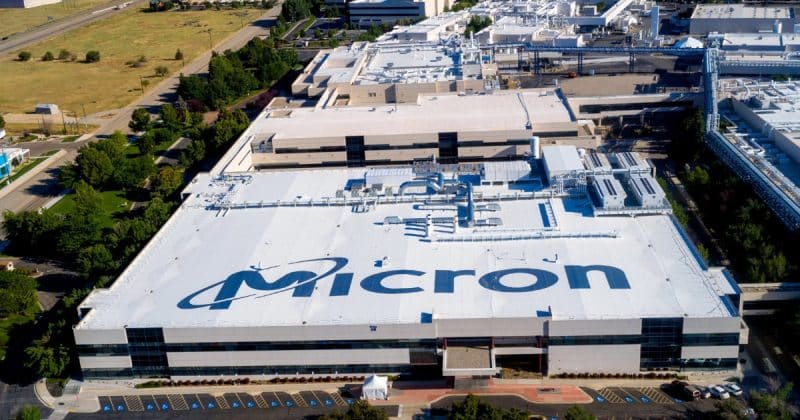
Micron earnings report set for June 24, profit growth near 1,000%
The memory chipmaker's AI-fueled surge has pushed its market cap past $1 trillion, and Wall Street expects the blowout numbers to keep coming
Micron Technology is about to show Wall Street what happens when a memory chip company finds itself at the center of the AI gold rush. The company reports fiscal Q3 2026 earnings on June 24 after market close, and analysts are forecasting year-over-year profit growth of roughly 932%.
That is not a typo. Earnings per share are expected to land around $19.72, compared to $1.91 in the same quarter last year. Revenue projections sit at approximately $34.5 billion, up about 271% from the $9.3 billion Micron generated in Q3 2025.
How Micron became a trillion-dollar company
The company’s meteoric rise traces directly to one thing: high-bandwidth memory, or HBM. This is the specialized memory that sits inside AI accelerators, the chips powering everything from large language models to autonomous driving systems.
Micron’s HBM capacity is completely sold out through the end of 2026. That’s the kind of supply constraint that gives a company serious pricing power, which shows up clearly in the financials.
In Q2 2026, the company posted record revenue of $23.86 billion and net income of $14.02 billion. Operating margins hit roughly 62%. Gross margins for Q3 are expected to come in around 81%.
Micron shares have surged more than 293% year-to-date in 2026, and the company crossed the $1 trillion market cap threshold back in May.
AI, tech, and the markets they move—in one daily briefing.
Daily. Free. Join 34,000+ readers across crypto, finance, and policy.
The AI memory machine
The Q2 non-GAAP EPS of $12.20 already represented a massive leap from prior periods. Analysts are projecting revenue growth from $23.86 billion in Q2 to $34.5 billion in Q3, a jump of roughly $10.6 billion in a single quarter.
Market analysts expect supply constraints and pricing dynamics to persist into 2027.
What this means for investors
Micron has historically been one of the most cyclical companies in technology. The memory market is famous for boom-bust dynamics, with margins sometimes dipping into negative territory during down cycles.
The critical variable is whether AI-driven demand represents a permanent shift in Micron’s earnings profile. If competitors like Samsung and SK Hynix ramp HBM production faster than expected, the pricing picture changes.
For crypto-adjacent investors, there’s an indirect signal worth paying attention to. Strong semiconductor earnings tend to reflect broader risk-on sentiment in technology markets, and that kind of environment has historically been constructive for Bitcoin and other digital assets, even without any direct operational connection between memory chips and blockchain networks.
Guidance for Q4 and any commentary on 2027 demand will matter more than the backward-looking numbers on the earnings call.