
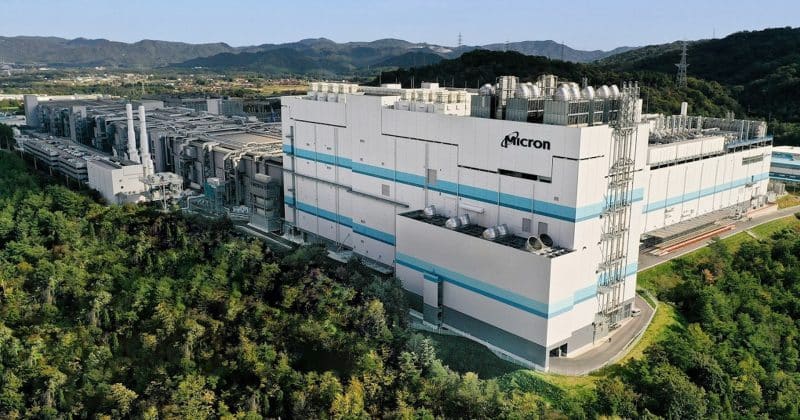
Micron breaks ground on ¥1.5T factory expansion in Japan to chase AI chip demand
The US memory giant is pouring $9.6 billion into its Hiroshima plant to produce high-bandwidth memory chips for artificial intelligence applications.
Micron Technology is making one of the largest single manufacturing bets in its history, committing approximately ¥1.5 trillion, roughly $9.6 billion, to expand its chip factory in Hiroshima, Japan. The target product is high-bandwidth memory, or HBM, the specialized chip architecture that has quietly become the most contested real estate in artificial intelligence computing.
Construction is set to begin in May 2026, with initial chip shipments projected to start around 2028. The Japanese government has pledged subsidies in the range of 500 to 536 billion yen to support the project, a figure that represents a substantial share of the total investment.
Japan’s bigger play here
Japan spent much of the 1980s and 1990s as the dominant force in global memory chip production before losing ground to South Korea’s Samsung and SK Hynix, and later to a resurgent Micron in the US. The country has been working methodically to reclaim relevance in the sector, and the Hiroshima subsidy package is a continuation of that effort.
Geographic diversification in semiconductor manufacturing has become something of an obsession for governments worldwide since the supply chain crises of the early 2020s. Pandemic-era chip shortages exposed just how concentrated advanced manufacturing had become, and both the US and Japan responded with aggressive subsidy regimes designed to pull production closer to home.
For Micron specifically, Japan has been a long-term manufacturing base. Expanding in Hiroshima rather than building a greenfield site elsewhere reduces execution risk and leverages an existing workforce and supplier network.
AI, tech, and the markets they move—in one daily briefing.
Daily. Free. Join 34,000+ readers across crypto, finance, and policy.
What investors should watch
The competitive landscape is worth keeping in mind. Samsung and SK Hynix have been producing HBM at scale for longer than Micron, and both have their own capacity expansion programs underway. Micron has been working to close the gap in HBM market share, and the Hiroshima expansion is part of that effort, but 2028 shipments mean the competitive dynamics of the market could look quite different by the time the factory is actually producing at volume.
The Japanese government’s subsidy commitment also introduces a policy dependency that investors should factor in. Any shift in Japan’s industrial policy posture or in the bilateral relationship between Tokyo and Washington could ripple into project timelines or terms.
Companies in the HBM supply chain, from specialized materials suppliers to equipment makers, have historically seen downstream benefits when a major manufacturer commits to this scale of capacity expansion. The 2026 construction start gives those adjacent players a reasonably clear demand signal to plan against.