
Micron projects first wafer output in Idaho by mid-2027, accelerating US chip ambitions

Micron projects first wafer output in Idaho by mid-2027, accelerating US chip ambitions

The only major US-headquartered memory chipmaker is pulling its timeline forward as part of a $50 billion domestic manufacturing push backed by CHIPS Act funding.

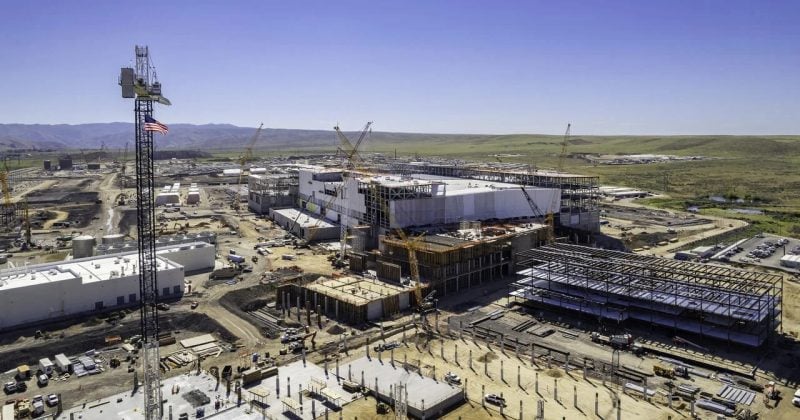
Micron Technology now expects its first wafer output from the new Idaho fabrication plant by mid-2027, slightly ahead of prior guidance that pointed to the second half of the year. The update, delivered during the company’s investor event on May 22, represents a modest but meaningful acceleration for what has become one of the largest semiconductor construction projects on American soil.

What Micron is actually building

The Idaho expansion is the centerpiece of Micron’s $50 billion manufacturing initiative, which spans facilities in Boise, New York, and Virginia. Each of the two planned Idaho fabs will house approximately 600,000 square feet of cleanroom space, dedicated to producing leading-edge DRAM chips.

Advertisement

Equipment move-in at the first Idaho facility is slated for later in 2026, setting the stage for that mid-2027 production target. Ground preparation for the second Idaho fab is already underway.

The second Idaho fab is expected to come online before Micron’s first New York facility. The project is projected to create around 90,000 direct and indirect jobs across US sites over the next two decades.

CHIPS Act money is flowing

Micron has been steadily unlocking portions of over $6.1 billion in promised CHIPS Act support. The mechanism is milestone-based: hit construction targets, get funding. Micron has already cleared several of those checkpoints on the first Idaho fab.

The CHIPS and Science Act was designed to rebuild domestic semiconductor manufacturing capacity after decades of offshoring, and Micron’s position as the only major US-headquartered memory chipmaker makes it something of a poster child for the program. The country hasn’t built a new advanced memory fab in roughly two decades.

Memory chips are foundational to everything from smartphones to data centers, and the explosive growth of artificial intelligence workloads has made high-bandwidth memory, or HBM, a critical bottleneck. Having domestic production capacity for these components is increasingly framed as a national security imperative.

Disclosure: This article was edited by Editorial Team. For more information on how we create and review content, see our Editorial Policy.

Micron projects first wafer output in Idaho by mid-2027, accelerating US chip ambitions

Micron projects first wafer output in Idaho by mid-2027, accelerating US chip ambitions

The only major US-headquartered memory chipmaker is pulling its timeline forward as part of a $50 billion domestic manufacturing push backed by CHIPS Act funding.

Micron Technology now expects its first wafer output from the new Idaho fabrication plant by mid-2027, slightly ahead of prior guidance that pointed to the second half of the year. The update, delivered during the company’s investor event on May 22, represents a modest but meaningful acceleration for what has become one of the largest semiconductor construction projects on American soil.

What Micron is actually building

The Idaho expansion is the centerpiece of Micron’s $50 billion manufacturing initiative, which spans facilities in Boise, New York, and Virginia. Each of the two planned Idaho fabs will house approximately 600,000 square feet of cleanroom space, dedicated to producing leading-edge DRAM chips.

Advertisement

Equipment move-in at the first Idaho facility is slated for later in 2026, setting the stage for that mid-2027 production target. Ground preparation for the second Idaho fab is already underway.

The second Idaho fab is expected to come online before Micron’s first New York facility. The project is projected to create around 90,000 direct and indirect jobs across US sites over the next two decades.

CHIPS Act money is flowing

Micron has been steadily unlocking portions of over $6.1 billion in promised CHIPS Act support. The mechanism is milestone-based: hit construction targets, get funding. Micron has already cleared several of those checkpoints on the first Idaho fab.

The CHIPS and Science Act was designed to rebuild domestic semiconductor manufacturing capacity after decades of offshoring, and Micron’s position as the only major US-headquartered memory chipmaker makes it something of a poster child for the program. The country hasn’t built a new advanced memory fab in roughly two decades.

Memory chips are foundational to everything from smartphones to data centers, and the explosive growth of artificial intelligence workloads has made high-bandwidth memory, or HBM, a critical bottleneck. Having domestic production capacity for these components is increasingly framed as a national security imperative.

Disclosure: This article was edited by Editorial Team. For more information on how we create and review content, see our Editorial Policy.