
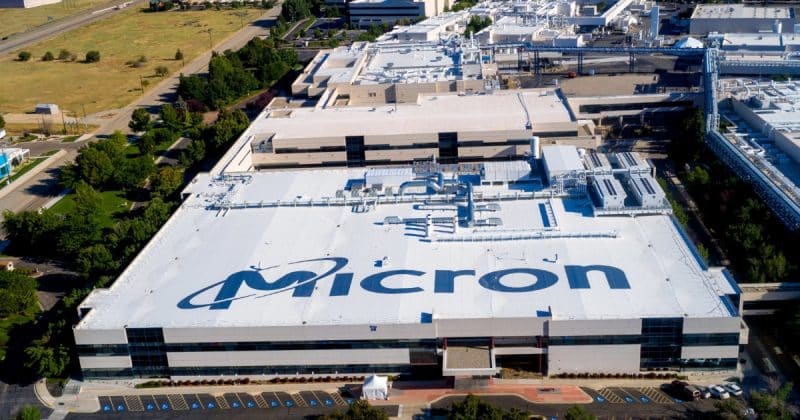
Micron mania raises questions about market concentration and what it means for risk assets

Micron mania raises questions about market concentration and what it means for risk assets

Three companies control nearly 90% of the DRAM market, and the AI supercycle is turning that oligopoly into a rocket ship for Micron's stock price.

Three companies make almost all the world’s memory chips. Micron Technology is one of them, and its stock has gained roughly 170% in 2026 so far.

The memory chip market, which supplies the high-bandwidth memory (HBM) and DRAM essential to every AI model worth its training data, is controlled by Samsung, SK hynix, and Micron. Together, they hold approximately 89% of the DRAM market. Some analysts have started calling this trio the “OPEC of memory.”

The numbers behind the mania

In Q1 2026, Samsung held roughly 38% of the DRAM market. SK hynix came in at about 29%. Micron rounded out the group at 22%.

The HBM segment is even more lopsided. SK hynix has at times controlled over 60% of that market.

Advertisement

Analysts have raised price targets for Micron as high as $1,500 per share. The broader narrative projects memory stocks could deliver performance gains in the 200-270% range for 2026.

A class-action lawsuit alleging collusion and price-fixing among memory chip producers was filed in June 2025. Whether or not the lawsuit gains traction, it introduces a layer of legal and regulatory risk that the current rally hasn’t fully priced in.

Why crypto traders should care about memory chips

The AI supercycle is the dominant macro narrative of 2026. It’s driving capital allocation decisions across every risk asset class, crypto included. When Nvidia, Micron, and their peers surge, they pull liquidity toward tech equities, and historically, speculative crypto positions are among the first to get trimmed during sector rotations.

Memory chips are a critical input for data centers, which are a critical input for cloud computing. If oligopolistic pricing pushes chip costs higher, that feeds into broader tech infrastructure inflation. Central banks watching sticky inflation have less room to cut rates, which matters enormously for both growth equities and Bitcoin’s macro sensitivity.

What investors should actually watch

AI workloads genuinely require exponentially more memory, and that demand curve isn’t flattening anytime soon.

A single geopolitical event involving South Korea or Taiwan, where Samsung and SK hynix are headquartered, could disrupt global memory supply overnight.

The June 2025 price-fixing lawsuit adds another variable. Even if it doesn’t result in a ruling against the memory giants, the discovery process could surface internal communications that reshape the narrative around these stocks.

Disclosure: This article was edited by Editorial Team. For more information on how we create and review content, see our Editorial Policy.

Micron mania raises questions about market concentration and what it means for risk assets

Micron mania raises questions about market concentration and what it means for risk assets

Three companies control nearly 90% of the DRAM market, and the AI supercycle is turning that oligopoly into a rocket ship for Micron's stock price.

Three companies make almost all the world’s memory chips. Micron Technology is one of them, and its stock has gained roughly 170% in 2026 so far.

The memory chip market, which supplies the high-bandwidth memory (HBM) and DRAM essential to every AI model worth its training data, is controlled by Samsung, SK hynix, and Micron. Together, they hold approximately 89% of the DRAM market. Some analysts have started calling this trio the “OPEC of memory.”

The numbers behind the mania

In Q1 2026, Samsung held roughly 38% of the DRAM market. SK hynix came in at about 29%. Micron rounded out the group at 22%.

The HBM segment is even more lopsided. SK hynix has at times controlled over 60% of that market.

Advertisement

Analysts have raised price targets for Micron as high as $1,500 per share. The broader narrative projects memory stocks could deliver performance gains in the 200-270% range for 2026.

A class-action lawsuit alleging collusion and price-fixing among memory chip producers was filed in June 2025. Whether or not the lawsuit gains traction, it introduces a layer of legal and regulatory risk that the current rally hasn’t fully priced in.

Why crypto traders should care about memory chips

The AI supercycle is the dominant macro narrative of 2026. It’s driving capital allocation decisions across every risk asset class, crypto included. When Nvidia, Micron, and their peers surge, they pull liquidity toward tech equities, and historically, speculative crypto positions are among the first to get trimmed during sector rotations.

Memory chips are a critical input for data centers, which are a critical input for cloud computing. If oligopolistic pricing pushes chip costs higher, that feeds into broader tech infrastructure inflation. Central banks watching sticky inflation have less room to cut rates, which matters enormously for both growth equities and Bitcoin’s macro sensitivity.

What investors should actually watch

AI workloads genuinely require exponentially more memory, and that demand curve isn’t flattening anytime soon.

A single geopolitical event involving South Korea or Taiwan, where Samsung and SK hynix are headquartered, could disrupt global memory supply overnight.

The June 2025 price-fixing lawsuit adds another variable. Even if it doesn’t result in a ruling against the memory giants, the discovery process could surface internal communications that reshape the narrative around these stocks.

Disclosure: This article was edited by Editorial Team. For more information on how we create and review content, see our Editorial Policy.