
Microsoft builds AI model business in China amid US concerns from OpenAI and Anthropic

Microsoft builds AI model business in China amid US concerns from OpenAI and Anthropic

The tech giant is integrating Chinese AI models into Azure while its own partners warn about intellectual property risks from Beijing

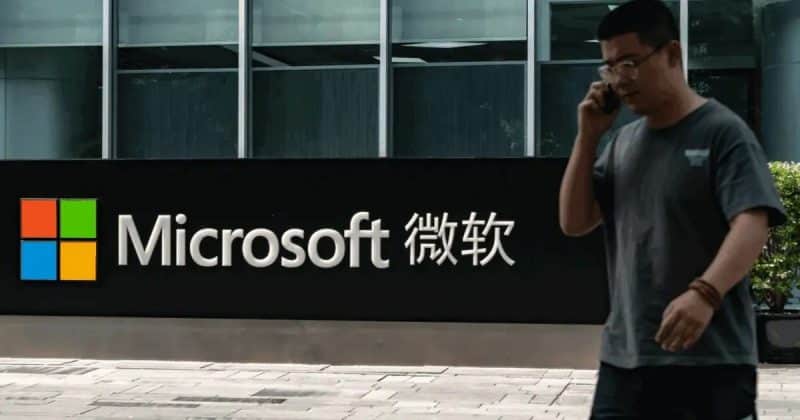
Microsoft is actively expanding its AI business in China, integrating models from Chinese firm DeepSeek into its Azure cloud platform, even as its closest AI partners, OpenAI and Anthropic, are raising alarms about Chinese companies copying their technology.

Microsoft co-founded the Frontier Model Forum alongside OpenAI, Anthropic, and Google, a group that has been working since at least April 2026 to counter what it calls “adversarial distillation practices” by Chinese entities. At the same time, Microsoft is testing DeepSeek’s latest model for its own enterprise products.

The DeepSeek play

DeepSeek’s R1 model landed on Azure AI Foundry and GitHub back in January 2025, joining a catalog of over 1,800 AI models available to enterprise customers. The pitch was straightforward: DeepSeek’s models cost significantly less to train and run than comparable Western alternatives.

As of June 2026, Microsoft is testing DeepSeek-V4 for its Copilot Cowork applications. The motivation is blunt economics. Inference costs from OpenAI and Anthropic models have surged, and Microsoft wants cheaper options for workloads that don’t require the most expensive frontier models.

Advertisement

Microsoft doesn’t sell its own proprietary AI models directly in China. Instead, it supports Chinese-built models through Azure, which lets it serve global enterprise clients without technically exporting restricted US technology.

The company is also launching an incubator for Chinese tech startups in 2026.

The other side of the table

OpenAI and Anthropic have participated in the Frontier Model Forum’s efforts to address what the industry calls model distillation, which is essentially the process of training a smaller, cheaper model by feeding it outputs from a larger, more expensive one. Chinese labs are accused of reverse-engineering Western AI models to build competitive alternatives at a fraction of the cost.

The Trump administration has reinforced these concerns with action. Security reviews targeting Chinese AI firms have been implemented, and the administration has threatened further measures over intellectual property theft. Export restrictions on advanced AI chips and model access have tightened.

DeepSeek’s rapid adoption hasn’t been limited to Microsoft’s platform. The model has gained meaningful traction in Africa and Asia, regions where cost sensitivity makes cheaper Chinese alternatives particularly appealing.

Microsoft is the largest investor in OpenAI, with billions committed to the partnership. It is a co-founder of the industry group trying to stop Chinese model copying. And it is simultaneously integrating the very Chinese models that its partners view as a competitive and security threat.

What this means for investors

Companies are increasingly sorting their AI needs into tiers, using expensive models from OpenAI or Anthropic for complex tasks, and cheaper alternatives like DeepSeek for routine operations.

If Microsoft itself is looking for cost-effective alternatives to its own partner’s models, other enterprise customers are almost certainly doing the same. OpenAI’s path to profitability gets harder if customers start routing significant portions of their workloads to cheaper Chinese models available on the same Azure platform.

Tighter US restrictions on Chinese AI could eventually force Microsoft to pull DeepSeek models from Azure, which would remove a cost advantage but also eliminate a source of competitive pressure on OpenAI and Anthropic’s pricing.

Disclosure: This article was edited by Editorial Team. For more information on how we create and review content, see our Editorial Policy.

Microsoft builds AI model business in China amid US concerns from OpenAI and Anthropic

Microsoft builds AI model business in China amid US concerns from OpenAI and Anthropic

The tech giant is integrating Chinese AI models into Azure while its own partners warn about intellectual property risks from Beijing

Microsoft is actively expanding its AI business in China, integrating models from Chinese firm DeepSeek into its Azure cloud platform, even as its closest AI partners, OpenAI and Anthropic, are raising alarms about Chinese companies copying their technology.

Microsoft co-founded the Frontier Model Forum alongside OpenAI, Anthropic, and Google, a group that has been working since at least April 2026 to counter what it calls “adversarial distillation practices” by Chinese entities. At the same time, Microsoft is testing DeepSeek’s latest model for its own enterprise products.

The DeepSeek play

DeepSeek’s R1 model landed on Azure AI Foundry and GitHub back in January 2025, joining a catalog of over 1,800 AI models available to enterprise customers. The pitch was straightforward: DeepSeek’s models cost significantly less to train and run than comparable Western alternatives.

As of June 2026, Microsoft is testing DeepSeek-V4 for its Copilot Cowork applications. The motivation is blunt economics. Inference costs from OpenAI and Anthropic models have surged, and Microsoft wants cheaper options for workloads that don’t require the most expensive frontier models.

Advertisement

Microsoft doesn’t sell its own proprietary AI models directly in China. Instead, it supports Chinese-built models through Azure, which lets it serve global enterprise clients without technically exporting restricted US technology.

The company is also launching an incubator for Chinese tech startups in 2026.

The other side of the table

OpenAI and Anthropic have participated in the Frontier Model Forum’s efforts to address what the industry calls model distillation, which is essentially the process of training a smaller, cheaper model by feeding it outputs from a larger, more expensive one. Chinese labs are accused of reverse-engineering Western AI models to build competitive alternatives at a fraction of the cost.

The Trump administration has reinforced these concerns with action. Security reviews targeting Chinese AI firms have been implemented, and the administration has threatened further measures over intellectual property theft. Export restrictions on advanced AI chips and model access have tightened.

DeepSeek’s rapid adoption hasn’t been limited to Microsoft’s platform. The model has gained meaningful traction in Africa and Asia, regions where cost sensitivity makes cheaper Chinese alternatives particularly appealing.

Microsoft is the largest investor in OpenAI, with billions committed to the partnership. It is a co-founder of the industry group trying to stop Chinese model copying. And it is simultaneously integrating the very Chinese models that its partners view as a competitive and security threat.

What this means for investors

Companies are increasingly sorting their AI needs into tiers, using expensive models from OpenAI or Anthropic for complex tasks, and cheaper alternatives like DeepSeek for routine operations.

If Microsoft itself is looking for cost-effective alternatives to its own partner’s models, other enterprise customers are almost certainly doing the same. OpenAI’s path to profitability gets harder if customers start routing significant portions of their workloads to cheaper Chinese models available on the same Azure platform.

Tighter US restrictions on Chinese AI could eventually force Microsoft to pull DeepSeek models from Azure, which would remove a cost advantage but also eliminate a source of competitive pressure on OpenAI and Anthropic’s pricing.

Disclosure: This article was edited by Editorial Team. For more information on how we create and review content, see our Editorial Policy.