
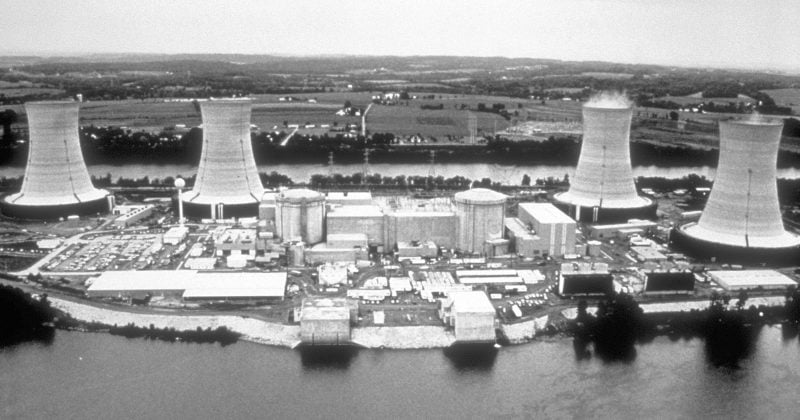
Microsoft signs 20-year deal to restart Three Mile Island nuclear plant, signaling a new era for energy-hungry data centers
The $1.6 billion project to revive the infamous Pennsylvania reactor highlights how AI and crypto mining are reshaping the energy landscape
Microsoft just inked a 20-year power purchase agreement with Constellation Energy to restart the Three Mile Island Unit 1 nuclear reactor in Pennsylvania. The deal will funnel roughly 835 megawatts of carbon-free electricity into the grid that powers Microsoft’s data centers, and it carries a price tag of approximately $1.6 billion to get the plant humming again.
For anyone who remembers Three Mile Island as the site of America’s worst commercial nuclear accident in 1979, yes, that Three Mile Island. Though it’s worth noting Unit 1, the reactor being restarted, was the one that operated safely for decades. It was Unit 2 that had the partial meltdown. Unit 1 kept running until September 2019, when it was shut down for economic reasons, not safety ones.
Why a tech giant needs a nuclear reactor
The revamped facility has been rebranded as the Crane Clean Energy Center. Commercial operations are targeted for 2028, though some reports suggest the timeline could be accelerated to 2027. In June 2026, regulators granted a waiver to allow faster grid connection. The project is expected to create around 3,400 jobs and generate more than $3 billion in state and federal tax revenues over the life of the agreement.
The crypto mining connection
The deal also puts upward pressure on energy markets within the PJM Interconnection, the regional grid operator covering 13 states and Washington DC. When a single corporate buyer locks up 835 MW for two decades, that’s capacity other users, including crypto miners operating in the same region, can’t access.
AI, tech, and the markets they move—in one daily briefing.
Daily. Free. Join 34,000+ readers across crypto, finance, and policy.
What this means for investors
Constellation Energy is investing $1.6 billion to restart the plant but has locked in a 20-year revenue stream from one of the world’s most creditworthy counterparties.
Bitcoin miners who have already secured long-term energy contracts or own their generation assets are in a stronger position. Those still buying power on spot markets may find themselves increasingly squeezed as AI companies vacuum up available capacity.
The regulatory environment is also shifting in favor of nuclear. The waiver granted in June 2026 for faster grid connection at Three Mile Island suggests that both federal and state regulators are willing to fast-track projects that address the energy deficit.