
Midjourney launches medical division with sci-fi body scanner, but the Mythos connection remains unverified
The AI image generator is pivoting into healthcare with an ultrasonic full-body scanner that ditches radiation and magnets entirely.
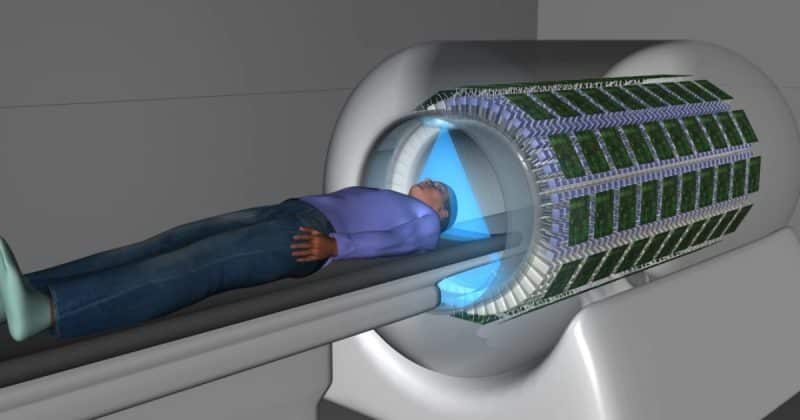
Midjourney, the company best known for turning text prompts into eerily beautiful images, just made one of the more unexpected pivots in recent tech history. The AI lab announced a new division called Midjourney Medical, complete with a concept for a full-body ultrasonic scanner that looks like it belongs on the starship Enterprise.
Here’s the thing: while the headline references “accessing Mythos,” there is no verified public connection between Midjourney’s medical initiative and the Mythos token, the Web3 gaming protocol, or any cryptocurrency whatsoever. Official sources and reporting on the announcement contain zero references to crypto tokens, blockchain technology, or digital assets of any kind.
The scanner itself is genuinely wild
Midjourney’s proposed scanner replaces the two things people hate most about traditional MRI machines: the radiation and the claustrophobia-inducing magnets. Instead, it uses sound waves and water immersion to image the entire human body.
The specs read like science fiction. A target resolution of 0.5mm across a full-body scan completed in just 60 seconds. For context, a standard MRI scan of a single body region typically takes 15 to 90 minutes, and the resolution varies significantly depending on the machine and the protocol.
Under the hood, the system reportedly packs approximately 8,960 transducers. Those are the devices that send and receive sound waves to construct the image. Together, they push data at a rate of 17 GB per second, which is roughly equivalent to downloading three full HD movies every single second.
AI, tech, and the markets they move—in one daily briefing.
Daily. Free. Join 34,000+ readers across crypto, finance, and policy.
The company plans to build a flagship location in San Francisco that would house up to ten of these scanners by the end of 2027.
What this means for crypto investors (and why the Mythos angle doesn’t hold up)
Mythos is a Web3 gaming token associated with the Mythical Games ecosystem. It has nothing to do with medical imaging, Midjourney, or ultrasonic scanners. No official Midjourney communication, press release, or credible report has drawn any line between Midjourney Medical and any cryptocurrency or blockchain protocol.
This matters because speculative narratives can move token prices before anyone stops to check whether the underlying claim is real. If Mythos sees unusual trading activity tied to this announcement, investors should understand that the connection appears to be based on name confusion or outright speculation rather than any verified partnership or integration.
The risks are substantial. Hardware development is capital-intensive. And Midjourney has never shipped a physical product, let alone a Class II or Class III medical device. The 2027 timeline for ten operational scanners in San Francisco is the number to watch.