
Nexo Earn with Nexo
Moonwell enables governance for WELL holders across multiple networks

Moonwell enables governance for WELL holders across multiple networks

The multichain lending protocol migrated its governance to Ethereum mainnet, letting token holders propose, vote, and execute decisions across Base, Optimism, and Moonbeam.

Moonwell just pulled off something most DeFi protocols only talk about on governance forums: actual cross-chain governance that works. WELL token holders can now propose, vote, and execute governance decisions across multiple networks, including Base, Optimism, and Moonbeam, all anchored to Ethereum’s mainnet.

The move comes via proposal MIP-X58, which was voted on in mid-May 2026 and formally migrated Moonwell’s entire governance framework to Ethereum. Previously, the protocol’s governance lived on Moonbeam, a setup that had been in place since the Multichain Governor was introduced through MIP-M23. Now, Ethereum is the nerve center.

How the cross-chain governance actually works

Moonwell’s approach leans on the xERC20 standard, which the protocol adopted for its WELL token back in April 2024 under the ticker xWELL.

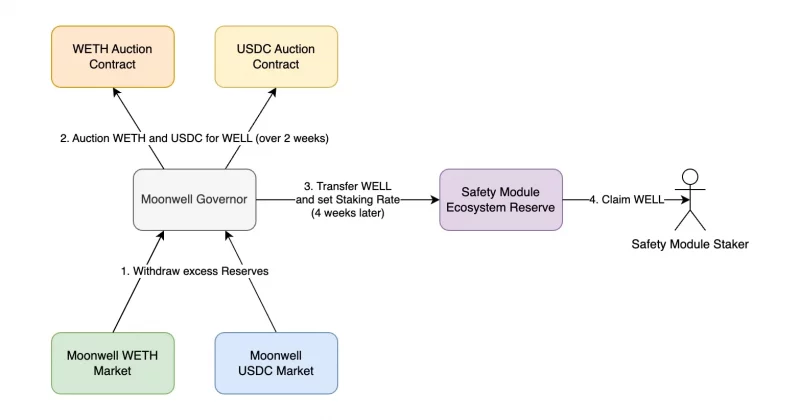
WELL holders who want governance power stake their tokens into what Moonwell calls the Safety Module. Staking generates stkWELL, which carries both voting rights and staking rewards. The staking mechanism doubles as a security backstop for the protocol, a design pattern borrowed from Aave’s Safety Module playbook.

Advertisement

The groundwork for this was laid by a precursor proposal, MIP-X55, which enabled WELL token bridging to Ethereum. That vote took place between May 13-16, 2026, opening the pipeline for tokens to flow from other networks to Ethereum ahead of the full governance migration.

Once staked, holders can participate in Moonwell Improvement Proposals, the protocol’s formal governance mechanism. MIPs cover everything from lending parameters to protocol upgrades, and critically, decisions made on Ethereum can now execute across all the chains where Moonwell operates lending markets.

Why Ethereum, and why now

Community discussions in early 2026 revealed a strong preference for Ethereum over the protocol’s previous Base-centric operations. Ethereum offers deeper liquidity pools, broader wallet infrastructure, and the kind of institutional recognition that makes compliance teams slightly less nervous.

Moonwell operates lending markets on Base, Optimism, and Moonbeam. But governance living on Moonbeam, a Polkadot parachain with comparatively thin liquidity, created a friction point. Voters needed Moonbeam-native tokens to participate, which limited who actually showed up to govern.

Moving the governance hub to Ethereum removes that bottleneck. WELL has a total supply of 5 billion tokens, and making governance accessible on the most widely used smart contract platform theoretically expands the pool of active participants significantly.

What this means for investors

The governance migration changes the investment thesis for WELL in a few concrete ways.

First, the staking mechanism creates a new demand sink. Tokens locked in the Safety Module for stkWELL aren’t circulating on the open market.

Third, the cross-chain execution capability is genuinely differentiated. Most DeFi governance systems are single-chain affairs. Moonwell’s architecture lets a single governance vote cascade across Base, Optimism, and Moonbeam. For a multichain lending protocol, that’s not a nice-to-have. It’s operational infrastructure.

There’s also the question of whether Ethereum’s higher gas costs could discourage smaller holders from participating in governance. Staking and voting transactions on Ethereum aren’t free, and for holders with modest WELL positions, the cost of governance participation could exceed the staking rewards. That creates a dynamic where governance power concentrates among larger holders, which is precisely the outcome decentralized governance is supposed to prevent.

Disclosure: This article was edited by Editorial Team. For more information on how we create and review content, see our Editorial Policy.

Moonwell enables governance for WELL holders across multiple networks

Moonwell enables governance for WELL holders across multiple networks

The multichain lending protocol migrated its governance to Ethereum mainnet, letting token holders propose, vote, and execute decisions across Base, Optimism, and Moonbeam.

Moonwell just pulled off something most DeFi protocols only talk about on governance forums: actual cross-chain governance that works. WELL token holders can now propose, vote, and execute governance decisions across multiple networks, including Base, Optimism, and Moonbeam, all anchored to Ethereum’s mainnet.

The move comes via proposal MIP-X58, which was voted on in mid-May 2026 and formally migrated Moonwell’s entire governance framework to Ethereum. Previously, the protocol’s governance lived on Moonbeam, a setup that had been in place since the Multichain Governor was introduced through MIP-M23. Now, Ethereum is the nerve center.

How the cross-chain governance actually works

Moonwell’s approach leans on the xERC20 standard, which the protocol adopted for its WELL token back in April 2024 under the ticker xWELL.

WELL holders who want governance power stake their tokens into what Moonwell calls the Safety Module. Staking generates stkWELL, which carries both voting rights and staking rewards. The staking mechanism doubles as a security backstop for the protocol, a design pattern borrowed from Aave’s Safety Module playbook.

Advertisement

The groundwork for this was laid by a precursor proposal, MIP-X55, which enabled WELL token bridging to Ethereum. That vote took place between May 13-16, 2026, opening the pipeline for tokens to flow from other networks to Ethereum ahead of the full governance migration.

Once staked, holders can participate in Moonwell Improvement Proposals, the protocol’s formal governance mechanism. MIPs cover everything from lending parameters to protocol upgrades, and critically, decisions made on Ethereum can now execute across all the chains where Moonwell operates lending markets.

Why Ethereum, and why now

Community discussions in early 2026 revealed a strong preference for Ethereum over the protocol’s previous Base-centric operations. Ethereum offers deeper liquidity pools, broader wallet infrastructure, and the kind of institutional recognition that makes compliance teams slightly less nervous.

Moonwell operates lending markets on Base, Optimism, and Moonbeam. But governance living on Moonbeam, a Polkadot parachain with comparatively thin liquidity, created a friction point. Voters needed Moonbeam-native tokens to participate, which limited who actually showed up to govern.

Moving the governance hub to Ethereum removes that bottleneck. WELL has a total supply of 5 billion tokens, and making governance accessible on the most widely used smart contract platform theoretically expands the pool of active participants significantly.

What this means for investors

The governance migration changes the investment thesis for WELL in a few concrete ways.

First, the staking mechanism creates a new demand sink. Tokens locked in the Safety Module for stkWELL aren’t circulating on the open market.

Third, the cross-chain execution capability is genuinely differentiated. Most DeFi governance systems are single-chain affairs. Moonwell’s architecture lets a single governance vote cascade across Base, Optimism, and Moonbeam. For a multichain lending protocol, that’s not a nice-to-have. It’s operational infrastructure.

There’s also the question of whether Ethereum’s higher gas costs could discourage smaller holders from participating in governance. Staking and voting transactions on Ethereum aren’t free, and for holders with modest WELL positions, the cost of governance participation could exceed the staking rewards. That creates a dynamic where governance power concentrates among larger holders, which is precisely the outcome decentralized governance is supposed to prevent.

Disclosure: This article was edited by Editorial Team. For more information on how we create and review content, see our Editorial Policy.