
Nexo Earn with Nexo
MWC Barcelona 2026 highlights AI compute as emerging commodity

MWC Barcelona 2026 highlights AI compute as emerging commodity

The world's biggest mobile conference pivoted hard toward AI infrastructure, and crypto's decentralized compute networks are watching closely

The Mobile World Congress has always been about phones. This year, it was about the machines that make phones smart.

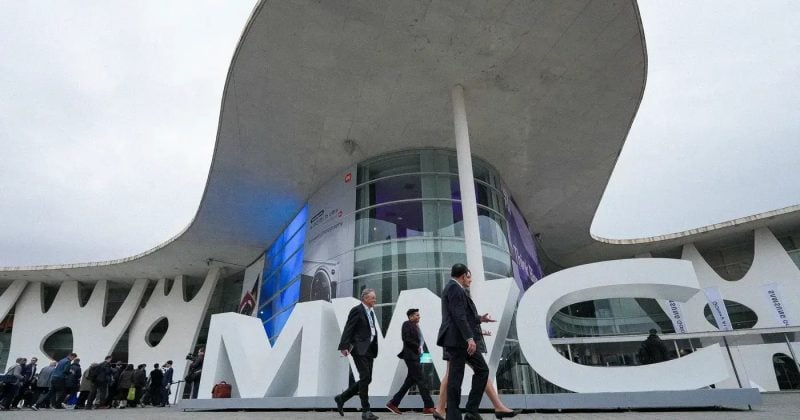
MWC Barcelona 2026, which ran from March 2 to 5, was dominated by AI infrastructure. Supermicro showed off server racks running AI-Radio Access Networks at booth 2D35, partnering with Nokia, SK Telecom, and Telenor. NVIDIA brought its AI-native platforms alongside T-Mobile, SoftBank, and Deutsche Telekom.

From server racks to futures contracts

CME Group launched the first compute futures contracts on May 12, 2026, focused specifically on GPU rental as an asset class. In English: you can now bet on the future price of renting a graphics card the same way traders have bet on wheat and crude oil for decades.

Advertisement

CME isn’t alone in this push. The Intercontinental Exchange (ICE) and ORNN are developing their own GPU compute futures products. China’s Shanghai Futures Exchange is going a step further, creating derivatives linked to AI token pricing.

Where crypto fits in

If centralized compute is becoming a commodity, decentralized compute is becoming its shadow market. And it already has a name: DePIN, short for decentralized physical infrastructure networks.

Protocols like Render and Akash have positioned themselves as secondary markets for GPU compute. Instead of letting idle GPUs collect dust, owners can rent them out to anyone who needs AI training or inference capacity. Bittensor and Theta operate in adjacent lanes, building decentralized layers for AI and compute tasks.

The convergence was visible at MWC itself. The event’s heavy emphasis on AI-RAN and sovereign AI solutions, systems designed to keep data and processing within national borders, creates natural demand for distributed infrastructure. Sovereign AI, by definition, resists concentration. That’s a thesis DePIN protocols were built for.

What this means for investors

The financialization of compute creates a new correlation risk for crypto portfolios. Token prices in the DePIN sector are likely to become increasingly sensitive to hardware sentiment, particularly around NVIDIA product launches, earnings reports, and supply chain updates.

The introduction of compute futures by CME Group and others also opens a hedging mechanism that didn’t previously exist. Institutional players who need GPU capacity can now manage that exposure through derivatives rather than scrambling for spot availability.

Watch the DePIN sector’s usage metrics, not just token prices. If protocols like Render and Akash show sustained growth in actual GPU hours consumed rather than speculative token trading, the commodity thesis has legs.

Disclosure: This article was edited by Editorial Team. For more information on how we create and review content, see our Editorial Policy.

MWC Barcelona 2026 highlights AI compute as emerging commodity

MWC Barcelona 2026 highlights AI compute as emerging commodity

The world's biggest mobile conference pivoted hard toward AI infrastructure, and crypto's decentralized compute networks are watching closely

The Mobile World Congress has always been about phones. This year, it was about the machines that make phones smart.

MWC Barcelona 2026, which ran from March 2 to 5, was dominated by AI infrastructure. Supermicro showed off server racks running AI-Radio Access Networks at booth 2D35, partnering with Nokia, SK Telecom, and Telenor. NVIDIA brought its AI-native platforms alongside T-Mobile, SoftBank, and Deutsche Telekom.

From server racks to futures contracts

CME Group launched the first compute futures contracts on May 12, 2026, focused specifically on GPU rental as an asset class. In English: you can now bet on the future price of renting a graphics card the same way traders have bet on wheat and crude oil for decades.

Advertisement

CME isn’t alone in this push. The Intercontinental Exchange (ICE) and ORNN are developing their own GPU compute futures products. China’s Shanghai Futures Exchange is going a step further, creating derivatives linked to AI token pricing.

Where crypto fits in

If centralized compute is becoming a commodity, decentralized compute is becoming its shadow market. And it already has a name: DePIN, short for decentralized physical infrastructure networks.

Protocols like Render and Akash have positioned themselves as secondary markets for GPU compute. Instead of letting idle GPUs collect dust, owners can rent them out to anyone who needs AI training or inference capacity. Bittensor and Theta operate in adjacent lanes, building decentralized layers for AI and compute tasks.

The convergence was visible at MWC itself. The event’s heavy emphasis on AI-RAN and sovereign AI solutions, systems designed to keep data and processing within national borders, creates natural demand for distributed infrastructure. Sovereign AI, by definition, resists concentration. That’s a thesis DePIN protocols were built for.

What this means for investors

The financialization of compute creates a new correlation risk for crypto portfolios. Token prices in the DePIN sector are likely to become increasingly sensitive to hardware sentiment, particularly around NVIDIA product launches, earnings reports, and supply chain updates.

The introduction of compute futures by CME Group and others also opens a hedging mechanism that didn’t previously exist. Institutional players who need GPU capacity can now manage that exposure through derivatives rather than scrambling for spot availability.

Watch the DePIN sector’s usage metrics, not just token prices. If protocols like Render and Akash show sustained growth in actual GPU hours consumed rather than speculative token trading, the commodity thesis has legs.

Disclosure: This article was edited by Editorial Team. For more information on how we create and review content, see our Editorial Policy.