
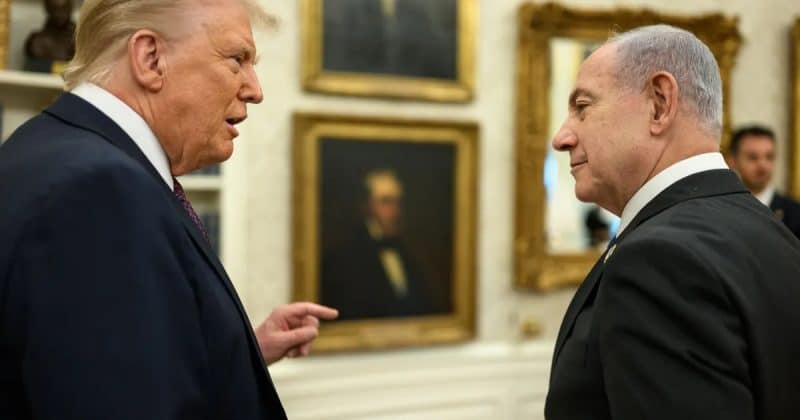
Netanyahu warns of possible third confrontation with Iran amid high tensions

https://www.whitehouse.gov/gallery/president-donald-trump-and-israeli-prime-minister-benjamin-netanyahu-hold-a-joint-press-conference-announcing-the-u-s-peace-plan-for-gaza/

Netanyahu warns of possible third confrontation with Iran amid high tensions

Next round of US-Iran peace talks

Israeli Prime Minister Benjamin Netanyahu has stated that a third confrontation with Iran remains a possibility “if necessary,” according to The Times of Israel. This follows two previous military engagements, including the ongoing 2026 Iran war and the June 2025 Twelve-Day War. Despite a ceasefire agreement on June 14, 2026, tensions remain high, with no formal cessation of hostilities in place. Netanyahu’s remarks underscore Israel’s firm stance against Iran’s potential acquisition of nuclear weapons, a concern that persists due to the incomplete dismantling of Iran’s nuclear program. His comments come amidst a fragile pause in the conflict, highlighting the potential for renewed hostilities.

Advertisement

Key Takeaways

  • Netanyahu’s statement appears consistent with increased tensions between Israel and Iran, suggesting a less favorable outlook for upcoming peace talks.
  • Market pricing indicates a decrease in the likelihood of a US-Iran diplomatic meeting by July 3, 2026, with odds dropping to 8.5% from 38% over the past 24 hours.
  • The potential for renewed military engagement or further escalation may indicate a challenging environment for diplomatic resolutions.

What to Watch

Developments in US-Iran relations will be crucial, particularly any announcements related to diplomatic meetings or extensions of the ceasefire. Pay attention to statements from key actors, including the US and Iranian governments, as well as any new military activities in the region. A continuation of the ceasefire or confirmed diplomatic meetings could suggest a shift towards de-escalation, while further military confrontations or nuclear developments by Iran could support scenarios where tensions remain high.

Get prediction market intelligence as a structured API feed. Early access waitlist.

Disclosure: This article was edited by Estefano Gomez. For more information on how we create and review content, see our Editorial Policy.

Netanyahu warns of possible third confrontation with Iran amid high tensions

Netanyahu warns of possible third confrontation with Iran amid high tensions

Next round of US-Iran peace talks

https://www.whitehouse.gov/gallery/president-donald-trump-and-israeli-prime-minister-benjamin-netanyahu-hold-a-joint-press-conference-announcing-the-u-s-peace-plan-for-gaza/

Israeli Prime Minister Benjamin Netanyahu has stated that a third confrontation with Iran remains a possibility “if necessary,” according to The Times of Israel. This follows two previous military engagements, including the ongoing 2026 Iran war and the June 2025 Twelve-Day War. Despite a ceasefire agreement on June 14, 2026, tensions remain high, with no formal cessation of hostilities in place. Netanyahu’s remarks underscore Israel’s firm stance against Iran’s potential acquisition of nuclear weapons, a concern that persists due to the incomplete dismantling of Iran’s nuclear program. His comments come amidst a fragile pause in the conflict, highlighting the potential for renewed hostilities.

Advertisement

Key Takeaways

  • Netanyahu’s statement appears consistent with increased tensions between Israel and Iran, suggesting a less favorable outlook for upcoming peace talks.
  • Market pricing indicates a decrease in the likelihood of a US-Iran diplomatic meeting by July 3, 2026, with odds dropping to 8.5% from 38% over the past 24 hours.
  • The potential for renewed military engagement or further escalation may indicate a challenging environment for diplomatic resolutions.

What to Watch

Developments in US-Iran relations will be crucial, particularly any announcements related to diplomatic meetings or extensions of the ceasefire. Pay attention to statements from key actors, including the US and Iranian governments, as well as any new military activities in the region. A continuation of the ceasefire or confirmed diplomatic meetings could suggest a shift towards de-escalation, while further military confrontations or nuclear developments by Iran could support scenarios where tensions remain high.

Get prediction market intelligence as a structured API feed. Early access waitlist.

Disclosure: This article was edited by Estefano Gomez. For more information on how we create and review content, see our Editorial Policy.