
Nvidia Blackwell achieves 20x more agents per megawatt than Hopper
A new benchmark puts hard numbers on Blackwell's efficiency leap, and the implications for AI infrastructure spending are massive
Nvidia’s Blackwell architecture isn’t just incrementally better than its predecessor. It’s operating in a different league entirely.
A new benchmark called AgentPerf shows that Blackwell systems can run 20 times more AI agents per megawatt than Nvidia’s Hopper generation. In English: the same amount of electricity that powered one AI agent on Hopper hardware can now power twenty on Blackwell.
The numbers behind the leap
The AgentPerf benchmark, introduced by Artificial Analysis under the name AA-AgentPerf in March 2026, measures real-world agent performance, evaluating concurrent users per accelerator and efficiency per rack.
The 20x agents-per-megawatt figure aligns with broader efficiency data from SemiAnalysis InferenceX, which reported in February 2026 that Blackwell’s GB300 NVL72 configuration achieves up to 50x higher throughput per megawatt compared to Hopper. That same report found a 35x reduction in cost per token for complex AI workloads like agentic reasoning.
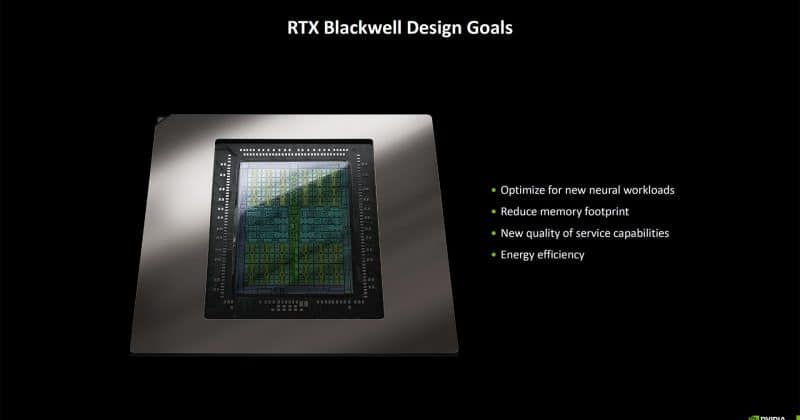
The hardware driving these gains includes several key architectural changes. Blackwell employs FP4 precision, a second-generation Transformer Engine, and advanced NVLink designs that allow GPUs to communicate faster within a system. Individual Blackwell GPUs draw between 1,200 and 1,400 watts, roughly double the approximately 700W that H100 chips consume. The efficiency gains come not from using less power per chip, but from doing dramatically more work per watt consumed.
AI, tech, and the markets they move—in one daily briefing.
Daily. Free. Join 34,000+ readers across crypto, finance, and policy.
Why agentic AI changes the calculus
Nvidia CEO Jensen Huang flagged this trend in late 2025, revealing that Blackwell sales were dramatically surpassing expectations. He specifically cited inference and agentic AI as significant growth areas.
Data centers are increasingly constrained by power availability. A 20x improvement in agents per megawatt means companies can scale their AI deployments 20x without building new power infrastructure. When your hardware can do 20 times more work on the same power budget, the unit economics of deploying AI agents shift accordingly.
What this means for investors
When a company delivers 20-50x efficiency improvements in a single generation, it expands the total addressable market by making previously uneconomical use cases viable. A 35x reduction in cost per token makes applications like personalized financial advisors, real-time supply chain optimization, or autonomous customer service economically viable at scale.
Some market observers have drawn connections between Nvidia’s AI infrastructure dominance and AI-associated crypto tokens like TAO, NEAR, ICP, and RNDR. However, no direct links between these tokens and the AgentPerf benchmark or Blackwell’s performance claims have been established.
AMD, Intel, and a growing roster of custom silicon startups are all chasing Nvidia in the inference market. A 20x efficiency advantage in agents per megawatt represents a significant lead in the metric that data center operators care most about.