
Nexo Earn with Nexo
Nvidia showcases GTC Taipei highlights and launches RTX Spark superchip

Nvidia showcases GTC Taipei highlights and launches RTX Spark superchip

The new platform crams a petaflop of AI performance into laptops as thin as 14 mm, but crypto got zero mentions at the event

Nvidia just dropped what might be the most consequential personal computing announcement in years. At GTC Taipei 2026, running June 1 through June 4 alongside the annual Computex tech expo, CEO Jensen Huang unveiled the RTX Spark superchip, a platform designed to turn everyday Windows PCs into personal AI agent machines.

What RTX Spark actually is

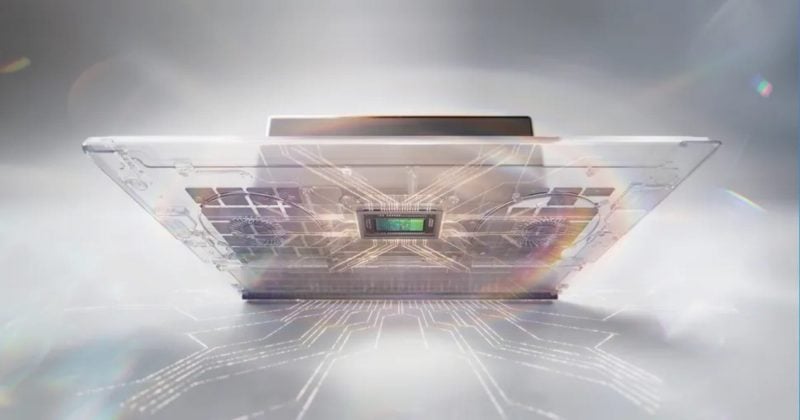
The superchip pairs a Blackwell RTX GPU packing up to 6,144 CUDA cores with a 20-core Grace CPU. These two processors are connected via NVLink-C2C, the same high-bandwidth interconnect Nvidia uses in its server hardware.

The result: up to 1 petaflop of AI processing power in a consumer device. In English, that’s a quadrillion floating-point operations per second.

The platform supports up to 128 GB of unified memory, meaning the CPU and GPU share the same memory pool. This matters enormously for running large AI models locally because it eliminates the bottleneck of shuttling data between separate memory banks.

Nvidia partnered with MediaTek on the platform. RTX Spark laptops and desktops are being developed alongside ASUS, Dell, HP, Lenovo, Microsoft Surface, MSI, Acer, and GIGABYTE, with devices as slim as 14 mm. These are expected to ship in fall 2026.

Advertisement

GTC Taipei’s broader themes

GTC Taipei ran a full program of demonstrations and workshops across three core themes: agentic AI, physical AI, and AI-native personal computing.

The RTX Spark platform is explicitly positioned as the hardware backbone for running personal AI agents locally on Windows PCs. Nvidia’s partnership with Microsoft was emphasized heavily, with a focus on enhanced security and local execution of AI agents rather than relying on cloud-based processing.

Nvidia also provided updates on its data center roadmap, including the Vera CPU as a component of its broader AI infrastructure plans.

The crypto silence speaks volumes

Throughout the entire four-day event, across keynotes, workshops, and demonstrations, there was not a single reference to cryptocurrency assets, protocols, or tokens.

This is notable because Nvidia’s GPUs have historically been deeply intertwined with the crypto industry. During the mining boom years, crypto miners bought GPUs in quantities large enough to cause global shortages of consumer graphics cards. Nvidia even launched dedicated mining hardware at one point.

What this means for investors

The partner list tells a story. Having every major PC manufacturer signed on at launch, plus Microsoft building Windows features around the platform, suggests Nvidia has secured broad ecosystem buy-in.

The 128 GB unified memory ceiling is worth watching closely. Current consumer laptops typically max out at far less usable memory for AI workloads. If RTX Spark delivers on its specifications, it could make local inference of increasingly large models practical for everyday users, reducing dependence on cloud AI services from OpenAI, Google, and others.

Competition is the key risk. Apple’s M-series chips have already established a beachhead in unified memory architectures for AI workloads. Qualcomm’s Snapdragon X series is pushing into AI PC territory. AMD continues to develop its own AI acceleration capabilities.

The fall 2026 launch window gives the market roughly a year to evaluate competitive responses.

Disclosure: This article was edited by Editorial Team. For more information on how we create and review content, see our Editorial Policy.

Nvidia showcases GTC Taipei highlights and launches RTX Spark superchip

Nvidia showcases GTC Taipei highlights and launches RTX Spark superchip

The new platform crams a petaflop of AI performance into laptops as thin as 14 mm, but crypto got zero mentions at the event

Nvidia just dropped what might be the most consequential personal computing announcement in years. At GTC Taipei 2026, running June 1 through June 4 alongside the annual Computex tech expo, CEO Jensen Huang unveiled the RTX Spark superchip, a platform designed to turn everyday Windows PCs into personal AI agent machines.

What RTX Spark actually is

The superchip pairs a Blackwell RTX GPU packing up to 6,144 CUDA cores with a 20-core Grace CPU. These two processors are connected via NVLink-C2C, the same high-bandwidth interconnect Nvidia uses in its server hardware.

The result: up to 1 petaflop of AI processing power in a consumer device. In English, that’s a quadrillion floating-point operations per second.

The platform supports up to 128 GB of unified memory, meaning the CPU and GPU share the same memory pool. This matters enormously for running large AI models locally because it eliminates the bottleneck of shuttling data between separate memory banks.

Nvidia partnered with MediaTek on the platform. RTX Spark laptops and desktops are being developed alongside ASUS, Dell, HP, Lenovo, Microsoft Surface, MSI, Acer, and GIGABYTE, with devices as slim as 14 mm. These are expected to ship in fall 2026.

Advertisement

GTC Taipei’s broader themes

GTC Taipei ran a full program of demonstrations and workshops across three core themes: agentic AI, physical AI, and AI-native personal computing.

The RTX Spark platform is explicitly positioned as the hardware backbone for running personal AI agents locally on Windows PCs. Nvidia’s partnership with Microsoft was emphasized heavily, with a focus on enhanced security and local execution of AI agents rather than relying on cloud-based processing.

Nvidia also provided updates on its data center roadmap, including the Vera CPU as a component of its broader AI infrastructure plans.

The crypto silence speaks volumes

Throughout the entire four-day event, across keynotes, workshops, and demonstrations, there was not a single reference to cryptocurrency assets, protocols, or tokens.

This is notable because Nvidia’s GPUs have historically been deeply intertwined with the crypto industry. During the mining boom years, crypto miners bought GPUs in quantities large enough to cause global shortages of consumer graphics cards. Nvidia even launched dedicated mining hardware at one point.

What this means for investors

The partner list tells a story. Having every major PC manufacturer signed on at launch, plus Microsoft building Windows features around the platform, suggests Nvidia has secured broad ecosystem buy-in.

The 128 GB unified memory ceiling is worth watching closely. Current consumer laptops typically max out at far less usable memory for AI workloads. If RTX Spark delivers on its specifications, it could make local inference of increasingly large models practical for everyday users, reducing dependence on cloud AI services from OpenAI, Google, and others.

Competition is the key risk. Apple’s M-series chips have already established a beachhead in unified memory architectures for AI workloads. Qualcomm’s Snapdragon X series is pushing into AI PC territory. AMD continues to develop its own AI acceleration capabilities.

The fall 2026 launch window gives the market roughly a year to evaluate competitive responses.

Disclosure: This article was edited by Editorial Team. For more information on how we create and review content, see our Editorial Policy.