
Nvidia and Toyota expand their partnership into robotics

Nvidia and Toyota expand their partnership into robotics

The two companies are deepening a collaboration that stretches from autonomous driving software to factory floor robot programming.

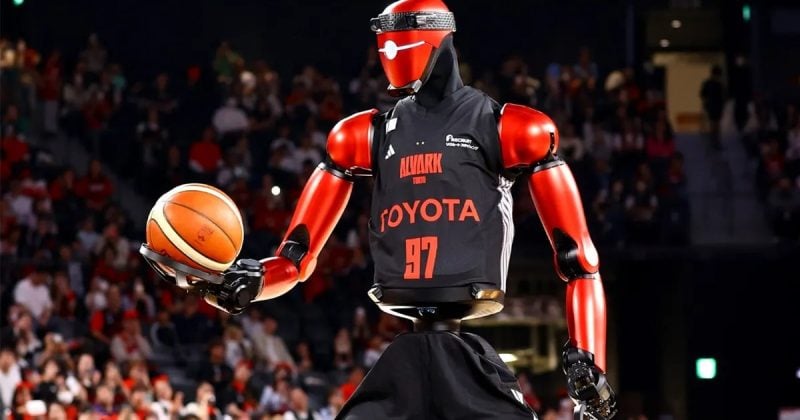
The relationship between Nvidia and Toyota has evolved from an automotive AI computing deal into something bigger, touching autonomous vehicles, factory robotics, and simulation software that lets engineers train robots before a single physical machine is built.

A partnership that has been compounding since 2017

The foundation was laid in May 2017, when Toyota selected Nvidia’s Drive PX platform as the computing backbone for its autonomous driving systems. By CES 2025, Toyota announced that its next-generation vehicles would run on Nvidia’s DRIVE AGX Orin platform, paired with the safety-certified DriveOS operating system.

Nvidia CEO Jensen Huang offered a frame for all of this at CES 2025, describing self-driving vehicles as potentially the first multi-trillion dollar robotics industry.

Advertisement

From the highway to the factory floor

In January 2024, Toyota partnered with READY Robotics to bring Nvidia’s Isaac Sim and Omniverse platforms into its manufacturing operations for sim-to-real robot programming. Engineers design and test robotic workflows inside a highly accurate digital replica of the production environment. Once the simulation runs cleanly, the programming transfers to physical robots on the line.

More recently, the Toyota Research Institute has been using Nvidia Cosmos for robotics research, a development highlighted during National Robotics Week in April 2026. Cosmos is Nvidia’s world foundation model platform, designed to help robots understand and navigate physical environments.

Toyota is not the only major automaker in Nvidia’s orbit. Mercedes-Benz and General Motors are also listed among Nvidia’s key automotive partners. But the depth of Toyota’s engagement, spanning vehicle compute, factory simulation, and foundational AI research, puts it in a different category from a standard vendor relationship.

What this means for investors watching both companies

For Nvidia, the Toyota relationship supports the company’s broader physical AI argument: that the next wave of AI value creation happens in the real world, inside vehicles, warehouses, and factories. When the world’s largest automaker by production volume runs your simulation software on its factory floors and your chips inside its next-generation vehicles, it lends credibility to that thesis.

Investors watching Nvidia’s automotive segment should pay attention to how quickly the sim-to-real robotics use case scales beyond Toyota’s pilot programs. If the READY Robotics collaboration produces measurable efficiency gains that Toyota discloses, it becomes a case study that Nvidia can take to every other major manufacturer in its pipeline.

Disclosure: This article was edited by Editorial Team. For more information on how we create and review content, see our Editorial Policy.

Nvidia and Toyota expand their partnership into robotics

Nvidia and Toyota expand their partnership into robotics

The two companies are deepening a collaboration that stretches from autonomous driving software to factory floor robot programming.

The relationship between Nvidia and Toyota has evolved from an automotive AI computing deal into something bigger, touching autonomous vehicles, factory robotics, and simulation software that lets engineers train robots before a single physical machine is built.

A partnership that has been compounding since 2017

The foundation was laid in May 2017, when Toyota selected Nvidia’s Drive PX platform as the computing backbone for its autonomous driving systems. By CES 2025, Toyota announced that its next-generation vehicles would run on Nvidia’s DRIVE AGX Orin platform, paired with the safety-certified DriveOS operating system.

Nvidia CEO Jensen Huang offered a frame for all of this at CES 2025, describing self-driving vehicles as potentially the first multi-trillion dollar robotics industry.

Advertisement

From the highway to the factory floor

In January 2024, Toyota partnered with READY Robotics to bring Nvidia’s Isaac Sim and Omniverse platforms into its manufacturing operations for sim-to-real robot programming. Engineers design and test robotic workflows inside a highly accurate digital replica of the production environment. Once the simulation runs cleanly, the programming transfers to physical robots on the line.

More recently, the Toyota Research Institute has been using Nvidia Cosmos for robotics research, a development highlighted during National Robotics Week in April 2026. Cosmos is Nvidia’s world foundation model platform, designed to help robots understand and navigate physical environments.

Toyota is not the only major automaker in Nvidia’s orbit. Mercedes-Benz and General Motors are also listed among Nvidia’s key automotive partners. But the depth of Toyota’s engagement, spanning vehicle compute, factory simulation, and foundational AI research, puts it in a different category from a standard vendor relationship.

What this means for investors watching both companies

For Nvidia, the Toyota relationship supports the company’s broader physical AI argument: that the next wave of AI value creation happens in the real world, inside vehicles, warehouses, and factories. When the world’s largest automaker by production volume runs your simulation software on its factory floors and your chips inside its next-generation vehicles, it lends credibility to that thesis.

Investors watching Nvidia’s automotive segment should pay attention to how quickly the sim-to-real robotics use case scales beyond Toyota’s pilot programs. If the READY Robotics collaboration produces measurable efficiency gains that Toyota discloses, it becomes a case study that Nvidia can take to every other major manufacturer in its pipeline.

Disclosure: This article was edited by Editorial Team. For more information on how we create and review content, see our Editorial Policy.