
Oman launches state-backed Bitcoin mining pool, requiring all licensed miners to participate
The sultanate's mandatory national mining pool, Omanhash, begins operations with 10 EH/s as part of a $700 million infrastructure push tied to its Vision 2040 economic diversification plan
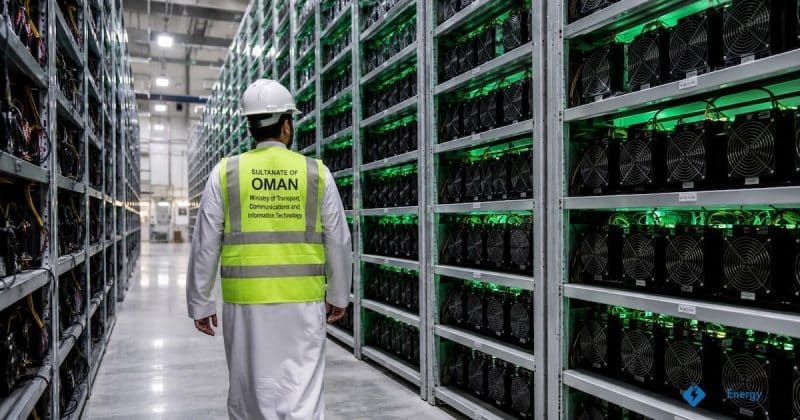
Oman just became the latest petrostate to go all-in on Bitcoin mining, but with a twist that would make most crypto libertarians deeply uncomfortable. The sultanate has launched Omanhash.om, a mandatory national mining pool that requires every licensed miner in the country to route their hashrate through a single, government-supervised operation.
The pool went live on June 17 under the oversight of Oman’s Ministry of Transport, Communications and Information Technology (MTCIT). It launched with an approximate hashrate of 10 exahashes per second, which would currently place it among the more significant pools globally.
How Omanhash actually works
The pool is managed locally by Frontier Technologies LLC, known as Frontech, with technological infrastructure and liquidity support provided by Enegix Global. Enegix previously helped Kazakhstan set up its own state-backed pool, btcpool.kz, making this something of a proven playbook for sovereign Bitcoin mining operations.
Enegix’s combined sovereign pool operations now total roughly 25 EH/s across multiple countries, with a stated target of scaling to 30 EH/s.
The structure gives Omani authorities direct visibility into mining metrics: hashrate contributions, revenue generation, and energy consumption, all flowing through a single chokepoint.
The news moving money, markets, and the world—before your day starts.
Daily. Free. Join 34,000+ readers across crypto, finance, and policy.
The $700 million bet on post-oil Bitcoin
Omanhash isn’t a standalone project. It’s one piece of a national mining infrastructure investment exceeding $700 million, all anchored to Oman Vision 2040, the country’s strategic plan to wean its economy off petroleum dependency.
Key projects within this investment include a 150 MW facility in Salalah that uses hydro-cooling technology. Licensed operators already active in the country include Exahertz and Green Data City, the latter operating in partnership with Alps Blockchain.
The Salalah facility alone represents a $370 million investment, accounting for more than half of the total national mining infrastructure spend.
What this means for the global mining landscape
For publicly traded mining companies and their investors, the trend raises questions about geographic diversification. Companies that operate or plan to operate in countries with state-backed pool mandates effectively lose the ability to pool-shop for better fee structures or payout terms, a competitive disadvantage compared to miners in jurisdictions like the US or Canada where pool selection remains voluntary.