
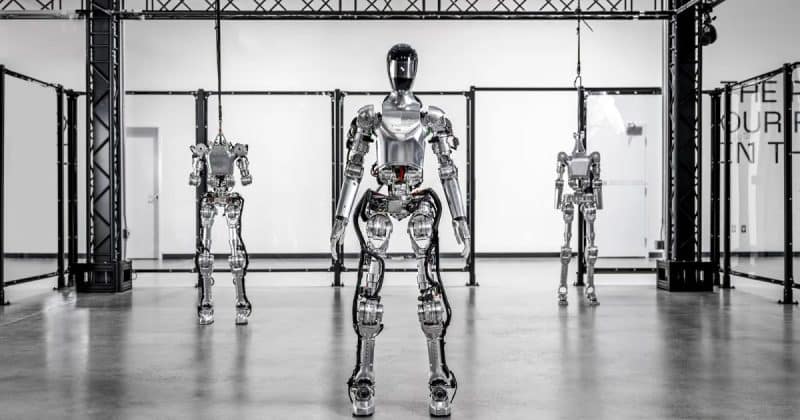
OpenAI Robotics ramps up hiring to build general-purpose robots
The AI giant is recruiting engineers across hardware and simulation roles in San Francisco, with base salaries up to $310K, as it pushes to bring its language models into the physical world.
OpenAI wants to build robots. Not the metaphorical kind that writes your emails and generates images of cats wearing top hats, but actual, physical machines that move through the real world and do useful things for society.
The company is actively hiring for its Robotics team in San Francisco, posting roles for Electrical Engineers, Simulation Environments Engineers, Actuator Design Engineers, and Control Systems Software Engineers. The positions are aimed at developing general-purpose robotic systems capable of operating with what OpenAI describes as AGI-level intelligence in dynamic, real-world settings.
From chatbots to actual bots
OpenAI ran a robotic hand project from 2017 to 2019 that used reinforcement learning to teach a mechanical hand to manipulate objects. That effort eventually wound down, and OpenAI pivoted hard into the language model business that made it a household name.
The multiple job postings represent a concerted effort to reinvigorate the robotics division. Some of the listed roles carry base salaries ranging from $210K to $310K, plus equity options.
AI, tech, and the markets they move—in one daily briefing.
Daily. Free. Join 34,000+ readers across crypto, finance, and policy.
A potential spinout adds intrigue
In early May 2026, reports emerged that OpenAI had been discussing a possible spinout of its robotics and consumer hardware divisions into a separate entity.
What this means for investors and the broader AI race
The competitive compensation being offered, with base salaries up to $310K before equity, signals an intensifying talent war in the embodied AI space. Companies like Google DeepMind, Tesla, and a growing number of well-funded startups are all chasing the same pool of engineers who understand both the software and hardware sides of robotics.
The specific roles being hired, particularly in simulation environments and control systems, suggest the company plans to train robots the same way it trained its language models: by running billions of simulated scenarios before deploying in the real world.