
Nexo Earn with Nexo
Orbital raises $5M to build 10,000 space data centers by 2028

Orbital raises $5M to build 10,000 space data centers by 2028

The former Spin founder wants to put AI inference compute in low Earth orbit, backed by a16z's Speedrun accelerator.


Orbital raised $5 million in pre-seed funding to build AI data centers in low Earth orbit, turning one of the more ambitious ideas in the compute boom into a venture backed company.

The round was led by a16z Speedrun, Andreessen Horowitz’s early stage accelerator. Orbital plans to use the capital to fund Orbital 1, its first test mission scheduled for 2027, and Factory 1, a research and development facility in Los Angeles.

The company was founded by Euwyn Poon, who previously co founded Spin, the scooter startup acquired by Ford in 2018. Poon is now trying to apply a similar distributed infrastructure logic to AI compute, replacing city streets with orbital hardware.

Advertisement

Orbital’s pitch is that terrestrial data centers are running into power and cooling limits just as demand for AI inference accelerates. In low Earth orbit, satellites can use solar energy and radiative cooling, potentially reducing two of the biggest constraints facing ground based data centers.

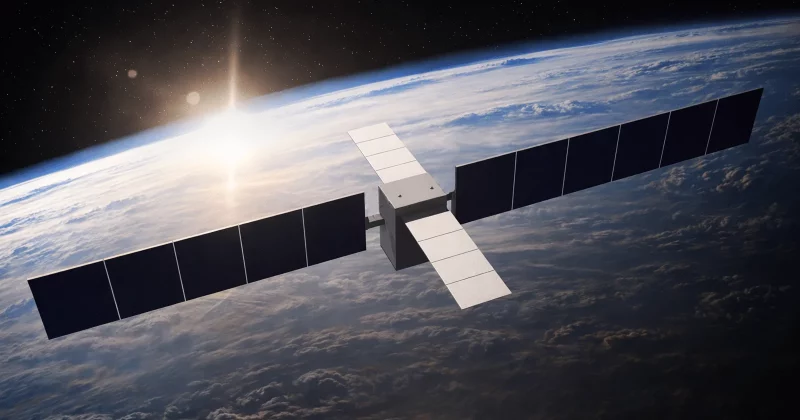
The roadmap is aggressive. Orbital wants to deploy as many as 10,000 satellites and deliver up to a gigawatt of inference compute by 2028. Its first satellite, Orbital 1, is expected to launch on a SpaceX Falcon 9 and test sustained GPU operations, radiation hardening, and commercial inference workloads in orbit.

The economic case still depends heavily on launch costs. Orbital’s long term plan assumes SpaceX’s Starship can make large scale deployment cheap enough for thousands of compute satellites to make financial sense.

That is the biggest risk. SpaceX needed years to scale Starlink into a multi thousand satellite network, and Orbital is starting with a far smaller balance sheet and a harder technical problem.

The company has not announced a token, blockchain integration, or crypto native partnership. For now, this is a space infrastructure and AI compute story, not a decentralized compute play.

For investors, the $5 million round is less important than the validation milestone. Orbital 1 will determine whether GPUs can operate reliably in orbit and whether space based inference can move from concept to commercial infrastructure.

The broader readthrough is that AI’s infrastructure race is pushing capital into stranger places. If power and cooling remain the bottlenecks on Earth, orbit becomes less of a sci fi idea and more of an expensive but increasingly serious alternative.

Disclosure: This article was edited by Editorial Team. For more information on how we create and review content, see our Editorial Policy.

Orbital raises $5M to build 10,000 space data centers by 2028

Orbital raises $5M to build 10,000 space data centers by 2028

The former Spin founder wants to put AI inference compute in low Earth orbit, backed by a16z's Speedrun accelerator.

Share

Add us on Google

Orbital raised $5 million in pre-seed funding to build AI data centers in low Earth orbit, turning one of the more ambitious ideas in the compute boom into a venture backed company.

The round was led by a16z Speedrun, Andreessen Horowitz’s early stage accelerator. Orbital plans to use the capital to fund Orbital 1, its first test mission scheduled for 2027, and Factory 1, a research and development facility in Los Angeles.

The company was founded by Euwyn Poon, who previously co founded Spin, the scooter startup acquired by Ford in 2018. Poon is now trying to apply a similar distributed infrastructure logic to AI compute, replacing city streets with orbital hardware.

Advertisement

Orbital’s pitch is that terrestrial data centers are running into power and cooling limits just as demand for AI inference accelerates. In low Earth orbit, satellites can use solar energy and radiative cooling, potentially reducing two of the biggest constraints facing ground based data centers.

The roadmap is aggressive. Orbital wants to deploy as many as 10,000 satellites and deliver up to a gigawatt of inference compute by 2028. Its first satellite, Orbital 1, is expected to launch on a SpaceX Falcon 9 and test sustained GPU operations, radiation hardening, and commercial inference workloads in orbit.

The economic case still depends heavily on launch costs. Orbital’s long term plan assumes SpaceX’s Starship can make large scale deployment cheap enough for thousands of compute satellites to make financial sense.

That is the biggest risk. SpaceX needed years to scale Starlink into a multi thousand satellite network, and Orbital is starting with a far smaller balance sheet and a harder technical problem.

The company has not announced a token, blockchain integration, or crypto native partnership. For now, this is a space infrastructure and AI compute story, not a decentralized compute play.

For investors, the $5 million round is less important than the validation milestone. Orbital 1 will determine whether GPUs can operate reliably in orbit and whether space based inference can move from concept to commercial infrastructure.

The broader readthrough is that AI’s infrastructure race is pushing capital into stranger places. If power and cooling remain the bottlenecks on Earth, orbit becomes less of a sci fi idea and more of an expensive but increasingly serious alternative.

Disclosure: This article was edited by Editorial Team. For more information on how we create and review content, see our Editorial Policy.