
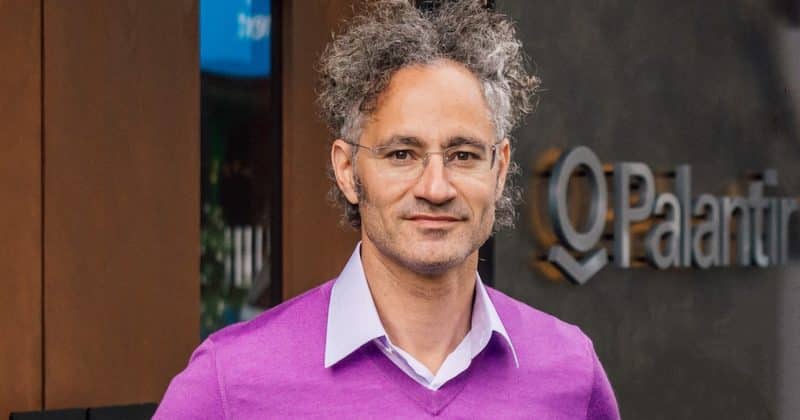
Palantir CEO Alex Karp criticizes AI sales models, warns of risks

Palantir CEO Alex Karp criticizes AI sales models, warns of risks

Karp calls token-based AI pricing 'effing insane' and warns enterprises are surrendering intellectual property for minimal value

Palantir CEO Alex Karp went on CNBC’s Squawk Box on July 1 and did something unusual for a tech executive: he openly torched the business model that most of the AI industry runs on.

His target was the token-based pricing structure used by companies like OpenAI and Anthropic, where enterprises pay per unit of AI computation. Karp’s assessment was blunt: “I’m not throwing shade at them, but something has gone completely wrong.”

The token model gets roasted

Karp’s argument is that enterprises are effectively handing over their most sensitive data to third-party AI providers and getting shortchanged in return. He characterized the enterprise mindset around these services with characteristic bluntness: “I’m going to chillax and waste my time with tokens, I’m gonna get no value, and they’re gonna get my IP.”

Advertisement

The Palantir CEO went further, calling certain aspects of the AI industry “effing insane,” zeroing in on what he sees as a dangerous dependence on Silicon Valley firms for military and national security applications.

Palantir’s counter-move with Nvidia

The interview coincided with Palantir’s announcement of a partnership with Nvidia, designed to provide US government agencies with secure AI capabilities where clients maintain full ownership and control of both their data and AI models.

Palantir has reported 85% revenue growth in recent quarters alongside operating margins of 46%. Those aren’t numbers you typically see from a company that’s been around since 2003. They suggest Palantir’s ontology-driven approach, which maps real-world entities and relationships rather than just processing text, is finding serious traction with enterprise and government clients.

Why crypto and Web3 investors should pay attention

The underlying dispute is about data sovereignty, ownership, and control. When Karp argues that enterprises are surrendering their IP to centralized AI providers, he’s making essentially the same argument that decentralized AI projects have been making for years.

The distinction matters, though. Crypto AI projects that use tokens for network coordination and incentive alignment are doing something fundamentally different from what Karp is criticizing. OpenAI charges tokens as a metered billing unit. Decentralized AI networks use tokens to align economic incentives among distributed participants. Same word, very different mechanics.

Disclosure: This article was edited by Editorial Team. For more information on how we create and review content, see our Editorial Policy.

Palantir CEO Alex Karp criticizes AI sales models, warns of risks

Palantir CEO Alex Karp criticizes AI sales models, warns of risks

Karp calls token-based AI pricing 'effing insane' and warns enterprises are surrendering intellectual property for minimal value

Palantir CEO Alex Karp went on CNBC’s Squawk Box on July 1 and did something unusual for a tech executive: he openly torched the business model that most of the AI industry runs on.

His target was the token-based pricing structure used by companies like OpenAI and Anthropic, where enterprises pay per unit of AI computation. Karp’s assessment was blunt: “I’m not throwing shade at them, but something has gone completely wrong.”

The token model gets roasted

Karp’s argument is that enterprises are effectively handing over their most sensitive data to third-party AI providers and getting shortchanged in return. He characterized the enterprise mindset around these services with characteristic bluntness: “I’m going to chillax and waste my time with tokens, I’m gonna get no value, and they’re gonna get my IP.”

Advertisement

The Palantir CEO went further, calling certain aspects of the AI industry “effing insane,” zeroing in on what he sees as a dangerous dependence on Silicon Valley firms for military and national security applications.

Palantir’s counter-move with Nvidia

The interview coincided with Palantir’s announcement of a partnership with Nvidia, designed to provide US government agencies with secure AI capabilities where clients maintain full ownership and control of both their data and AI models.

Palantir has reported 85% revenue growth in recent quarters alongside operating margins of 46%. Those aren’t numbers you typically see from a company that’s been around since 2003. They suggest Palantir’s ontology-driven approach, which maps real-world entities and relationships rather than just processing text, is finding serious traction with enterprise and government clients.

Why crypto and Web3 investors should pay attention

The underlying dispute is about data sovereignty, ownership, and control. When Karp argues that enterprises are surrendering their IP to centralized AI providers, he’s making essentially the same argument that decentralized AI projects have been making for years.

The distinction matters, though. Crypto AI projects that use tokens for network coordination and incentive alignment are doing something fundamentally different from what Karp is criticizing. OpenAI charges tokens as a metered billing unit. Decentralized AI networks use tokens to align economic incentives among distributed participants. Same word, very different mechanics.

Disclosure: This article was edited by Editorial Team. For more information on how we create and review content, see our Editorial Policy.