
Nexo Earn with Nexo
Phinergy partners with Google, Microsoft for clean backup power systems

Phinergy partners with Google, Microsoft for clean backup power systems

The Israeli clean energy company's aluminum-air generators could replace diesel backup power at data centers, and its stock has surged 180% on the news.

Every data center has a dirty little secret humming quietly out back: diesel generators. They exist for the worst-case scenario, kicking on when the grid fails to keep servers alive. Now an Israeli company called Phinergy wants to replace them with something that runs on aluminum and air, and it just locked in a partnership with two of the biggest names in tech to prove it works.

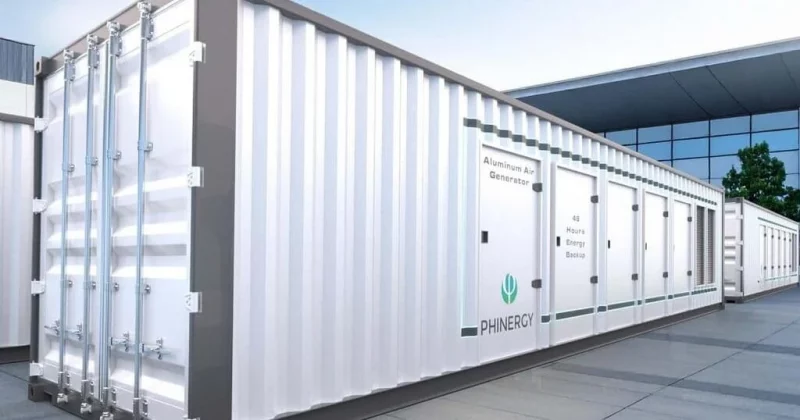
Phinergy’s Aluminum-Air Generator technology has been selected by the Net Zero Innovation Hub for Data Centers, a consortium that counts Google and Microsoft among its key stakeholders. The company was chosen from over 70 proposals, which gives you a sense of how competitive the race to clean up backup power has become.

How aluminum and oxygen replace diesel

The core technology is elegantly simple in concept. Phinergy’s AAG systems generate electricity through a chemical reaction between aluminum plates and oxygen pulled from the surrounding air. No combustion, no emissions, no fuel trucks rolling up to top off tanks.

In English: instead of burning fossil fuels during a power outage, these generators essentially consume aluminum. The byproduct is aluminum hydroxide, which can be recycled back into aluminum, creating something close to a circular system.

Advertisement

From pilot project to megawatt scale

This partnership did not materialize overnight. Phinergy previously secured a $1.5 million grant through the BIRD Energy program, a US-Israel collaboration, working alongside the New York Power Authority. That earlier project focused on developing a hybrid system combining aluminum-air technology with battery storage.

The current effort with the Net Zero Innovation Hub is more ambitious. A binding agreement has been formalized, and the project’s trajectory points toward scaling AAG systems to megawatt-level capabilities.

Phinergy CEO Emmanuel Levy has framed the consortium’s selection as validation of the company’s approach to clean energy backup power.

The US market entry strategy also took a concrete step forward in August 2025, when Phinergy entered a partnership with Rosendin, a major American electrical contractor. Rosendin’s role is to help integrate AAG systems into data center infrastructure across the US.

What this means for investors

The market’s reaction has been emphatic. Following the consortium announcement in July 2025, Phinergy’s stock surged approximately 180%, including a single-day jump of over 35%.

Tech companies have made binding net-zero commitments. Google has pledged to run on carbon-free energy around the clock. Microsoft has committed to being carbon negative.

The Rosendin partnership is worth watching closely as a leading indicator. If AAG installations begin appearing at US data centers in the next 12 to 18 months, it would signal that the technology has crossed from validation into commercial deployment.

Disclosure: This article was edited by Editorial Team. For more information on how we create and review content, see our Editorial Policy.

Phinergy partners with Google, Microsoft for clean backup power systems

Phinergy partners with Google, Microsoft for clean backup power systems

The Israeli clean energy company's aluminum-air generators could replace diesel backup power at data centers, and its stock has surged 180% on the news.

Every data center has a dirty little secret humming quietly out back: diesel generators. They exist for the worst-case scenario, kicking on when the grid fails to keep servers alive. Now an Israeli company called Phinergy wants to replace them with something that runs on aluminum and air, and it just locked in a partnership with two of the biggest names in tech to prove it works.

Phinergy’s Aluminum-Air Generator technology has been selected by the Net Zero Innovation Hub for Data Centers, a consortium that counts Google and Microsoft among its key stakeholders. The company was chosen from over 70 proposals, which gives you a sense of how competitive the race to clean up backup power has become.

How aluminum and oxygen replace diesel

The core technology is elegantly simple in concept. Phinergy’s AAG systems generate electricity through a chemical reaction between aluminum plates and oxygen pulled from the surrounding air. No combustion, no emissions, no fuel trucks rolling up to top off tanks.

In English: instead of burning fossil fuels during a power outage, these generators essentially consume aluminum. The byproduct is aluminum hydroxide, which can be recycled back into aluminum, creating something close to a circular system.

Advertisement

From pilot project to megawatt scale

This partnership did not materialize overnight. Phinergy previously secured a $1.5 million grant through the BIRD Energy program, a US-Israel collaboration, working alongside the New York Power Authority. That earlier project focused on developing a hybrid system combining aluminum-air technology with battery storage.

The current effort with the Net Zero Innovation Hub is more ambitious. A binding agreement has been formalized, and the project’s trajectory points toward scaling AAG systems to megawatt-level capabilities.

Phinergy CEO Emmanuel Levy has framed the consortium’s selection as validation of the company’s approach to clean energy backup power.

The US market entry strategy also took a concrete step forward in August 2025, when Phinergy entered a partnership with Rosendin, a major American electrical contractor. Rosendin’s role is to help integrate AAG systems into data center infrastructure across the US.

What this means for investors

The market’s reaction has been emphatic. Following the consortium announcement in July 2025, Phinergy’s stock surged approximately 180%, including a single-day jump of over 35%.

Tech companies have made binding net-zero commitments. Google has pledged to run on carbon-free energy around the clock. Microsoft has committed to being carbon negative.

The Rosendin partnership is worth watching closely as a leading indicator. If AAG installations begin appearing at US data centers in the next 12 to 18 months, it would signal that the technology has crossed from validation into commercial deployment.

Disclosure: This article was edited by Editorial Team. For more information on how we create and review content, see our Editorial Policy.