
Prime Intellect raises $130M Series A at $1B valuation, bridging decentralized AI and crypto-native capital

Prime Intellect raises $130M Series A at $1B valuation, bridging decentralized AI and crypto-native capital

The two-year-old startup building a peer-to-peer GPU compute marketplace has now raised over $150M, with early backing from CoinFund and Founders Fund

Prime Intellect, a San Francisco-based AI infrastructure startup, has closed a $130M Series A funding round led by Radical Ventures, putting the company’s valuation at $1B. For a company that’s barely two years old, that’s a remarkable trajectory, and one that sits squarely at the intersection of two narratives crypto investors care deeply about: decentralized compute and the AI arms race.

The round drew participation from NVIDIA Ventures, Intel Capital, and Dell Technologies Capital.

From crypto seed to billion-dollar valuation

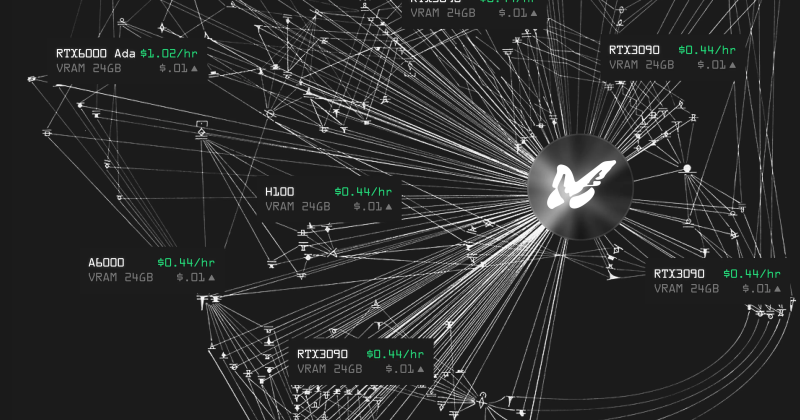
The company raised a $5.5M seed round in April 2024, co-led by CoinFund and Distributed Global, two firms with deep roots in the crypto ecosystem. Prime Intellect’s core architecture, a peer-to-peer GPU compute marketplace with distributed reinforcement learning infrastructure, reads like a DePIN project dressed in enterprise clothing.

Advertisement

Then came a $15M round in February 2025 led by Founders Fund, the Peter Thiel-backed venture firm. That round featured Andrej Karpathy, the former Tesla AI director and OpenAI co-founder, among its angel investors.

With this Series A, Prime Intellect’s total funding now exceeds $150M since its founding in 2023.

What Prime Intellect actually builds

The company’s platform enables training, evaluating, and deploying what it calls “agentic AI models” across distributed GPU resources. Instead of relying on a single massive data center, Prime Intellect lets users tap into GPU power spread across multiple locations globally.

Prime Intellect also emphasizes open-source model releases and tools for verifiable compute. Verifiable compute is the idea that you can cryptographically prove that a computation was performed correctly, a concept that underpins much of the DePIN and decentralized AI narrative.

The DePIN connection investors should watch

Despite having crypto-native investors in its cap table and building infrastructure that looks architecturally similar to decentralized physical infrastructure networks, Prime Intellect has not launched any token. No governance token, no utility token, no points program.

Projects like Filecoin, Akash Network, and io.net have pursued similar visions of decentralized compute marketplaces, but with token-based incentive models baked in from day one. Prime Intellect’s approach raises traditional venture capital while building decentralized infrastructure.

The participation of CoinFund and Distributed Global in the seed round keeps the door open, as both firms have extensive experience structuring investments that bridge traditional equity and token-based models.

Disclosure: This article was edited by Editorial Team. For more information on how we create and review content, see our Editorial Policy.

Prime Intellect raises $130M Series A at $1B valuation, bridging decentralized AI and crypto-native capital

Prime Intellect raises $130M Series A at $1B valuation, bridging decentralized AI and crypto-native capital

The two-year-old startup building a peer-to-peer GPU compute marketplace has now raised over $150M, with early backing from CoinFund and Founders Fund

Prime Intellect, a San Francisco-based AI infrastructure startup, has closed a $130M Series A funding round led by Radical Ventures, putting the company’s valuation at $1B. For a company that’s barely two years old, that’s a remarkable trajectory, and one that sits squarely at the intersection of two narratives crypto investors care deeply about: decentralized compute and the AI arms race.

The round drew participation from NVIDIA Ventures, Intel Capital, and Dell Technologies Capital.

From crypto seed to billion-dollar valuation

The company raised a $5.5M seed round in April 2024, co-led by CoinFund and Distributed Global, two firms with deep roots in the crypto ecosystem. Prime Intellect’s core architecture, a peer-to-peer GPU compute marketplace with distributed reinforcement learning infrastructure, reads like a DePIN project dressed in enterprise clothing.

Advertisement

Then came a $15M round in February 2025 led by Founders Fund, the Peter Thiel-backed venture firm. That round featured Andrej Karpathy, the former Tesla AI director and OpenAI co-founder, among its angel investors.

With this Series A, Prime Intellect’s total funding now exceeds $150M since its founding in 2023.

What Prime Intellect actually builds

The company’s platform enables training, evaluating, and deploying what it calls “agentic AI models” across distributed GPU resources. Instead of relying on a single massive data center, Prime Intellect lets users tap into GPU power spread across multiple locations globally.

Prime Intellect also emphasizes open-source model releases and tools for verifiable compute. Verifiable compute is the idea that you can cryptographically prove that a computation was performed correctly, a concept that underpins much of the DePIN and decentralized AI narrative.

The DePIN connection investors should watch

Despite having crypto-native investors in its cap table and building infrastructure that looks architecturally similar to decentralized physical infrastructure networks, Prime Intellect has not launched any token. No governance token, no utility token, no points program.

Projects like Filecoin, Akash Network, and io.net have pursued similar visions of decentralized compute marketplaces, but with token-based incentive models baked in from day one. Prime Intellect’s approach raises traditional venture capital while building decentralized infrastructure.

The participation of CoinFund and Distributed Global in the seed round keeps the door open, as both firms have extensive experience structuring investments that bridge traditional equity and token-based models.

Disclosure: This article was edited by Editorial Team. For more information on how we create and review content, see our Editorial Policy.