
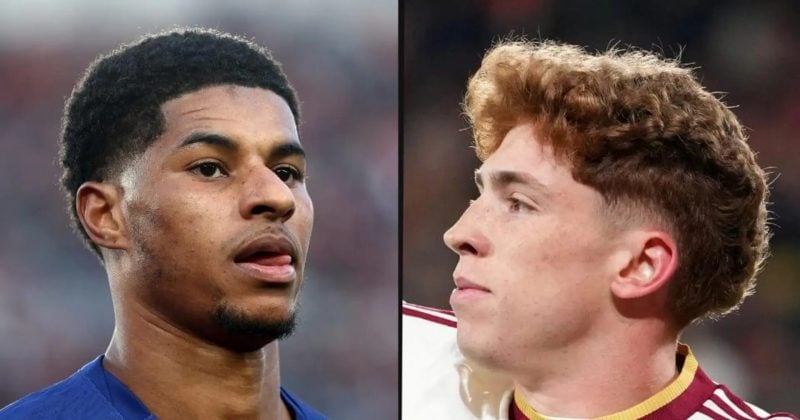
Marcus Rashford bids farewell to Barcelona on Instagram as loan spell ends

Via nytimes.com

Marcus Rashford bids farewell to Barcelona on Instagram as loan spell ends

The England forward's departure raises questions about whether fan tokens like BAR should be more responsive to major squad changes

Marcus Rashford has officially said goodbye to FC Barcelona, posting a farewell message on Instagram after the Catalan club declined to exercise the €30M purchase option attached to his season-long loan. The 28-year-old forward is heading back to Manchester United for the 2026/27 campaign, closing a chapter that saw him rack up 49 appearances and 14 goals in Blaugrana colors.

A productive loan, an uncashed check

Rashford’s time at the Camp Nou was, by most measures, a success. Fourteen goals across domestic and European competitions is a respectable haul for a loanee adapting to a new league. The decision not to activate the buy clause became public around mid-June 2026, and Rashford responded by removing “Barcelona” from his Instagram bio. His farewell message was gracious. He thanked the fans and the club, wished them well for the season ahead, and left his bio reflecting only his status as an England international.

Advertisement

The fan token that didn’t flinch

Barcelona has operated one of the most high-profile fan tokens in sports, the BAR token, launched on June 22, 2020, through the Chiliz and Socios.com platform. It was supposed to be the bridge between club decisions and fan engagement, giving holders voting rights on minor club matters and a sense of digital ownership in the Barcelona experience.

When one of the club’s most marketable players departed, the BAR token ecosystem barely registered the event. No governance vote on whether to keep Rashford. No token-gated farewell content. No spike in engagement tied to the transfer decision. A major squad change, the kind of event that actually matters to fans, passed through the token ecosystem with no meaningful token-layer activity.

What this means for the fan token market

Transfer windows are the most emotionally charged periods in football. Fan token platforms have largely failed to capture that energy. A player like Rashford saying goodbye to millions of followers on Instagram generates enormous engagement on a platform that gives Barcelona zero direct revenue. Meanwhile, the BAR token, Barcelona’s digital engagement layer, sat idle during the exact moment fans cared most.

There’s a version of this that works. Imagine token-gated farewell videos, exclusive behind-the-scenes content from a departing player’s last day, or governance polls on which squad number gets retired. These aren’t technically difficult. They’re just not being built. Until then, fan tokens remain a solution still searching for its problem, while the actual fan engagement happens on Instagram, where Rashford just said his goodbyes to Barcelona for free.

Disclosure: This article was edited by Editorial Team. For more information on how we create and review content, see our Editorial Policy.

Marcus Rashford bids farewell to Barcelona on Instagram as loan spell ends

Marcus Rashford bids farewell to Barcelona on Instagram as loan spell ends

The England forward's departure raises questions about whether fan tokens like BAR should be more responsive to major squad changes

Via nytimes.com

Marcus Rashford has officially said goodbye to FC Barcelona, posting a farewell message on Instagram after the Catalan club declined to exercise the €30M purchase option attached to his season-long loan. The 28-year-old forward is heading back to Manchester United for the 2026/27 campaign, closing a chapter that saw him rack up 49 appearances and 14 goals in Blaugrana colors.

A productive loan, an uncashed check

Rashford’s time at the Camp Nou was, by most measures, a success. Fourteen goals across domestic and European competitions is a respectable haul for a loanee adapting to a new league. The decision not to activate the buy clause became public around mid-June 2026, and Rashford responded by removing “Barcelona” from his Instagram bio. His farewell message was gracious. He thanked the fans and the club, wished them well for the season ahead, and left his bio reflecting only his status as an England international.

Advertisement

The fan token that didn’t flinch

Barcelona has operated one of the most high-profile fan tokens in sports, the BAR token, launched on June 22, 2020, through the Chiliz and Socios.com platform. It was supposed to be the bridge between club decisions and fan engagement, giving holders voting rights on minor club matters and a sense of digital ownership in the Barcelona experience.

When one of the club’s most marketable players departed, the BAR token ecosystem barely registered the event. No governance vote on whether to keep Rashford. No token-gated farewell content. No spike in engagement tied to the transfer decision. A major squad change, the kind of event that actually matters to fans, passed through the token ecosystem with no meaningful token-layer activity.

What this means for the fan token market

Transfer windows are the most emotionally charged periods in football. Fan token platforms have largely failed to capture that energy. A player like Rashford saying goodbye to millions of followers on Instagram generates enormous engagement on a platform that gives Barcelona zero direct revenue. Meanwhile, the BAR token, Barcelona’s digital engagement layer, sat idle during the exact moment fans cared most.

There’s a version of this that works. Imagine token-gated farewell videos, exclusive behind-the-scenes content from a departing player’s last day, or governance polls on which squad number gets retired. These aren’t technically difficult. They’re just not being built. Until then, fan tokens remain a solution still searching for its problem, while the actual fan engagement happens on Instagram, where Rashford just said his goodbyes to Barcelona for free.

Disclosure: This article was edited by Editorial Team. For more information on how we create and review content, see our Editorial Policy.