
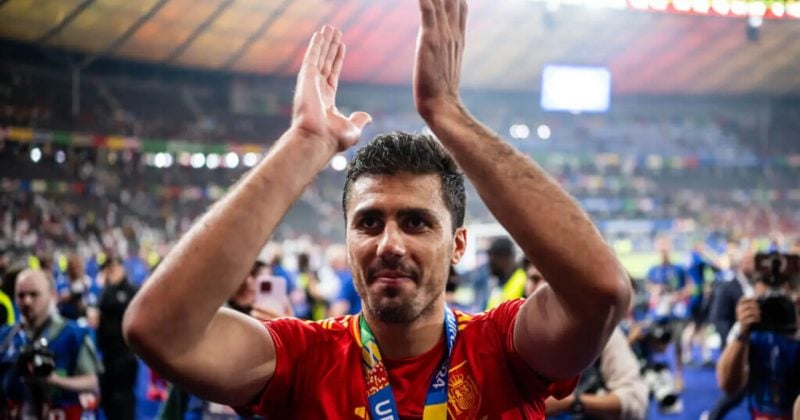
Rodri sets World Cup record with 62 line-breaking passes as crypto brands flood FIFA’s biggest tournament

Rodri sets World Cup record with 62 line-breaking passes as crypto brands flood FIFA’s biggest tournament

Spain's midfield maestro matches a record held since 2014 while Kraken and Chiliz turn the 2026 World Cup into crypto's biggest sports marketing stage yet

Rodri has completed 62 line-breaking passes in the final third at the 2026 FIFA World Cup, matching a benchmark that has stood since Toni Kroos did it for Germany in 2014. For a tournament that keeps expanding in every direction, from 48 teams to three host nations to an entire crypto exchange sponsorship tier, the Spanish midfielder’s statistical dominance is a fitting centerpiece.

What line-breaking passes actually mean

A line-breaking pass is one that bypasses an entire defensive line. When it happens in the final third, the attacking third of the pitch, it means the passer is dissecting defenses in the most dangerous zones.

Rodri doing this 62 times in a single World Cup puts him in elite company. The only player to previously hit that number was Toni Kroos, during Germany’s triumphant 2014 campaign in Brazil. The fact that Rodri has matched the figure underscores his role as Spain’s entire creative engine.

Advertisement

The biggest World Cup meets the biggest crypto push

The 2026 FIFA World Cup is the largest edition the tournament has ever seen, co-hosted by the United States, Canada, and Mexico. Kraken was named FIFA’s Official Crypto Exchange Supporter on June 9, 2026. Chiliz, the blockchain platform behind fan tokens for dozens of football clubs worldwide, is also active around the tournament, with fan tokens letting supporters vote on minor club decisions and access exclusive content.

No one has minted a “62 Line-Breaking Passes” NFT. There is no Rodri fan token. No trading pair has emerged on any exchange pegged to the Spaniard’s performance metrics. The disconnect between individual athletic achievement and crypto market movement remains as wide as ever.

Why the gap between sports stats and crypto markets persists

Kraken’s FIFA deal is about brand awareness, not about creating financial instruments tied to match outcomes. Chiliz fan tokens are engagement tools, not derivatives contracts. The infrastructure to connect a midfielder’s passing accuracy to a tradeable asset simply doesn’t exist in any meaningful, regulated way.

For Chiliz specifically, the question is whether fan token trading volume during this tournament exceeds previous benchmarks set during the 2022 World Cup in Qatar. That event saw significant spikes in fan token activity, particularly around knockout-stage matches.

Investors monitoring sports-adjacent crypto assets during the remainder of the 2026 World Cup should pay closer attention to aggregate engagement metrics and platform sign-up data from sponsors like Kraken than to any single player’s stat line.

Disclosure: This article was edited by Editorial Team. For more information on how we create and review content, see our Editorial Policy.

Rodri sets World Cup record with 62 line-breaking passes as crypto brands flood FIFA’s biggest tournament

Rodri sets World Cup record with 62 line-breaking passes as crypto brands flood FIFA’s biggest tournament

Spain's midfield maestro matches a record held since 2014 while Kraken and Chiliz turn the 2026 World Cup into crypto's biggest sports marketing stage yet

Rodri has completed 62 line-breaking passes in the final third at the 2026 FIFA World Cup, matching a benchmark that has stood since Toni Kroos did it for Germany in 2014. For a tournament that keeps expanding in every direction, from 48 teams to three host nations to an entire crypto exchange sponsorship tier, the Spanish midfielder’s statistical dominance is a fitting centerpiece.

What line-breaking passes actually mean

A line-breaking pass is one that bypasses an entire defensive line. When it happens in the final third, the attacking third of the pitch, it means the passer is dissecting defenses in the most dangerous zones.

Rodri doing this 62 times in a single World Cup puts him in elite company. The only player to previously hit that number was Toni Kroos, during Germany’s triumphant 2014 campaign in Brazil. The fact that Rodri has matched the figure underscores his role as Spain’s entire creative engine.

Advertisement

The biggest World Cup meets the biggest crypto push

The 2026 FIFA World Cup is the largest edition the tournament has ever seen, co-hosted by the United States, Canada, and Mexico. Kraken was named FIFA’s Official Crypto Exchange Supporter on June 9, 2026. Chiliz, the blockchain platform behind fan tokens for dozens of football clubs worldwide, is also active around the tournament, with fan tokens letting supporters vote on minor club decisions and access exclusive content.

No one has minted a “62 Line-Breaking Passes” NFT. There is no Rodri fan token. No trading pair has emerged on any exchange pegged to the Spaniard’s performance metrics. The disconnect between individual athletic achievement and crypto market movement remains as wide as ever.

Why the gap between sports stats and crypto markets persists

Kraken’s FIFA deal is about brand awareness, not about creating financial instruments tied to match outcomes. Chiliz fan tokens are engagement tools, not derivatives contracts. The infrastructure to connect a midfielder’s passing accuracy to a tradeable asset simply doesn’t exist in any meaningful, regulated way.

For Chiliz specifically, the question is whether fan token trading volume during this tournament exceeds previous benchmarks set during the 2022 World Cup in Qatar. That event saw significant spikes in fan token activity, particularly around knockout-stage matches.

Investors monitoring sports-adjacent crypto assets during the remainder of the 2026 World Cup should pay closer attention to aggregate engagement metrics and platform sign-up data from sponsors like Kraken than to any single player’s stat line.

Disclosure: This article was edited by Editorial Team. For more information on how we create and review content, see our Editorial Policy.