
Troy Rohrbaugh emerges as leading contender to succeed Jamie Dimon at JPMorgan

Troy Rohrbaugh emerges as leading contender to succeed Jamie Dimon at JPMorgan

JPMorgan elevates two co-presidents in a leadership shuffle that narrows the race to replace its legendary CEO

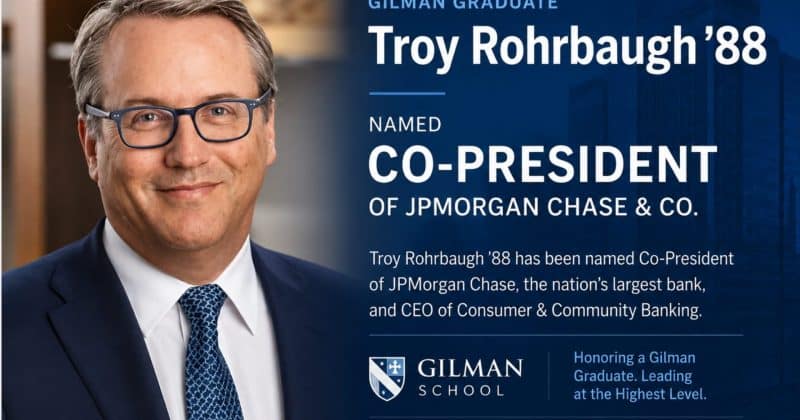
JPMorgan Chase just reshuffled its executive deck in a way that makes the bank’s succession picture considerably clearer. Troy Rohrbaugh and Doug Petno have been named co-presidents of the firm, with Rohrbaugh widely viewed as the frontrunner to eventually take the top job from Jamie Dimon.

The move, announced on June 25, places two of JPMorgan’s most seasoned operators at the very top of the org chart. It also narrows what was once a wider field of internal candidates, particularly after the retirement of Marianne Lake, who had long been considered a leading succession contender herself.

The new power structure

Rohrbaugh, 56, takes over as CEO of Consumer and Community Banking, the division Lake ran before announcing her departure after 25 years at the firm. Petno, 61, becomes sole CEO of the Commercial & Investment Bank.

Advertisement

Both men had been running the CIB together as co-heads since early 2024. Now they each get their own fiefdom, running JPMorgan’s two largest business segments independently.

The bank is also putting real money behind the transition. Both Rohrbaugh and Petno will receive retention bonuses of $30 million each.

Why Rohrbaugh is the one to watch

Both executives carry serious credentials, but the age gap tells part of the story. Rohrbaugh is 56. Petno is 61. If JPMorgan is planning a transition that unfolds over the next few years, the math favors the younger candidate for a longer runway as CEO.

Rohrbaugh’s move to Consumer and Community Banking is also worth noting. The CCB division is JPMorgan’s largest consumer-facing unit. Running it successfully means demonstrating an ability to manage the sprawling, operationally complex side of the business that touches millions of everyday customers. It’s the kind of role that rounds out a resume that was previously defined by institutional and investment banking expertise.

The Dimon question

Jamie Dimon has run JPMorgan Chase since 2005. Lake’s retirement, which removed one of the most prominent internal candidates, appears to have accelerated the clarity around who’s left standing.

What this means for investors and the crypto angle

For JPMorgan shareholders, the announcement is designed to project stability. Succession planning at a bank this size is not just an HR exercise. It’s a risk management event.

For crypto market observers, the leadership shuffle carries an interesting subtext. JPMorgan’s CIB division oversees the firm’s digital asset initiatives, including its blockchain-based payment infrastructure and tokenization efforts. The restructuring did not include any specific commentary on those programs. Rohrbaugh’s tenure co-running CIB means he’s been in the room where those digital asset decisions were made.

Disclosure: This article was edited by Editorial Team. For more information on how we create and review content, see our Editorial Policy.

Troy Rohrbaugh emerges as leading contender to succeed Jamie Dimon at JPMorgan

Troy Rohrbaugh emerges as leading contender to succeed Jamie Dimon at JPMorgan

JPMorgan elevates two co-presidents in a leadership shuffle that narrows the race to replace its legendary CEO

JPMorgan Chase just reshuffled its executive deck in a way that makes the bank’s succession picture considerably clearer. Troy Rohrbaugh and Doug Petno have been named co-presidents of the firm, with Rohrbaugh widely viewed as the frontrunner to eventually take the top job from Jamie Dimon.

The move, announced on June 25, places two of JPMorgan’s most seasoned operators at the very top of the org chart. It also narrows what was once a wider field of internal candidates, particularly after the retirement of Marianne Lake, who had long been considered a leading succession contender herself.

The new power structure

Rohrbaugh, 56, takes over as CEO of Consumer and Community Banking, the division Lake ran before announcing her departure after 25 years at the firm. Petno, 61, becomes sole CEO of the Commercial & Investment Bank.

Advertisement

Both men had been running the CIB together as co-heads since early 2024. Now they each get their own fiefdom, running JPMorgan’s two largest business segments independently.

The bank is also putting real money behind the transition. Both Rohrbaugh and Petno will receive retention bonuses of $30 million each.

Why Rohrbaugh is the one to watch

Both executives carry serious credentials, but the age gap tells part of the story. Rohrbaugh is 56. Petno is 61. If JPMorgan is planning a transition that unfolds over the next few years, the math favors the younger candidate for a longer runway as CEO.

Rohrbaugh’s move to Consumer and Community Banking is also worth noting. The CCB division is JPMorgan’s largest consumer-facing unit. Running it successfully means demonstrating an ability to manage the sprawling, operationally complex side of the business that touches millions of everyday customers. It’s the kind of role that rounds out a resume that was previously defined by institutional and investment banking expertise.

The Dimon question

Jamie Dimon has run JPMorgan Chase since 2005. Lake’s retirement, which removed one of the most prominent internal candidates, appears to have accelerated the clarity around who’s left standing.

What this means for investors and the crypto angle

For JPMorgan shareholders, the announcement is designed to project stability. Succession planning at a bank this size is not just an HR exercise. It’s a risk management event.

For crypto market observers, the leadership shuffle carries an interesting subtext. JPMorgan’s CIB division oversees the firm’s digital asset initiatives, including its blockchain-based payment infrastructure and tokenization efforts. The restructuring did not include any specific commentary on those programs. Rohrbaugh’s tenure co-running CIB means he’s been in the room where those digital asset decisions were made.

Disclosure: This article was edited by Editorial Team. For more information on how we create and review content, see our Editorial Policy.