
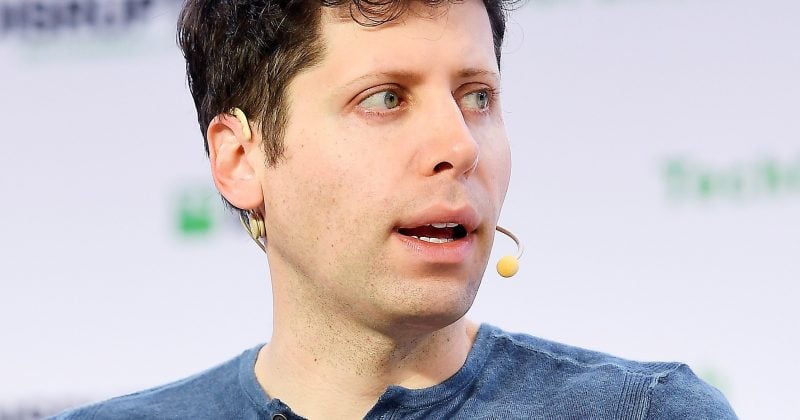
Sam Altman’s CNBC interview arrives as OpenAI eyes public markets and WLD traders watch closely

Sam Altman’s CNBC interview arrives as OpenAI eyes public markets and WLD traders watch closely

OpenAI's confidential S-1 filing sets the stage for a closely watched television appearance that could move more than one market.

Sam Altman is scheduled to sit down with CNBC’s Julia Boorstin on July 9 at 10 a.m. ET, and the timing is not accidental. OpenAI has already submitted a confidential S-1 registration statement to the SEC, which is the document companies file when they’re seriously thinking about going public.

For crypto traders, the interview carries a second layer of interest. Altman is also the co-founder of Worldcoin, the project behind the WLD token, and markets have developed a habit of treating WLD as a rough proxy for Altman-related news flow. When OpenAI’s S-1 news broke, WLD jumped more than 7%, reaching just over $0.50 and adding roughly $101 million to its market capitalization in a single session on June 9.

What the S-1 means and why traders are paying attention

A confidential S-1 filing is the first formal step in the IPO process. In plain English: OpenAI told the SEC it wants to go public, but it isn’t ready to show the world its financials yet. Companies file confidentially to test the process before committing to a public timeline.

Advertisement

For a company that has operated as a nonprofit-turned-capped-profit structure, the path to public markets is more complicated than a typical tech IPO, which makes Altman’s CNBC appearance a natural venue to address investor questions before a formal roadshow.

The supply side: WLD’s token unlock schedule is about to change

Separate from the interview itself, WLD holders have a structural catalyst approaching. Starting July 24, the daily token unlock rate will decrease by 43%, dropping from 5.1 million tokens per day to 2.9 million.

Token unlocks matter because they represent scheduled selling pressure. When a project releases tokens on a fixed schedule, recipients, often early investors or team members, can sell into the market. A lower unlock rate means less of that scheduled supply arriving daily, which, if demand holds steady or grows, can push prices higher simply through the mechanics of supply and demand.

WLD’s move to just over $0.50 following the S-1 announcement suggests some of that anticipation is already baked in.

Altman’s broader Washington footprint adds another dimension

In early June, Altman met with lawmakers and expressed support for a Trump administration executive order on AI safety. That kind of policy engagement matters for a company preparing to go public, because regulatory clarity, or the lack of it, directly affects how institutional investors will value an AI company in its S-1 prospectus.

Altman’s active engagement with Washington suggests OpenAI is trying to shape the regulatory conversation before the IPO, not react to it afterward. The stakes are higher when the company’s co-founder also controls a crypto project with a live, tradeable token.

What investors in both equities and crypto should watch for in the interview is whether Altman provides any forward guidance on the IPO timeline, comments on OpenAI’s revenue trajectory, or addresses the structural complexities of taking a capped-profit entity public.

Disclosure: This article was edited by Editorial Team. For more information on how we create and review content, see our Editorial Policy.

Sam Altman’s CNBC interview arrives as OpenAI eyes public markets and WLD traders watch closely

Sam Altman’s CNBC interview arrives as OpenAI eyes public markets and WLD traders watch closely

OpenAI's confidential S-1 filing sets the stage for a closely watched television appearance that could move more than one market.

Sam Altman is scheduled to sit down with CNBC’s Julia Boorstin on July 9 at 10 a.m. ET, and the timing is not accidental. OpenAI has already submitted a confidential S-1 registration statement to the SEC, which is the document companies file when they’re seriously thinking about going public.

For crypto traders, the interview carries a second layer of interest. Altman is also the co-founder of Worldcoin, the project behind the WLD token, and markets have developed a habit of treating WLD as a rough proxy for Altman-related news flow. When OpenAI’s S-1 news broke, WLD jumped more than 7%, reaching just over $0.50 and adding roughly $101 million to its market capitalization in a single session on June 9.

What the S-1 means and why traders are paying attention

A confidential S-1 filing is the first formal step in the IPO process. In plain English: OpenAI told the SEC it wants to go public, but it isn’t ready to show the world its financials yet. Companies file confidentially to test the process before committing to a public timeline.

Advertisement

For a company that has operated as a nonprofit-turned-capped-profit structure, the path to public markets is more complicated than a typical tech IPO, which makes Altman’s CNBC appearance a natural venue to address investor questions before a formal roadshow.

The supply side: WLD’s token unlock schedule is about to change

Separate from the interview itself, WLD holders have a structural catalyst approaching. Starting July 24, the daily token unlock rate will decrease by 43%, dropping from 5.1 million tokens per day to 2.9 million.

Token unlocks matter because they represent scheduled selling pressure. When a project releases tokens on a fixed schedule, recipients, often early investors or team members, can sell into the market. A lower unlock rate means less of that scheduled supply arriving daily, which, if demand holds steady or grows, can push prices higher simply through the mechanics of supply and demand.

WLD’s move to just over $0.50 following the S-1 announcement suggests some of that anticipation is already baked in.

Altman’s broader Washington footprint adds another dimension

In early June, Altman met with lawmakers and expressed support for a Trump administration executive order on AI safety. That kind of policy engagement matters for a company preparing to go public, because regulatory clarity, or the lack of it, directly affects how institutional investors will value an AI company in its S-1 prospectus.

Altman’s active engagement with Washington suggests OpenAI is trying to shape the regulatory conversation before the IPO, not react to it afterward. The stakes are higher when the company’s co-founder also controls a crypto project with a live, tradeable token.

What investors in both equities and crypto should watch for in the interview is whether Altman provides any forward guidance on the IPO timeline, comments on OpenAI’s revenue trajectory, or addresses the structural complexities of taking a capped-profit entity public.

Disclosure: This article was edited by Editorial Team. For more information on how we create and review content, see our Editorial Policy.