
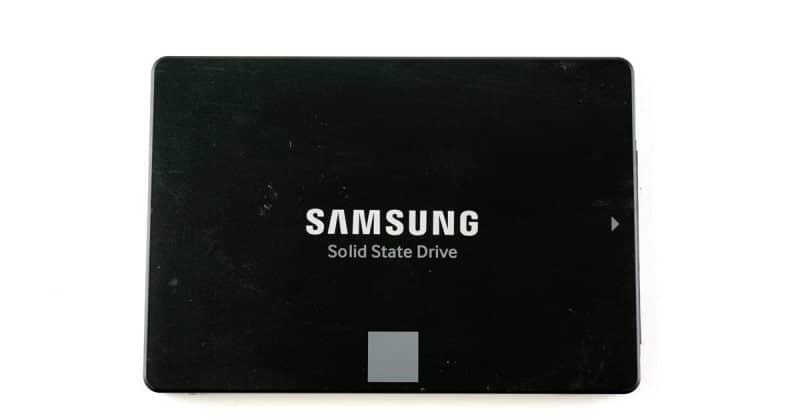
Samsung begins mass production of advanced storage drive for Nvidia’s Vera Rubin platform
The tech giant's PCIe 6.0 SSDs with up to 64TB capacity are designed to handle the enormous data demands of next-generation AI infrastructure
Samsung has kicked off mass production of its most advanced data center storage drives, built specifically for Nvidia’s Vera Rubin AI platform.
The Vera Rubin platform, which entered full-scale production on June 1, 2026, represents Nvidia’s next leap in AI compute. Initial shipments are expected to begin in Q3 2026. And Samsung just locked in a front-row seat as a critical supplier.
What Samsung is actually building
The star of the show is Samsung’s PM1763 SSD, a PCIe 6.0 drive that supports capacities up to 64TB. It uses 9th-generation TLC NAND and runs on a 4nm controller.
Samsung is also producing the PM1753 variant, which integrates with Nvidia’s BlueField-4 STX reference architecture. That architecture is purpose-built to optimize accelerated storage infrastructure for what the industry calls “agentic AI workloads,” particularly knowledge vector cache management.
Beyond SSDs, Samsung confirmed it has hit an industry-first milestone: mass production of SOCAMM2 memory modules. The company also began mass production of HBM4 memory back in February 2026, with designs specifically tailored for the Vera Rubin project. Samsung isn’t just supplying one component here. It’s embedded across multiple layers of Nvidia’s next-generation stack.
The Vera Rubin platform and why it matters
Nvidia’s Vera Rubin platform bundles together Rubin GPUs, Vera CPUs, and associated storage and memory systems into a unified architecture.
AI, tech, and the markets they move—in one daily briefing.
Daily. Free. Join 34,000+ readers across crypto, finance, and policy.
These systems are projected to consume millions of terabytes of storage. That projected consumption has analysts watching for a potential NAND supply shock. When demand spikes that dramatically across a concentrated set of buyers, it tends to ripple through the entire supply chain.
Nvidia confirmed the June 1 production start date, with the platform moving from development to full-scale manufacturing. The Q3 2026 delivery timeline means hyperscalers and enterprise customers could begin deploying Vera Rubin systems before the end of this year.
The competitive landscape is getting lopsided
Samsung and Micron are positioned as the two leaders supplying PCIe Gen6 SSD solutions for platforms like Vera Rubin. SK Hynix has yet to enter volume enterprise SSD supply for the Vera Rubin ecosystem.
The collaboration between Samsung and Nvidia extends beyond raw performance. Energy efficiency is a core design priority, and Samsung’s drives are engineered to deliver high throughput while keeping power draw manageable.
What this means for investors
Samsung is now a confirmed mass-production supplier across SSDs, SOCAMM2 memory modules, and HBM4 for Nvidia’s flagship platform. Micron stands to benefit similarly as the other leading PCIe Gen6 SSD supplier.
The NAND supply chain question is significant. Millions of terabytes of projected consumption from Vera Rubin systems alone could tighten NAND supply globally, meaning higher prices for enterprise-grade flash memory.
The risk to watch is execution. Samsung needs to deliver at scale without yield issues, and Nvidia needs Vera Rubin adoption to match the hype. SK Hynix also shouldn’t be counted out entirely, and a late entry into PCIe Gen6 enterprise SSDs could disrupt the Samsung-Micron duopoly.