
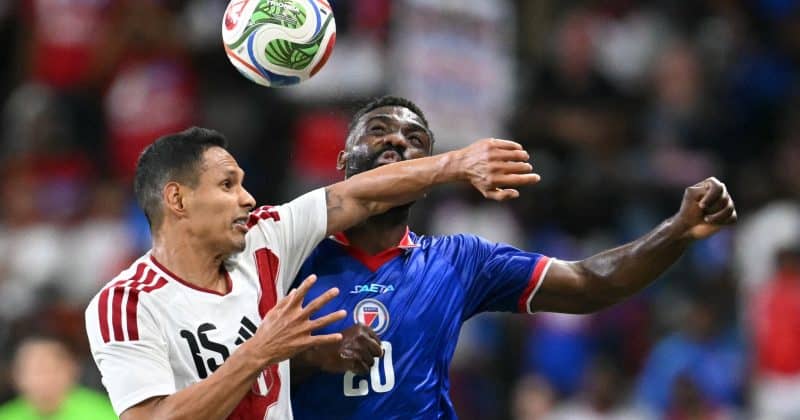
Scotland faces pressure from Haiti ahead of World Cup opener
Haiti's 4-0 demolition of New Zealand sends a clear message to Scotland as both nations prepare for their Group C clash at the 2026 FIFA World Cup
Scotland hasn’t played a World Cup match since 1998. That’s 28 years of watching from the couch.
Now, as Steve Clarke’s side prepares for their long-awaited return to the biggest stage in international football, their opening opponents are doing everything possible to make sure the homecoming party gets crashed. Haiti thumped New Zealand 4-0 in a recent friendly, and if Scotland weren’t already taking their Group C rivals seriously, that scoreline should have recalibrated things quickly.
The match that matters most
Scotland’s World Cup opener against Haiti is set for June 13 at Gillette Stadium in the Boston area, with kickoff at 21:00 local time.
Haiti, ranked approximately 82nd in the FIFA world rankings, are not a side most casual fans would circle as a danger. A four-goal dismantling of New Zealand suggests Haiti have found a gear that their ranking doesn’t reflect.
Clarke has reportedly used Haiti’s result against New Zealand as a teaching moment, reminding his squad that underestimating any opponent at a World Cup is the fastest route to an early flight home.
The Group C draw puts Scotland alongside Brazil and Morocco after the Haiti match. Dropping points to Haiti would leave Clarke’s men needing results against two of the most talented squads in world football.
Scotland’s preparation and the 28-year wait
The Scottish squad has set up camp in North Carolina for their pre-tournament preparations. The choice of a US-based training location makes logistical sense given that the 2026 World Cup is being co-hosted by the United States, Canada, and Mexico, with Scotland’s group stage matches taking place on American soil.
Clarke faces selection decisions about how much to commit in the opener versus the Brazil and Morocco fixtures that follow.
Scotland’s last World Cup appearance came at France 1998. The team lost to Brazil in the opener, drew with Norway, and lost to Morocco, exiting at the group stage. Morocco and Brazil are once again in their group.
Haiti’s moment and the diaspora effect
For Haiti, this World Cup represents something that extends well beyond football. The Haitian government has mobilized in support of the national team, and there’s been a concerted effort to rally the global Haitian diaspora behind the squad’s campaign.
The United States is home to one of the largest Haitian communities outside of Haiti itself, with major population centers in cities like Miami, New York, and the greater Boston area. Playing a World Cup match at Gillette Stadium, within driving distance of a sizable Haitian-American community, means Haiti could effectively have something close to a home crowd advantage.
The expanded format of the 2026 World Cup features 48 teams for the first time, which is part of what has opened the door for nations like Haiti to compete.
What this means for Scotland’s campaign
A victory on June 13 would give Clarke’s side the breathing room to approach the Brazil and Morocco matches with some tactical flexibility. A loss or a draw would turn those subsequent fixtures into must-win affairs.
Haiti’s 4-0 result against New Zealand, combined with the confidence of national and diaspora support, makes the opener a genuinely tricky proposition for Scotland, who carry the expectations of 28 years of absence.