
Nexo Earn with Nexo
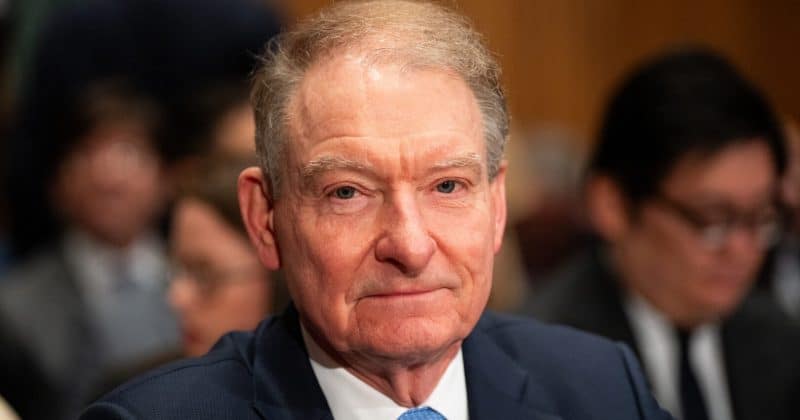
SEC Chairman Paul Atkins emphasizes agency’s impartial role in crypto regulation

SEC Chairman Paul Atkins emphasizes agency’s impartial role in crypto regulation

The SEC chief used his one-year anniversary to double down on the message that the agency enforces rules, not picks favorites

Paul Atkins wants you to know the SEC isn’t in the business of choosing winners and losers. The agency’s chairman, marking roughly one year since taking the helm, used a CNBC Squawk Box appearance to declare “a new day at the SEC,” a phrase that doubles as both a mission statement and a not-so-subtle jab at his predecessor’s approach.

From enforcement hammer to regulatory partner

Atkins was sworn in as the 34th SEC Chairman on April 21, 2025, after being nominated by President Trump. His first year has been defined by a systematic dismantling of the enforcement-first posture that characterized the Gensler era.

The centerpiece initiative is “Project Crypto,” launched on July 31, 2025. The program’s core assertion is one that would have been unthinkable from the prior administration: most crypto assets are not securities.

Advertisement

Project Crypto introduced token taxonomies, essentially a classification system that distinguishes between different types of digital assets based on their actual characteristics rather than applying a blanket “it’s probably a security” approach. The initiative also includes safe harbor proposals for startups, giving early-stage projects room to develop without immediate threat of enforcement action.

The CFTC collaboration and regulatory clarity push

By March 2026, Atkins had issued interpretive guidance in collaboration with the Commodity Futures Trading Commission to define what actually constitutes a crypto asset security.

Atkins has advocated for what the agency describes as a “technology-neutral” stance: enforce existing rules regardless of whether the asset lives on a blockchain or a spreadsheet, but don’t create new regulatory burdens simply because the technology is unfamiliar.

The SEC also reduced its workforce in certain offices by June 2025, signaling a strategic pivot in resource allocation away from enforcement divisions focused on crypto litigation toward rulemaking and guidance.

What this means for investors

The safe harbor proposals deserve close attention from anyone watching early-stage crypto investing. If startups can operate under defined regulatory protections during their initial development phase, the pipeline of new projects launching in the US rather than offshore should expand.

During his CNBC appearance, Atkins reiterated the SEC’s commitment to transparency and impartiality. The message is consistent with what he’s been saying since day one: the SEC enforces rules, it doesn’t pick which technologies or business models deserve to exist.

Disclosure: This article was edited by Editorial Team. For more information on how we create and review content, see our Editorial Policy.

SEC Chairman Paul Atkins emphasizes agency’s impartial role in crypto regulation

SEC Chairman Paul Atkins emphasizes agency’s impartial role in crypto regulation

The SEC chief used his one-year anniversary to double down on the message that the agency enforces rules, not picks favorites

Paul Atkins wants you to know the SEC isn’t in the business of choosing winners and losers. The agency’s chairman, marking roughly one year since taking the helm, used a CNBC Squawk Box appearance to declare “a new day at the SEC,” a phrase that doubles as both a mission statement and a not-so-subtle jab at his predecessor’s approach.

From enforcement hammer to regulatory partner

Atkins was sworn in as the 34th SEC Chairman on April 21, 2025, after being nominated by President Trump. His first year has been defined by a systematic dismantling of the enforcement-first posture that characterized the Gensler era.

The centerpiece initiative is “Project Crypto,” launched on July 31, 2025. The program’s core assertion is one that would have been unthinkable from the prior administration: most crypto assets are not securities.

Advertisement

Project Crypto introduced token taxonomies, essentially a classification system that distinguishes between different types of digital assets based on their actual characteristics rather than applying a blanket “it’s probably a security” approach. The initiative also includes safe harbor proposals for startups, giving early-stage projects room to develop without immediate threat of enforcement action.

The CFTC collaboration and regulatory clarity push

By March 2026, Atkins had issued interpretive guidance in collaboration with the Commodity Futures Trading Commission to define what actually constitutes a crypto asset security.

Atkins has advocated for what the agency describes as a “technology-neutral” stance: enforce existing rules regardless of whether the asset lives on a blockchain or a spreadsheet, but don’t create new regulatory burdens simply because the technology is unfamiliar.

The SEC also reduced its workforce in certain offices by June 2025, signaling a strategic pivot in resource allocation away from enforcement divisions focused on crypto litigation toward rulemaking and guidance.

What this means for investors

The safe harbor proposals deserve close attention from anyone watching early-stage crypto investing. If startups can operate under defined regulatory protections during their initial development phase, the pipeline of new projects launching in the US rather than offshore should expand.

During his CNBC appearance, Atkins reiterated the SEC’s commitment to transparency and impartiality. The message is consistent with what he’s been saying since day one: the SEC enforces rules, it doesn’t pick which technologies or business models deserve to exist.

Disclosure: This article was edited by Editorial Team. For more information on how we create and review content, see our Editorial Policy.