
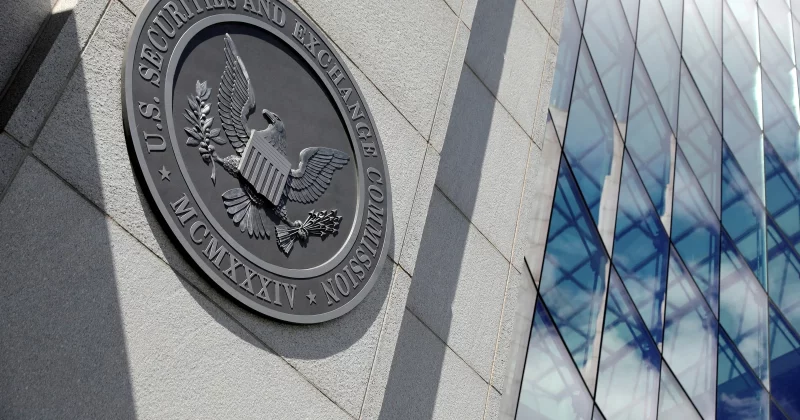
SEC moves to scrap Biden-era rule on climate risk disclosures
The agency's proposed rescission of its 2024 climate reporting mandate marks a sharp U-turn on ESG regulation under Chair Paul Atkins.
The SEC wants to kill the climate disclosure rules it adopted just two years ago. On May 4, the agency submitted a proposed rulemaking titled “Rescission of Climate-Related Disclosure Rules” to the White House Office of Information and Regulatory Affairs for review, setting the stage for a formal unwinding of what was the federal government’s first major attempt at regulating climate-related corporate reporting.
The rules, adopted on March 6, 2024, under former Chair Gary Gensler, would have required public companies to disclose climate-related risks, transition plans, Scope 1 and Scope 2 greenhouse gas emissions, and related financial impacts. They never actually took effect. Legal challenges landed almost immediately, and the rules were stayed in April 2024. Now, under Chair Paul Atkins, the SEC is making it official: the whole thing is getting tossed.
From defense to surrender in 14 months
Here’s the timeline that tells the story. The original rules were adopted in March 2024. They were challenged in court and stayed within weeks. Then, on March 27, 2025, the SEC voted to stop defending the rules in court entirely.
By May 7, 2026, an SEC spokesperson confirmed that staff had been directed to prepare formal recommendations for the rescission under Atkins’ leadership. The focus, according to the agency, is shifting back to disclosures that are “material to investors,” which is SEC-speak for: we’re going back to the traditional standard where companies only have to report things that would influence a reasonable investor’s decision.
What the original rules actually required
The 2024 rules represented the most ambitious federal attempt to standardize how companies talk about climate risk. They covered several major categories.
First, companies would have had to disclose the climate-related risks they face and how those risks might affect their business strategy, financial condition, and operations. Think physical risks like flooding or extreme heat, and transition risks like shifts in energy policy or consumer preferences.
The crypto and markets news you actually need—every morning.
Daily. Free. Join 34,000+ readers across crypto, finance, and policy.
Second, companies would have needed to outline their governance processes for overseeing climate-related strategy. Boards would have had to explain how they monitor and manage these risks.
Third, and most controversially, the rules mandated disclosure of Scope 1 emissions (direct emissions from company-owned sources) and Scope 2 emissions (indirect emissions from purchased energy). Scope 3 emissions, which cover a company’s entire value chain, were ultimately excluded from the final rule after intense lobbying.
Fourth, companies would have had to provide select financial metrics showing how climate-related events affected their balance sheets. This meant quantifying the actual dollar impact of severe weather events, carbon pricing, or transition costs.
The patchwork problem
California has already enacted its own climate disclosure laws, and the European Union’s Corporate Sustainability Reporting Directive imposes requirements on companies operating in EU markets regardless of where they’re headquartered. Several other states have been exploring similar legislation.
So the practical effect of the SEC’s rescission may not be that companies stop reporting climate data altogether. Instead, they’ll face a patchwork of state-level and international requirements with different standards, different timelines, and different definitions of what counts.
What this means for investors
For companies, the immediate effect is clear: reduced compliance costs and more flexibility in how they communicate climate-related information. Firms that were gearing up for the original rules’ reporting requirements can stand down, at least at the federal level.
The broader risk for markets is information asymmetry. When some companies disclose and others don’t, and when disclosure standards vary by jurisdiction, investors lose the ability to make apples-to-apples comparisons. That’s exactly the problem the 2024 rules were designed to solve.