
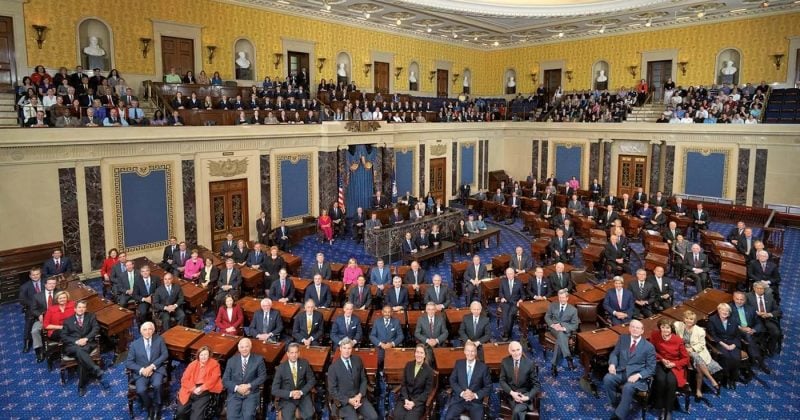
Senate quartet announces breakthrough on sanctions against Russia
A bipartisan group of four senators reached a deal with the Trump administration to advance sweeping secondary sanctions targeting countries that buy Russian energy.
Four U.S. senators walked into a room with competing political priorities and walked out with something Washington rarely produces: an agreement. On July 10, a bipartisan coalition announced a breakthrough on legislation designed to dramatically expand sanctions pressure on Russia, including the threat of tariffs as high as 500% on any country that continues buying Russian oil, gas, or uranium.
The deal involves Senators Lindsey Graham (R-SC), Roger Wicker (R-MS), Richard Blumenthal (D-CT), and Jeanne Shaheen (D-NH), and it comes with the backing of the Trump administration. That last part is significant. Previous bipartisan efforts to tighten the screws on Moscow had stalled partly because of friction with the White House over its own diplomatic negotiations with Russia.
What the bill actually does
The legislation in question is the Sanctioning Russia Act of 2025, introduced as Senate Bill 1241 on April 1, 2025. It already has over 80 Senate co-sponsors, which is a remarkable number for any piece of legislation, let alone one navigating the minefield of U.S.-Russia relations.
The bill would give the president authority to impose blocking sanctions, the financial equivalent of locking someone out of the global banking system. It also enables secondary sanctions: countries that keep buying Russian energy could face tariffs of up to 500% on their goods entering the United States if Russia fails to comply with peace negotiations or violates any treaty obligations.
Why this moment matters
The Sanctioning Russia Act gained its initial momentum following Russia’s invasion of Ukraine, with bipartisan support intensifying through a series of lobbying efforts at recent NATO summits. The announcement on July 10 signals that the administration is ready to use economic coercion as a complement to, or substitute for, direct military assistance.
Macro, rates, and crypto—what moved markets and what matters next.
Daily. Free. Join 34,000+ readers across crypto, finance, and policy.
Russia remains one of the world’s largest exporters of crude oil, natural gas, and uranium. Countries across Asia and parts of Europe have continued purchasing Russian energy at discounted prices since the 2022 invasion, effectively subsidizing Moscow’s war chest. If the threat of secondary tariffs becomes credible and enforceable, some of those buyers will need to recalculate their procurement strategies.
What this means for crypto and financial markets
This legislation does not include any measures targeting digital assets. That is a departure from the early days of the Ukraine conflict, when 2022-era proposals floated the idea of using crypto regulations as part of the sanctions toolkit, on the theory that Russia could use Bitcoin or stablecoins to route money around traditional banking restrictions.
The bill still needs to clear the full Senate floor and the House before reaching the president’s desk. Eighty co-sponsors is a strong foundation, but the Trump administration’s stated support changes that calculus meaningfully, and the bipartisan framing makes it harder for either party to use the bill as a political football heading into the next electoral cycle.