
Singaporean prosecutors expand charges in AI server fraud case tied to Nvidia chip export controls
Four individuals and four companies face fraud and money laundering charges over servers allegedly funneled through Singapore to circumvent US export restrictions
Singapore just got a lot less comfortable for anyone trying to play fast and loose with AI chip export rules. Prosecutors have expanded charges against four individuals and four companies accused of misrepresenting the end-users of high-performance servers containing Nvidia AI chips, allegedly routing them through the city-state to skirt US export controls.
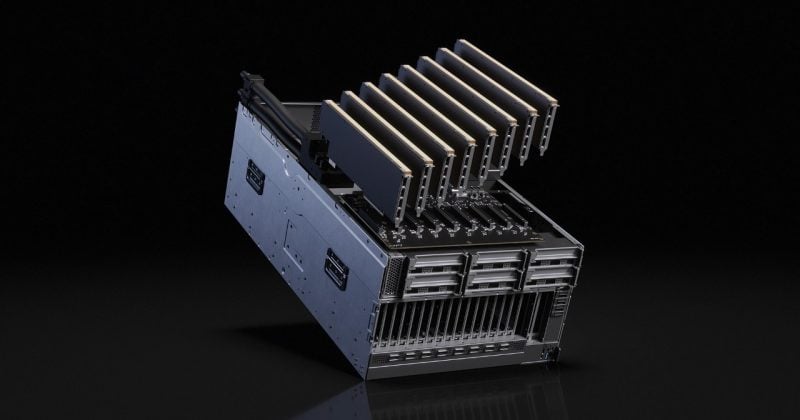
The case, which involves servers purchased from Dell, Super Micro Computer, and Asus, reads like a textbook example of the kind of sanctions evasion Washington has been warning about for years.
What happened
Singaporean authorities filed additional charges on July 1 against four individuals: Alan Wei Zhaolun, 50; Aaron Woon Guo Jie, 41; Jenny Lim, 51; and Li Ming, 52. All four face multiple counts of fraud and money laundering, with proceedings scheduled to continue on July 6.
Four companies connected to the Aperia Group were also charged with fraud by false representation. Those entities, Aperia International, A-Speed Infotech, Aperia Cloud Services (II), and Luxuriate Your Life, allegedly misstated who would actually be using the servers they purchased between November 2023 and February 2025.
The servers in question reportedly contained Nvidia AI chips subject to US export restrictions. Investigators believe the hardware was being funneled through Singapore for eventual shipment to Malaysia or China, which would constitute a direct circumvention of international trade controls designed to limit access to advanced computing technology.
The investigation itself traces back to an anonymous tip-off in February 2025.
AI, tech, and the markets they move—in one daily briefing.
Daily. Free. Join 34,000+ readers across crypto, finance, and policy.
Follow the money (and the bungalow)
Authorities have confiscated a Good Class Bungalow valued at approximately S$55 million, roughly $42 million. For context, Good Class Bungalows are Singapore’s most prestigious residential properties, limited to a tiny number of designated areas across the island.
On top of the real estate, around S$1 million ($770,000) in bank accounts linked to the fraud have been frozen. If convicted, the individuals face potential imprisonment of up to 20 years and fines of up to $385,000.
The bigger picture for tech and crypto markets
The US has been progressively tightening export controls on advanced semiconductors, particularly Nvidia’s AI chips, to prevent China from accessing cutting-edge computing power for military and surveillance applications. Singapore, as a major trading hub with deep ties to both Western suppliers and Asian buyers, has emerged as a focal point for enforcement.
Super Micro Computer, one of the manufacturers whose servers were allegedly involved, has already had a turbulent period with investors. Additional headlines linking its products to sanctions-evasion schemes are unlikely to help sentiment, even though the company itself isn’t accused of wrongdoing. Dell and Asus face similar reputational risks from association alone.
The proceedings resume on July 6, and any new revelations about the scale of the alleged network or its connections to end-users in China could further move the needle on how markets price in geopolitical risk for the semiconductor sector.