
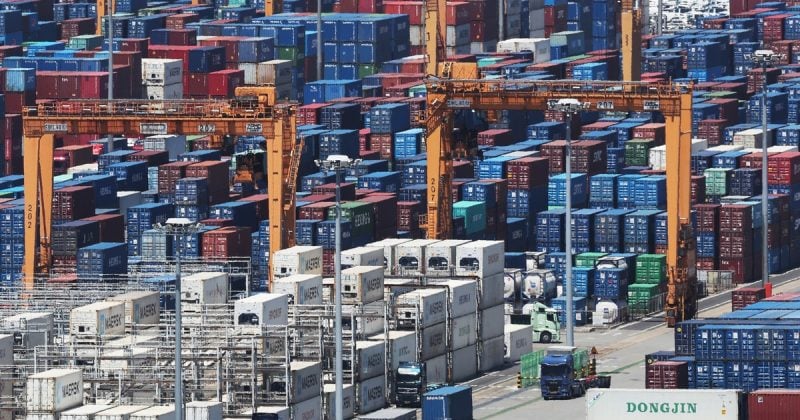
South Korea’s exports surge 53% in May, driven by AI chip boom
Record semiconductor shipments of over $37 billion pushed the country's total exports to $87.8 billion, underscoring AI's grip on global trade flows.
South Korea just posted a 53.2% year-over-year jump in exports for May 2026, reaching a record $87.8 billion. The engine behind those numbers isn’t subtle: semiconductor exports alone climbed roughly 170%, blasting past $37 billion in a single month.
That’s not a typo. Chip exports nearly tripled compared to the same period last year, setting a new monthly record and accounting for a dominant share of the country’s total outbound trade. The beneficiaries are exactly who you’d expect: Samsung Electronics and SK Hynix, the two companies that essentially own the market for high-bandwidth memory chips, the silicon that makes AI data centers hum.
The AI chip pipeline shows no signs of slowing
May marked the 12th consecutive month of export expansion for South Korea, a streak that’s been accelerating rather than plateauing.
In April, exports hit approximately $85.89 billion, a 48% year-over-year increase. March saw semiconductor shipments cross the $30 billion threshold for the first time. The first 20 days of May alone showed a 52.6% increase over the prior year, foreshadowing the full-month blowout.
Macro, rates, and crypto—what moved markets and what matters next.
Daily. Free. Join 34,000+ readers across crypto, finance, and policy.
Bank of Korea Governor Shin Hyun-song put a number on the macroeconomic impact. He stated that booming semiconductor sales are expected to contribute an additional 0.7 percentage points to the nation’s GDP growth in 2026.
A recovery story hiding inside the boom
The current export surge looks even more dramatic when you remember where the Korean chip industry was not long ago. In 2023, the memory-chip market cratered. Prices plummeted, inventories ballooned, and Samsung and SK Hynix both took significant hits to their bottom lines.
Samsung and SK Hynix have pivoted their production lines heavily toward HBM chips, which command significantly higher margins than standard memory products. Going from a glut to record-breaking export months in roughly two years is the kind of whiplash that makes corporate strategy decks look either genius or lucky, depending on your perspective.