
Nexo Earn with Nexo
South Korea unveils measures to stem won slide and curb speculation

South Korea unveils measures to stem won slide and curb speculation

After the won hit its weakest level since March 2009, Seoul is done with verbal warnings and moving to enforcement.

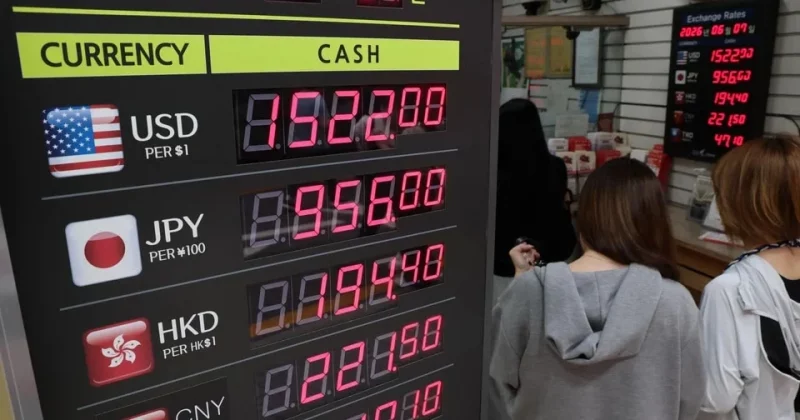
South Korea’s finance ministry rolled out a suite of measures on June 7, 2026, aimed at halting the won’s freefall and cracking down on speculative trading that authorities say has been amplifying the currency’s volatility. The won had dropped more than 7.5% year-to-date before the announcement, briefly touching roughly 1,562 per US dollar, a level not seen since March 2009.

What Seoul is actually doing

Finance Minister Koo Yun-cheol led an emergency meeting with the Bank of Korea and financial regulators that produced a concrete set of enforcement actions. The central focus: tighter oversight of offshore currency derivatives, the instruments that allow traders to bet on (or against) the won from outside the country’s borders.

Beyond derivatives oversight, the measures include targeted inspections to identify market misconduct and investigations into illegal foreign-exchange transactions by importers and exporters.

Advertisement

The ministry said it would take a “strict approach” to curb excessive volatility and prevent one-sided market movements. Previous rounds of verbal intervention, where officials publicly warned speculators to back off, failed to meaningfully stabilize the won. This time, the shift from rhetoric to regulatory enforcement represents a meaningful escalation.

Markets noticed. The won rebounded after the announcement, suggesting traders took the threat seriously enough to unwind at least some short positions.

Why the won has been under pressure

The won’s slide to 1,562 per dollar was driven by a combination of factors, but speculative trading was singled out by authorities as the key amplifier. The March 2009 comparison is worth sitting with. That was the tail end of the global financial crisis, when virtually every emerging-market currency was in freefall. For the won to revisit those levels in 2026 tells you something about the severity of the current pressure, even if the underlying economic circumstances are different.

South Korea’s approach also marks a philosophical shift. For years, Asian central banks and finance ministries have preferred to intervene by spending foreign reserves to buy their own currencies on the open market. By targeting speculative behavior directly through regulatory enforcement, Seoul is trying to change the cost-benefit calculation for traders rather than simply absorbing their selling pressure with its own balance sheet.

What this means for investors and the crypto angle

For traditional FX traders, the message is straightforward: directional bets against the won now carry meaningful regulatory risk. Inspections, misconduct probes, and tighter derivatives oversight all raise the cost of speculation.

For crypto investors, particularly those active in South Korean markets, South Korea has historically been one of the world’s most active retail crypto trading markets, and currency weakness tends to accelerate capital flows into dollar-denominated or decentralized assets as a hedge. The so-called “kimchi premium,” the gap between crypto prices on Korean exchanges and global ones, has historically widened during periods of won weakness as domestic demand surges.

The current measures are squarely focused on traditional foreign-exchange mechanisms. There’s no indication that authorities are extending similar scrutiny to cryptocurrency markets.

Disclosure: This article was edited by Editorial Team. For more information on how we create and review content, see our Editorial Policy.

South Korea unveils measures to stem won slide and curb speculation

South Korea unveils measures to stem won slide and curb speculation

After the won hit its weakest level since March 2009, Seoul is done with verbal warnings and moving to enforcement.

South Korea’s finance ministry rolled out a suite of measures on June 7, 2026, aimed at halting the won’s freefall and cracking down on speculative trading that authorities say has been amplifying the currency’s volatility. The won had dropped more than 7.5% year-to-date before the announcement, briefly touching roughly 1,562 per US dollar, a level not seen since March 2009.

What Seoul is actually doing

Finance Minister Koo Yun-cheol led an emergency meeting with the Bank of Korea and financial regulators that produced a concrete set of enforcement actions. The central focus: tighter oversight of offshore currency derivatives, the instruments that allow traders to bet on (or against) the won from outside the country’s borders.

Beyond derivatives oversight, the measures include targeted inspections to identify market misconduct and investigations into illegal foreign-exchange transactions by importers and exporters.

Advertisement

The ministry said it would take a “strict approach” to curb excessive volatility and prevent one-sided market movements. Previous rounds of verbal intervention, where officials publicly warned speculators to back off, failed to meaningfully stabilize the won. This time, the shift from rhetoric to regulatory enforcement represents a meaningful escalation.

Markets noticed. The won rebounded after the announcement, suggesting traders took the threat seriously enough to unwind at least some short positions.

Why the won has been under pressure

The won’s slide to 1,562 per dollar was driven by a combination of factors, but speculative trading was singled out by authorities as the key amplifier. The March 2009 comparison is worth sitting with. That was the tail end of the global financial crisis, when virtually every emerging-market currency was in freefall. For the won to revisit those levels in 2026 tells you something about the severity of the current pressure, even if the underlying economic circumstances are different.

South Korea’s approach also marks a philosophical shift. For years, Asian central banks and finance ministries have preferred to intervene by spending foreign reserves to buy their own currencies on the open market. By targeting speculative behavior directly through regulatory enforcement, Seoul is trying to change the cost-benefit calculation for traders rather than simply absorbing their selling pressure with its own balance sheet.

What this means for investors and the crypto angle

For traditional FX traders, the message is straightforward: directional bets against the won now carry meaningful regulatory risk. Inspections, misconduct probes, and tighter derivatives oversight all raise the cost of speculation.

For crypto investors, particularly those active in South Korean markets, South Korea has historically been one of the world’s most active retail crypto trading markets, and currency weakness tends to accelerate capital flows into dollar-denominated or decentralized assets as a hedge. The so-called “kimchi premium,” the gap between crypto prices on Korean exchanges and global ones, has historically widened during periods of won weakness as domestic demand surges.

The current measures are squarely focused on traditional foreign-exchange mechanisms. There’s no indication that authorities are extending similar scrutiny to cryptocurrency markets.

Disclosure: This article was edited by Editorial Team. For more information on how we create and review content, see our Editorial Policy.