
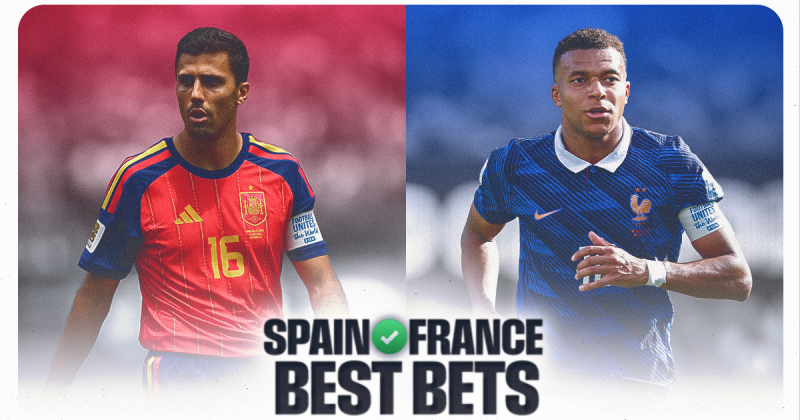
FIFA World Cup semi-final between Spain and France highlights crypto’s growing sports betting footprint
The biggest match of the 2026 World Cup arrives as blockchain-based prediction markets and sports betting platforms see surging volumes around major sporting events
Spain has confirmed its starting XI for the FIFA World Cup 2026 semi-final against France, scheduled for July 14, 2026. For crypto markets, it’s becoming something bigger: a real-time stress test for the blockchain-based prediction and sports betting ecosystem that has quietly become one of the industry’s most active verticals.
The match pits two of European football’s heavyweights against each other on North American soil. Spain, coached by Luis de la Fuente, is expected to deploy a squad anchored by goalkeeper Unai Simón, midfield maestro Rodri, and teenage sensation Lamine Yamal. France, led by Didier Deschamps, counters with Kylian Mbappé, goalkeeper Mike Maignan, and Aurélien Tchouaméni. The winner advances to face either England or Argentina in the final.
Why crypto cares about a football match
Major sporting events have become one of the clearest use cases for decentralized prediction markets. Platforms like Polymarket and Azuro have seen trading volumes spike dramatically around high-profile matches, turning lineup announcements and tactical decisions into tradeable information.
Lineup confirmations matter because they shift odds. When a coach reveals whether a star player starts or sits on the bench, prediction market contracts reprice almost instantly. The confirmation of Mbappé in France’s starting lineup, or Yamal in Spain’s, isn’t just football news. It’s a market-moving event for the growing ecosystem of on-chain sports betting.
The 2026 World Cup is the first to be hosted across the US, Canada, and Mexico.
The news moving money, markets, and the world—before your day starts.
Daily. Free. Join 34,000+ readers across crypto, finance, and policy.
The players driving the narrative
Two names stand out in this matchup. Lamine Yamal, Barcelona’s generational talent, represents the youth movement in football. Kylian Mbappé, now at Real Madrid, sits on the other side and has previously engaged with NFT and Web3 partnerships.
Rodri, Spain’s midfield anchor, brings another dimension. His presence or absence from the lineup has historically swung Spain’s win probability by meaningful margins, which means his confirmed inclusion is the kind of information that decentralized markets price in within minutes.
What this means for the crypto sports betting market
Decentralized alternatives to traditional sportsbooks offer permissionless access, transparent odds, and settlement that doesn’t depend on a centralized operator deciding when and how to pay out. For users in regions where traditional betting is restricted or where trust in local operators is low, on-chain platforms provide a genuine alternative.
The risk for crypto platforms is execution. Major matches generate enormous concurrent activity. If smart contracts fail to settle properly, or if oracle feeds delivering match results experience delays, the reputational damage could set the sector back.