
Spain’s World Cup midfield dominance highlights what crypto still gets wrong about team building
Luis de la Fuente's bold claim about Spain's midfield offers a surprisingly useful framework for evaluating crypto project teams
Spain manager Luis de la Fuente sat down at the Cotton Bowl in Dallas this week and made a claim that would make even the most confident crypto founder blush: his squad has the best midfield in the world. The thing is, he might actually be right.
De la Fuente, who won the IFFHS World’s Best Men’s National Coach award in both 2024 and 2025, made the declaration ahead of Spain’s Round of 16 matchup against Portugal at the 2026 FIFA World Cup. Argentina’s Enzo Fernández even acknowledged the depth of Spanish midfield talent, which is the soccer equivalent of a rival protocol’s founder admitting your tokenomics are better.
Why a football story matters to crypto readers
In football, a midfield is the engine room. It controls tempo, connects defense to attack, and determines whether a team plays with purpose or just vibes. In crypto, the equivalent is a project’s core development and leadership team, the people who sit between the vision (the attackers) and the infrastructure (the defense).
Spain opened their 2026 World Cup campaign against Cape Verde on June 14 in Atlanta. They’ve since advanced through the group stage and into the knockout rounds, largely on the strength of that midfield depth de la Fuente keeps talking about. This isn’t a squad built around one generational talent. It’s a system that makes multiple players look generational.
The talent pipeline problem
De la Fuente was also asked about advice he’d give to teenage star Lamine Yamal, which points to another parallel worth examining: talent development and succession planning.
The news moving money, markets, and the world—before your day starts.
Daily. Free. Join 34,000+ readers across crypto, finance, and policy.
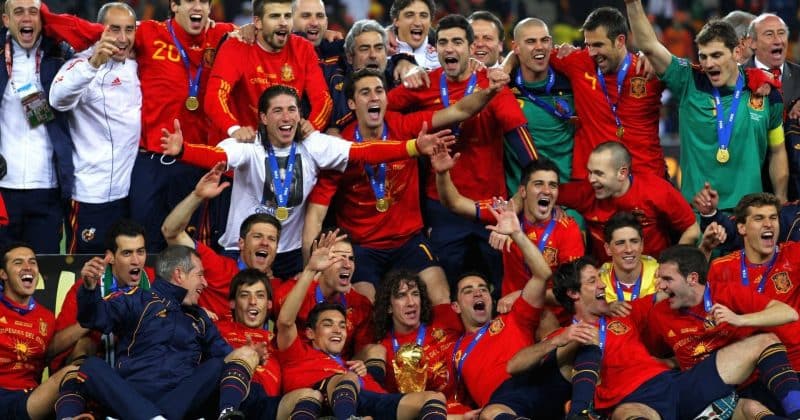
Spain’s football federation has spent decades building youth academies and development pathways. The result is a pipeline that produced the 2010 World Cup winners and continues to produce world-class players fifteen years later. The system outlasts any individual manager or player.
The DAOs that have survived longest tend to be the ones that invested in depth rather than star power. Protocols like Ethereum have benefited from having multiple client teams and a broad base of contributors rather than depending on a single development shop. MakerDAO’s transition to multiple SubDAOs reflects a similar philosophy.
What this means for investors
When de la Fuente says Spain has the world’s best midfield, he’s making a claim about systemic strength, not individual brilliance. Investors evaluating crypto projects should be asking the same questions football analysts ask about national teams. How deep is the bench? What happens when a key player gets injured, or in crypto terms, when a core contributor burns out or gets poached by a competitor? Is the system designed to produce results regardless of personnel changes?
The 2026 World Cup has driven significant volume on prediction markets and crypto-native betting platforms. Spain’s consistent performance under de la Fuente, back-to-back coaching awards and now a deep knockout stage run, makes them a case study in how sustained organizational quality translates to predictable outcomes.