
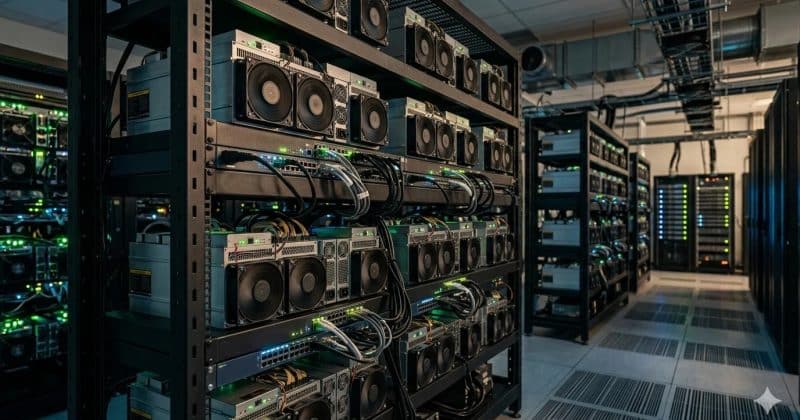
SpiderPool mines empty Bitcoin block at height 954,352, raising questions about mining pool tactics

SpiderPool mines empty Bitcoin block at height 954,352, raising questions about mining pool tactics

The block contained only a coinbase transaction weighing 1.16 kWU, fitting a pattern of strategic empty block mining by the pool

SpiderPool pushed a Bitcoin block through the network on June 19, 2026, with essentially nothing in it. Block 954,352, mined around 04:27 UTC, contained only the mandatory coinbase transaction, the automatic reward payment to the miner, and zero user transactions.

The block weighed in at just 1.16 kWU. For context, a typical Bitcoin block can hold up to 4,000 kWU of data. That makes this one roughly 0.03% full.

Why a mining pool would deliberately skip transaction fees

When a new block gets found on the Bitcoin network, pools need time to validate all the transactions in their pending queue and build a fresh template. During that window, they can pause and wait for a complete template with full transactions, or immediately start hashing on a minimal template containing only the coinbase transaction.

SpiderPool chose option two. The gap between block 954,352 and the previous block was just 62 seconds, a notably short interval that helps explain the decision. Rather than waste those seconds waiting for transaction data to propagate, the pool kept its hashrate working on a bare-bones template and got lucky, finding a valid block before a fuller template was ready.

Advertisement

SpiderPool’s empty block track record

This wasn’t a one-off quirk. Data from Mempool Research indicates that SpiderPool has consistently produced a higher-than-average rate of empty blocks relative to its share of network hashrate. Prior analyses put the pool’s empty block rate above 5%.

SpiderPool, founded in 2018, operates as one of the larger Bitcoin mining pools, commanding an estimated 8-12% of total network hashrate. The pool runs an FPPS (Full Pay Per Share) payout model with a standard fee of approximately 4%.

Mempool Research’s analysis characterizes the behavior as intentional, a deliberate operational strategy rather than a symptom of technical problems.

SpiderPool has also distinguished itself through dual-mining capabilities, allowing miners to simultaneously mine Bitcoin and NAT (DMT-NAT) within the same blocks. This approach creates additional reward streams without requiring extra computational work.

What empty blocks mean for the Bitcoin network

Empty blocks are one of Bitcoin’s perennial debate topics. Critics argue they waste valuable block space, delaying transaction confirmations and reducing the network’s throughput. Defenders counter that nothing in the consensus rules requires miners to include transactions. The protocol incentivizes it through fees, but it doesn’t mandate it.

At SpiderPool’s reported 5%-plus empty block rate and its share of network hashrate, the aggregate effect translates to a small but measurable reduction in available block space across the network. For the network’s security model, empty blocks still contribute valid proof of work and extend the chain, so they don’t weaken Bitcoin’s consensus mechanism.

The 62-second gap before block 954,352 illustrates why empty blocks cluster around short inter-block intervals. When blocks arrive in rapid succession, pools have less time to construct full templates. The shorter the gap, the higher the probability that a pool is still working with a minimal template when it finds the next block.

Disclosure: This article was edited by Editorial Team. For more information on how we create and review content, see our Editorial Policy.

SpiderPool mines empty Bitcoin block at height 954,352, raising questions about mining pool tactics

SpiderPool mines empty Bitcoin block at height 954,352, raising questions about mining pool tactics

The block contained only a coinbase transaction weighing 1.16 kWU, fitting a pattern of strategic empty block mining by the pool

SpiderPool pushed a Bitcoin block through the network on June 19, 2026, with essentially nothing in it. Block 954,352, mined around 04:27 UTC, contained only the mandatory coinbase transaction, the automatic reward payment to the miner, and zero user transactions.

The block weighed in at just 1.16 kWU. For context, a typical Bitcoin block can hold up to 4,000 kWU of data. That makes this one roughly 0.03% full.

Why a mining pool would deliberately skip transaction fees

When a new block gets found on the Bitcoin network, pools need time to validate all the transactions in their pending queue and build a fresh template. During that window, they can pause and wait for a complete template with full transactions, or immediately start hashing on a minimal template containing only the coinbase transaction.

SpiderPool chose option two. The gap between block 954,352 and the previous block was just 62 seconds, a notably short interval that helps explain the decision. Rather than waste those seconds waiting for transaction data to propagate, the pool kept its hashrate working on a bare-bones template and got lucky, finding a valid block before a fuller template was ready.

Advertisement

SpiderPool’s empty block track record

This wasn’t a one-off quirk. Data from Mempool Research indicates that SpiderPool has consistently produced a higher-than-average rate of empty blocks relative to its share of network hashrate. Prior analyses put the pool’s empty block rate above 5%.

SpiderPool, founded in 2018, operates as one of the larger Bitcoin mining pools, commanding an estimated 8-12% of total network hashrate. The pool runs an FPPS (Full Pay Per Share) payout model with a standard fee of approximately 4%.

Mempool Research’s analysis characterizes the behavior as intentional, a deliberate operational strategy rather than a symptom of technical problems.

SpiderPool has also distinguished itself through dual-mining capabilities, allowing miners to simultaneously mine Bitcoin and NAT (DMT-NAT) within the same blocks. This approach creates additional reward streams without requiring extra computational work.

What empty blocks mean for the Bitcoin network

Empty blocks are one of Bitcoin’s perennial debate topics. Critics argue they waste valuable block space, delaying transaction confirmations and reducing the network’s throughput. Defenders counter that nothing in the consensus rules requires miners to include transactions. The protocol incentivizes it through fees, but it doesn’t mandate it.

At SpiderPool’s reported 5%-plus empty block rate and its share of network hashrate, the aggregate effect translates to a small but measurable reduction in available block space across the network. For the network’s security model, empty blocks still contribute valid proof of work and extend the chain, so they don’t weaken Bitcoin’s consensus mechanism.

The 62-second gap before block 954,352 illustrates why empty blocks cluster around short inter-block intervals. When blocks arrive in rapid succession, pools have less time to construct full templates. The shorter the gap, the higher the probability that a pool is still working with a minimal template when it finds the next block.

Disclosure: This article was edited by Editorial Team. For more information on how we create and review content, see our Editorial Policy.