
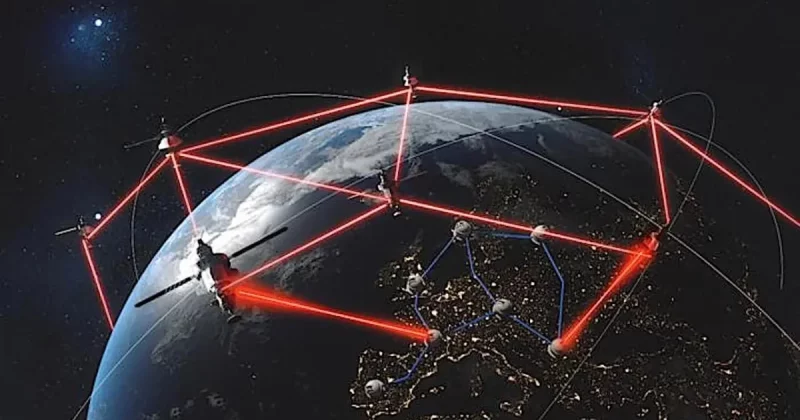
Starlink plans over 100K satellites to become the internet’s backbone
Elon Musk's satellite constellation wants to carry the majority of global internet traffic, with potential ripple effects across crypto and telecom.
Elon Musk wants Starlink to be the internet. Not just a piece of it. The whole thing.
On May 24, Musk announced that SpaceX’s satellite internet division plans to deploy more than 100,000 next-generation satellites, spanning V3, V4, and V5 models, designed for both broadband access and direct-to-cellphone connectivity.
“Starlink will one day carry the majority of Internet traffic. At that point, it is the Internet and everything else just connects to Starlink.”
From 10,000 to 100,000
Starlink currently operates roughly 10,000 satellites in low Earth orbit. That already makes it the largest active satellite constellation on the planet by a wide margin.
Previous regulatory authorizations allowed for about 12,000 Gen2 satellites, with filings suggesting a potential expansion to over 30,000. The jump to 100,000 is not an incremental step.
V3 satellites are designed to deliver downlink capacity of 1,024 Gbps, compared to 96 Gbps for their V2 predecessors. That’s roughly a 10.7x improvement per satellite.
AI, tech, and the markets they move—in one daily briefing.
Daily. Free. Join 34,000+ readers across crypto, finance, and policy.
Why telecom should be nervous
The direct-to-cellphone capability is particularly disruptive. If Starlink can deliver reliable cellular connectivity from orbit, the value proposition of building and maintaining cell towers in remote or underserved areas diminishes significantly.
What this means for crypto
There’s no blockchain integration here. No token launch. No DePIN angle being marketed. This is a pure infrastructure play from a company that has shown zero interest in crypto partnerships.
CryptoBriefing highlighted that the single biggest barrier to crypto adoption in emerging markets isn’t education or regulation — it’s connectivity. A satellite network capable of delivering broadband anywhere on Earth changes that equation. More connected users means a larger addressable market for digital assets, decentralized applications, and blockchain-based financial services.
There’s also a resilience argument. Crypto networks depend on distributed node operators, and those nodes depend on internet connectivity. If Starlink becomes the internet, then SpaceX becomes a single point of failure for systems specifically designed to avoid single points of failure.