
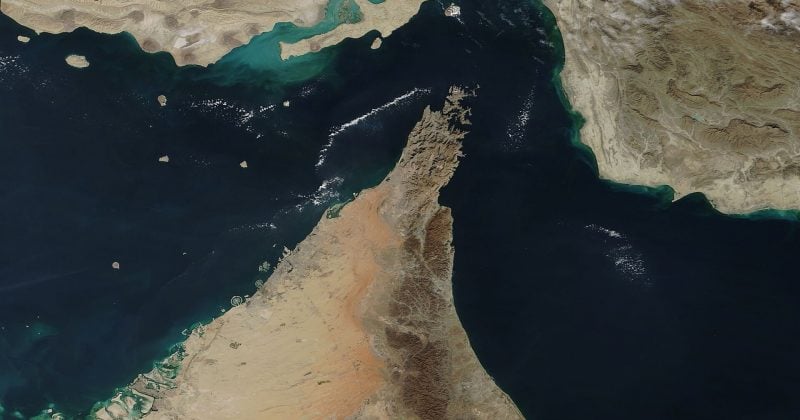
Shipping through Strait of Hormuz drops sharply amid US-Iran tensions, pushing oil past $100 and sparking crypto workarounds
The world's most important oil chokepoint has seen vessel traffic plummet from over 100 ships daily to as few as 12, with Iran reportedly exploring bitcoin-based settlement systems for maritime costs.
The Strait of Hormuz, a narrow waterway responsible for roughly 20% of the world’s oil and LNG shipments, has effectively become a no-go zone. Daily vessel traffic through the strait has collapsed from over 100 ships before the US-Iran conflict escalated to as few as 12-29 vessels on certain days in recent weeks. Major shipping lines including Maersk and Hapag-Lloyd have suspended transits entirely. And in one of the more unexpected twists, Iran has reportedly begun exploring Bitcoin as a settlement mechanism for maritime insurance and transit fees through a platform called “Hormuz Safe.”
How the strait went from busy to barely functional
The current crisis traces back to US and Israeli military operations launched in late February 2026. Iran responded with threats to disrupt shipping, mine-laying operations in the strait, and outright declarations of closure. Iran formally declared the strait closed on February 28, and again on June 20 and June 22.
By April, approximately 2,000 ships were stranded in the Persian Gulf, with around 20,000 mariners stuck aboard with no clear timeline for passage. A brief window of reduced hostilities allowed some traffic to resume, with vessel counts climbing back to around 74 earlier in one week of July. But renewed military actions, including US strikes on Iranian targets and Iranian assaults on commercial vessels, drove those numbers right back down to the 12-29 range.
Oil markets are feeling every bit of this
Brent crude crossing $100 per barrel marked a psychological threshold that traders hadn’t dealt with consistently since 2022. The 6.8% single-month spike in US crude during April reflected the market’s realization that this wasn’t a weekend skirmish. It was a sustained disruption to physical supply.
The suspension of transits by Maersk and Hapag-Lloyd signals that insurance costs, crew safety concerns, and operational risks have crossed thresholds that make transit economically irrational regardless of what cargo rates look like. Longer voyages around the Cape of Good Hope add weeks and significant cost to each shipment.
Macro, rates, and crypto—what moved markets and what matters next.
Daily. Free. Join 34,000+ readers across crypto, finance, and policy.
Bitcoin enters the conversation, sort of
Iran’s reported exploration of Bitcoin-based settlement for maritime costs via the “Hormuz Safe” platform would theoretically allow shipping insurance and transit fees to be settled in Bitcoin, bypassing traditional financial channels that are largely closed to Iran due to sanctions. Sanctions have progressively cut the country off from SWIFT and correspondent banking networks.
The crisis has also spawned crypto-related scams targeting affected parties. Investors should treat any Hormuz-related crypto offerings with extreme skepticism unless they can verify the counterparty and platform independently.
What this means for investors watching from the sidelines
If Iran successfully operationalizes Bitcoin-based settlement for commercial maritime activity, it would represent the most significant state-level use of cryptocurrency for trade finance to date. That could accelerate regulatory scrutiny in Western capitals, particularly around blockchain analytics and compliance frameworks designed to track sanctioned flows.