
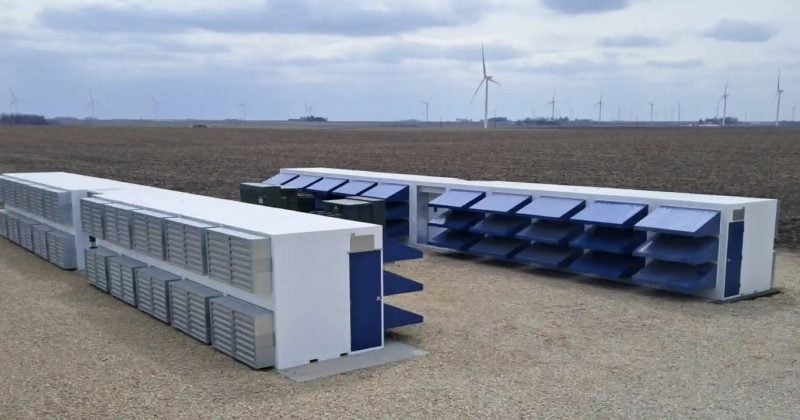
Swedish Bitcoin miner called 11,245 times in one year for grid stabilization services
A single mining facility in Sweden now earns more from keeping the lights on than from mining Bitcoin itself
Somewhere in Sweden, a Bitcoin mining operation spent the past year moonlighting as critical energy infrastructure. The facility was activated between 11,245 and 11,247 times for frequency regulation on Sweden’s national grid, delivering roughly 30 GWh of regulation energy. That’s not a typo. A crypto mine got called up to stabilize the power grid more than 30 times a day, on average.
Here’s the kicker: 58% of the operation’s revenue now comes from these ancillary grid services, not from mining Bitcoin.
How a Bitcoin mine becomes a power plant in reverse
The operation runs under Flexionics Energy AG, a Swiss firm that specializes in converting computing infrastructure into prequalified assets for energy reserve markets.
The facility operates with approximately 14 MW of flexible capacity. When Sweden’s grid needs stabilization, the miners can throttle their power consumption up or down in real time.
During periods of peak flexibility utilization, the operation’s electricity costs reportedly go negative. That means the grid is literally paying the miners to consume, or not consume, power.
The news moving money, markets, and the world—before your day starts.
Daily. Free. Join 34,000+ readers across crypto, finance, and policy.
Daniel Batten, an independent researcher who has publicly discussed coaching the operation, has pointed to this facility as evidence that Bitcoin mining is evolving into something the energy sector actually wants around. He’s noted that miners in up to seven other nations are providing similar stabilization services, suggesting Sweden isn’t an isolated experiment but part of a broader pattern.
Why grids need flexible loads more than ever
Bitcoin miners, it turns out, are almost perfectly designed for demand response. ASIC machines can be powered down nearly instantaneously. They have no production schedule to protect, no employees to send home, no physical product that spoils if the line stops.
Flexionics Energy AG has built its business around this insight, using AI-driven demand-response systems that adapt energy consumption in real time. The 30 GWh of regulation energy this single facility delivered over the past year is a meaningful contribution to grid stability.
What this means for the mining industry and investors
The revenue split at this Swedish operation, 58% from grid services versus 42% from actual mining, represents a fundamentally different business model than what most people associate with Bitcoin mining. It’s a hedge against Bitcoin price volatility, against rising energy costs, and against the halving cycle that periodically slashes block rewards.
The trend also carries strategic implications for where miners choose to set up shop. Locations with high renewable penetration and active ancillary service markets become dramatically more attractive. Miners aren’t just looking for cheap power anymore. They’re looking for grids that will pay them for flexibility.