
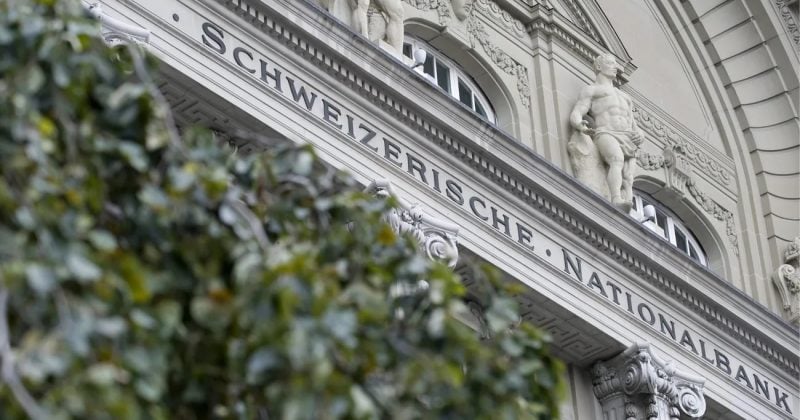
Swiss National Bank chairman signals openness to negative rates as inflation flatlines

Swiss National Bank chairman signals openness to negative rates as inflation flatlines

Martin Schlegel says the SNB would go below zero if needed, but the bar is much higher than last time

Switzerland’s central bank is already at the floor. Now its chairman is eyeing the basement.

Martin Schlegel, Chairman of the Swiss National Bank, confirmed on February 2, 2026, that the SNB would consider pushing its policy rate into negative territory if economic conditions demanded it. The benchmark rate has sat at 0% since mid-2025, after the SNB spent much of 2024 cutting aggressively from 1.75%.

The immediate trigger is an inflation reading that would make most central bankers reach for a defibrillator. Swiss inflation came in at 0.1% in early February 2026, barely alive and sitting at the absolute bottom of the SNB’s target range of 0% to 2%.

Schlegel was careful to frame this as a contingency, not a commitment. His language emphasized a “significantly higher threshold” for negative rates compared to previous episodes, a nod to how painful the last experiment turned out to be for savers and pension funds.

Advertisement

Been here before, and it wasn’t fun

Switzerland is not a stranger to sub-zero monetary policy. The SNB first took rates negative in December 2014, starting at -0.25% before eventually pushing to -0.75%, where they stayed until 2022.

Schlegel clearly remembers this. His February comments came with explicit acknowledgment of those side effects, suggesting the SNB is not eager to revisit the experiment without serious justification.

Economists polled in late 2025 largely agreed with that reluctance. The consensus view heading into 2026 was that negative rates remained unlikely, with the SNB more probably leaning on foreign exchange interventions to manage franc strength before touching the rate tool again.

Why this matters for markets beyond Switzerland

At 0.1% inflation and a 0% policy rate, the SNB has essentially no room to cut conventionally. The only direction left is negative, and Schlegel just put that option officially back on the table.

The SNB itself has previously dismissed Bitcoin as unsuitable for reserve purposes, citing volatility and liquidity constraints. That position hasn’t changed. But the policy backdrop Schlegel is describing, persistent low inflation, a rate at zero, and the theoretical possibility of going lower, is structurally similar to the 2015-2019 environment that preceded Bitcoin’s first major institutional attention cycle.

Swiss pension funds, which Schlegel specifically flagged as vulnerable to negative rate impacts, are among the most conservative institutional investors in the world.

Schlegel’s signal isn’t a crisis alarm. Inflation at 0.1% is uncomfortable but not catastrophic, and the SNB retains room to act deliberately. What he’s done is serve notice that the tools are still in the drawer, the threshold is higher than before, and Switzerland is watching the same low-growth, low-inflation pressures that keep monetary policymakers in Tokyo and Frankfurt equally uncomfortable heading into the rest of the year.

Disclosure: This article was edited by Editorial Team. For more information on how we create and review content, see our Editorial Policy.

Swiss National Bank chairman signals openness to negative rates as inflation flatlines

Swiss National Bank chairman signals openness to negative rates as inflation flatlines

Martin Schlegel says the SNB would go below zero if needed, but the bar is much higher than last time

Switzerland’s central bank is already at the floor. Now its chairman is eyeing the basement.

Martin Schlegel, Chairman of the Swiss National Bank, confirmed on February 2, 2026, that the SNB would consider pushing its policy rate into negative territory if economic conditions demanded it. The benchmark rate has sat at 0% since mid-2025, after the SNB spent much of 2024 cutting aggressively from 1.75%.

The immediate trigger is an inflation reading that would make most central bankers reach for a defibrillator. Swiss inflation came in at 0.1% in early February 2026, barely alive and sitting at the absolute bottom of the SNB’s target range of 0% to 2%.

Schlegel was careful to frame this as a contingency, not a commitment. His language emphasized a “significantly higher threshold” for negative rates compared to previous episodes, a nod to how painful the last experiment turned out to be for savers and pension funds.

Advertisement

Been here before, and it wasn’t fun

Switzerland is not a stranger to sub-zero monetary policy. The SNB first took rates negative in December 2014, starting at -0.25% before eventually pushing to -0.75%, where they stayed until 2022.

Schlegel clearly remembers this. His February comments came with explicit acknowledgment of those side effects, suggesting the SNB is not eager to revisit the experiment without serious justification.

Economists polled in late 2025 largely agreed with that reluctance. The consensus view heading into 2026 was that negative rates remained unlikely, with the SNB more probably leaning on foreign exchange interventions to manage franc strength before touching the rate tool again.

Why this matters for markets beyond Switzerland

At 0.1% inflation and a 0% policy rate, the SNB has essentially no room to cut conventionally. The only direction left is negative, and Schlegel just put that option officially back on the table.

The SNB itself has previously dismissed Bitcoin as unsuitable for reserve purposes, citing volatility and liquidity constraints. That position hasn’t changed. But the policy backdrop Schlegel is describing, persistent low inflation, a rate at zero, and the theoretical possibility of going lower, is structurally similar to the 2015-2019 environment that preceded Bitcoin’s first major institutional attention cycle.

Swiss pension funds, which Schlegel specifically flagged as vulnerable to negative rate impacts, are among the most conservative institutional investors in the world.

Schlegel’s signal isn’t a crisis alarm. Inflation at 0.1% is uncomfortable but not catastrophic, and the SNB retains room to act deliberately. What he’s done is serve notice that the tools are still in the drawer, the threshold is higher than before, and Switzerland is watching the same low-growth, low-inflation pressures that keep monetary policymakers in Tokyo and Frankfurt equally uncomfortable heading into the rest of the year.

Disclosure: This article was edited by Editorial Team. For more information on how we create and review content, see our Editorial Policy.