
Swiss National Bank’s zero rate outlook squeezes lenders as low-yield era extends to 2027

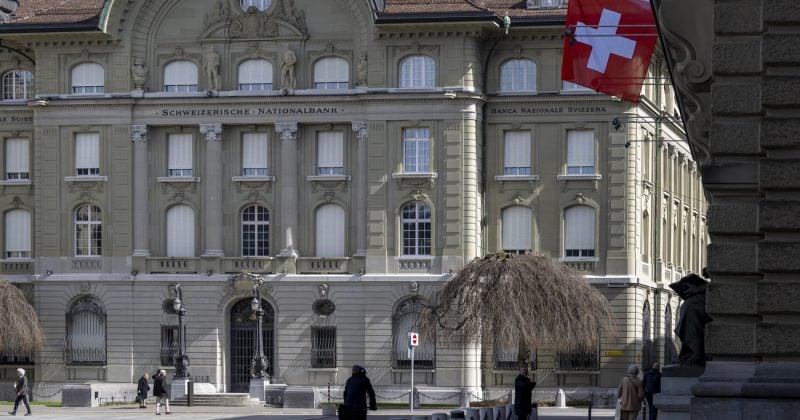
Photo: PETER SCHNEIDER / KEYSTONE

Swiss National Bank’s zero rate outlook squeezes lenders as low-yield era extends to 2027

SNB's decision to hold rates at zero through at least late 2027 is eroding net interest income at Swiss banks, reviving painful memories of the last lost decade for lending margins.

The Swiss National Bank held its policy rate at zero on June 18, 2026, and the message embedded in that decision was clear: do not expect relief anytime soon. Internal forecasts suggest the SNB will keep rates pinned at zero through at least late 2027, a timeline that has Swiss lenders quietly recalculating their business models.

The math is brutal for Swiss lenders

Banks make money the old-fashioned way: borrow cheap, lend expensive, pocket the spread. When the central bank sets borrowing costs at zero and inflation runs at roughly 0.6% annually, that spread compresses to almost nothing.

Swiss aggregate net income already fell from CHF 72.3 billion in 2023 to CHF 69.7 billion in 2024. The sharper cut came inside that number: interest income dropped from CHF 24.3 billion to CHF 21.1 billion in the same period, a decline of roughly CHF 3.2 billion in a single year.

Advertisement

Economists project a further drop of approximately CHF 660 million in net interest income attributable to ongoing rate cuts. Swiss domestic lenders cannot realistically charge retail customers negative rates on their savings accounts without triggering a political and reputational backlash, so the bank absorbs the cost instead, sitting on cheap liabilities it cannot reprice without consequence.

This movie has played before

During the previous zero and negative rate episode that ran from roughly 2011 to 2015, net interest margins at Swiss banks fell from 1.4% to 1.1%. The SNB’s zero rate policy commenced in June 2025, meaning the current cycle is already over a year old. With forecasts from Swiss Life and Reuters polling suggesting the rate stays anchored through the end of 2027, the industry is looking at a multi-year grind, not a brief detour.

Inflation running at 0.6% annually gives the SNB little urgency to act. Price stability is the central bank’s mandate, and by that narrow measure, it is succeeding.

What this means for investors watching Swiss financials

Fee-based revenue becomes the new battleground. Banks that have already diversified into wealth management, advisory services, and transaction fees are better insulated than traditional retail lenders whose income depends on deposit-to-loan spreads.

For bond investors, the SNB’s commitment to zero rates through 2027 anchors Swiss franc short-term yields near zero, which keeps Swiss government debt expensive in price terms and unattractive on yield.

The risk scenario worth watching is a sudden inflation surprise. Swiss inflation at 0.6% annually looks stable, but global supply chain dynamics, energy prices, and a weaker franc could shift that reading faster than the SNB’s current models project. If inflation moves materially above target, the SNB would need to raise rates, which would help banks but would also reprice a lot of fixed-rate mortgage exposure that Swiss lenders have accumulated during the low-rate years.

Disclosure: This article was edited by Editorial Team. For more information on how we create and review content, see our Editorial Policy.

Swiss National Bank’s zero rate outlook squeezes lenders as low-yield era extends to 2027

Swiss National Bank’s zero rate outlook squeezes lenders as low-yield era extends to 2027

SNB's decision to hold rates at zero through at least late 2027 is eroding net interest income at Swiss banks, reviving painful memories of the last lost decade for lending margins.

Photo: PETER SCHNEIDER / KEYSTONE

The Swiss National Bank held its policy rate at zero on June 18, 2026, and the message embedded in that decision was clear: do not expect relief anytime soon. Internal forecasts suggest the SNB will keep rates pinned at zero through at least late 2027, a timeline that has Swiss lenders quietly recalculating their business models.

The math is brutal for Swiss lenders

Banks make money the old-fashioned way: borrow cheap, lend expensive, pocket the spread. When the central bank sets borrowing costs at zero and inflation runs at roughly 0.6% annually, that spread compresses to almost nothing.

Swiss aggregate net income already fell from CHF 72.3 billion in 2023 to CHF 69.7 billion in 2024. The sharper cut came inside that number: interest income dropped from CHF 24.3 billion to CHF 21.1 billion in the same period, a decline of roughly CHF 3.2 billion in a single year.

Advertisement

Economists project a further drop of approximately CHF 660 million in net interest income attributable to ongoing rate cuts. Swiss domestic lenders cannot realistically charge retail customers negative rates on their savings accounts without triggering a political and reputational backlash, so the bank absorbs the cost instead, sitting on cheap liabilities it cannot reprice without consequence.

This movie has played before

During the previous zero and negative rate episode that ran from roughly 2011 to 2015, net interest margins at Swiss banks fell from 1.4% to 1.1%. The SNB’s zero rate policy commenced in June 2025, meaning the current cycle is already over a year old. With forecasts from Swiss Life and Reuters polling suggesting the rate stays anchored through the end of 2027, the industry is looking at a multi-year grind, not a brief detour.

Inflation running at 0.6% annually gives the SNB little urgency to act. Price stability is the central bank’s mandate, and by that narrow measure, it is succeeding.

What this means for investors watching Swiss financials

Fee-based revenue becomes the new battleground. Banks that have already diversified into wealth management, advisory services, and transaction fees are better insulated than traditional retail lenders whose income depends on deposit-to-loan spreads.

For bond investors, the SNB’s commitment to zero rates through 2027 anchors Swiss franc short-term yields near zero, which keeps Swiss government debt expensive in price terms and unattractive on yield.

The risk scenario worth watching is a sudden inflation surprise. Swiss inflation at 0.6% annually looks stable, but global supply chain dynamics, energy prices, and a weaker franc could shift that reading faster than the SNB’s current models project. If inflation moves materially above target, the SNB would need to raise rates, which would help banks but would also reprice a lot of fixed-rate mortgage exposure that Swiss lenders have accumulated during the low-rate years.

Disclosure: This article was edited by Editorial Team. For more information on how we create and review content, see our Editorial Policy.