
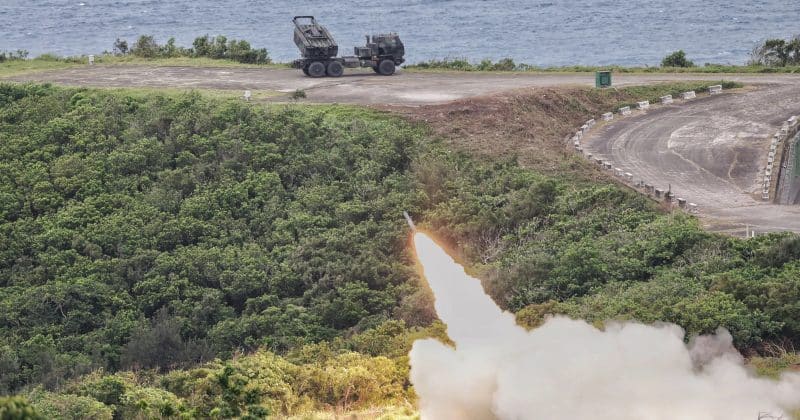
Taiwan fires US-supplied HIMARS into waters facing China in first live-fire test
The island launched 36 rockets into the Taiwan Strait as part of invasion-defense drills, ratcheting up geopolitical tensions that could ripple across risk assets including crypto.
Taiwan test-fired US-supplied mobile missile launchers into the Taiwan Strait on June 10, marking the first time the island has used the American-made HIMARS system in a live-fire exercise. Thirty-six rockets were launched from Taiwan’s western coast, the stretch of land that directly faces mainland China.
The exercise was part of broader invasion-defense drills designed to demonstrate Taiwan’s willingness to use advanced Western weapons systems in a conflict scenario.
What happened and why it matters
HIMARS, short for High Mobility Artillery Rocket System, is a truck-mounted rocket system that shoots and moves, making it extremely hard to pin down. That mobility is what makes it strategically significant for Taiwan. An island preparing for a potential amphibious invasion needs weapons that can hit coastal landing zones and then relocate quickly before the enemy can respond.
The 36-rocket barrage targeted waters in the Taiwan Strait, the roughly 100-mile-wide body of water separating Taiwan from mainland China.
In December 2025, China conducted large-scale military exercises that specifically simulated strikes on US-made weapons systems, essentially rehearsing how to destroy the exact kind of hardware Taiwan just demonstrated it can use.
The news moving money, markets, and the world—before your day starts.
Daily. Free. Join 34,000+ readers across crypto, finance, and policy.
The geopolitical backdrop
Beijing views Taiwan as a breakaway province and has never renounced the use of force to bring it under mainland control. The US has been steadily increasing arms sales to Taiwan, with HIMARS deliveries among the most closely watched transactions in the Indo-Pacific security landscape.
The drills also serve a domestic purpose. Public confidence in Taiwan’s ability to defend itself affects everything from political stability to economic planning on the island.
What this means for investors
Taiwan produces the vast majority of the world’s most advanced semiconductors, and any disruption to that supply chain would send shockwaves through every sector of the global economy.
No specific tokens or projects were directly linked to this military exercise. Historically, major military actions in contested regions have triggered short-term volatility spikes across crypto markets, with traders rotating into perceived safe havens and altcoins and smaller-cap tokens almost universally suffering during acute risk-off episodes.