
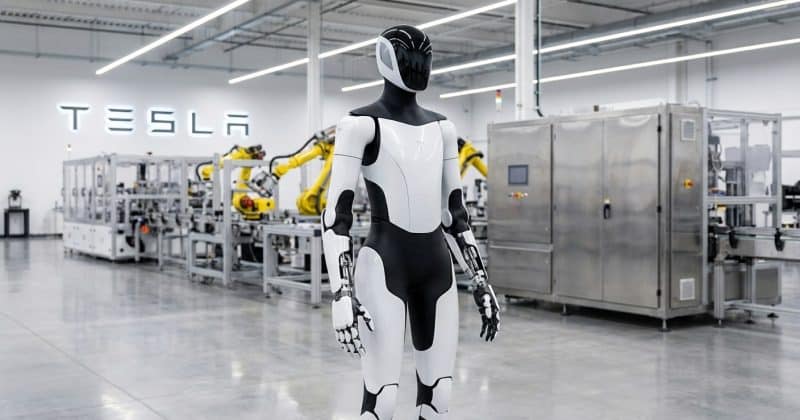
Tesla begins installation of first Optimus production line at Fremont factory

Tesla begins installation of first Optimus production line at Fremont factory

The automaker is converting its Model S and Model X assembly space into a humanoid robot factory targeting 1 million units per year.

Tesla is officially in the robot-building business. Elon Musk confirmed that installation of the company’s first Optimus humanoid robot production line has begun at the Fremont, California factory, repurposing the space previously dedicated to assembling Model S and Model X vehicles.

Tesla is converting one of its most iconic production areas into a facility designed to produce humanoid robots at industrial scale. The target capacity for this first-generation line: 1 million Optimus units per year.

From luxury EVs to humanoid robots

The transition at Fremont follows announcements made during Tesla’s Q4 2025 and Q1 2026 earnings calls, where the company laid out its intention to wind down high-end vehicle production at the facility and redirect resources toward robotics manufacturing.

Low-volume production of Optimus robots is expected to begin by late July or August 2026, following the conclusion of Model S and Model X assembly. Musk has cautioned that initial output will be slow. The production line incorporates over 10,000 unique parts, which is the kind of complexity that tends to make early ramp-ups feel more like a crawl than a sprint.

Advertisement

Tesla has plans for a second-generation production line at its Gigafactory Texas, with a target capacity of 10 million units per year.

Over 1,000 robots already deployed internally

Tesla isn’t starting from zero on the operational side. More than 1,000 units of the Optimus Gen 3 robot have already been deployed internally across Tesla’s own facilities. These units are being used for testing and to gather real-world performance data, essentially turning Tesla’s factories into a live proving ground.

The Optimus project was first unveiled in 2021, when Musk introduced the concept of a general-purpose humanoid robot designed for tasks that are “dangerous, repetitive, or boring.”

What this means for investors

Tesla is essentially asking investors to believe it can build a new category of product, humanoid robots, at a scale that no company has ever attempted. The 1 million unit annual target at Fremont alone would make this one of the most ambitious manufacturing undertakings in recent industrial history.

The competitive landscape is worth watching closely. Companies like Figure AI, Agility Robotics, and Boston Dynamics have all been developing humanoid or bipedal robots.

Converting proven vehicle production capacity into an unproven robotics line means Tesla is sacrificing known revenue for speculative upside. Model S and Model X, while not Tesla’s highest-volume vehicles, still represent a premium product line with established margins.

The late July to August 2026 window for low-volume production is the first concrete milestone. Musk’s production targets have historically been aspirational rather than precise, and whether Tesla hits it will say a lot about how seriously the market should take the 1 million and 10 million unit targets that follow.

Disclosure: This article was edited by Editorial Team. For more information on how we create and review content, see our Editorial Policy.

Tesla begins installation of first Optimus production line at Fremont factory

Tesla begins installation of first Optimus production line at Fremont factory

The automaker is converting its Model S and Model X assembly space into a humanoid robot factory targeting 1 million units per year.

Tesla is officially in the robot-building business. Elon Musk confirmed that installation of the company’s first Optimus humanoid robot production line has begun at the Fremont, California factory, repurposing the space previously dedicated to assembling Model S and Model X vehicles.

Tesla is converting one of its most iconic production areas into a facility designed to produce humanoid robots at industrial scale. The target capacity for this first-generation line: 1 million Optimus units per year.

From luxury EVs to humanoid robots

The transition at Fremont follows announcements made during Tesla’s Q4 2025 and Q1 2026 earnings calls, where the company laid out its intention to wind down high-end vehicle production at the facility and redirect resources toward robotics manufacturing.

Low-volume production of Optimus robots is expected to begin by late July or August 2026, following the conclusion of Model S and Model X assembly. Musk has cautioned that initial output will be slow. The production line incorporates over 10,000 unique parts, which is the kind of complexity that tends to make early ramp-ups feel more like a crawl than a sprint.

Advertisement

Tesla has plans for a second-generation production line at its Gigafactory Texas, with a target capacity of 10 million units per year.

Over 1,000 robots already deployed internally

Tesla isn’t starting from zero on the operational side. More than 1,000 units of the Optimus Gen 3 robot have already been deployed internally across Tesla’s own facilities. These units are being used for testing and to gather real-world performance data, essentially turning Tesla’s factories into a live proving ground.

The Optimus project was first unveiled in 2021, when Musk introduced the concept of a general-purpose humanoid robot designed for tasks that are “dangerous, repetitive, or boring.”

What this means for investors

Tesla is essentially asking investors to believe it can build a new category of product, humanoid robots, at a scale that no company has ever attempted. The 1 million unit annual target at Fremont alone would make this one of the most ambitious manufacturing undertakings in recent industrial history.

The competitive landscape is worth watching closely. Companies like Figure AI, Agility Robotics, and Boston Dynamics have all been developing humanoid or bipedal robots.

Converting proven vehicle production capacity into an unproven robotics line means Tesla is sacrificing known revenue for speculative upside. Model S and Model X, while not Tesla’s highest-volume vehicles, still represent a premium product line with established margins.

The late July to August 2026 window for low-volume production is the first concrete milestone. Musk’s production targets have historically been aspirational rather than precise, and whether Tesla hits it will say a lot about how seriously the market should take the 1 million and 10 million unit targets that follow.

Disclosure: This article was edited by Editorial Team. For more information on how we create and review content, see our Editorial Policy.