
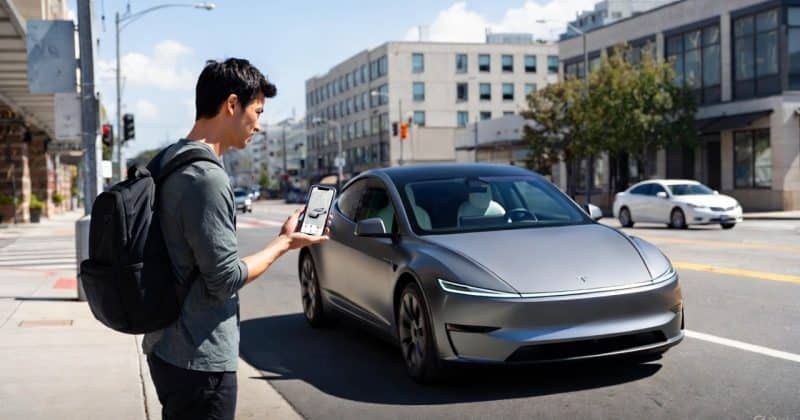
Tesla Robotaxi reports zero at-fault accidents since February, according to NHTSA data
Tesla's Austin fleet of 96 Cybercabs has logged over 673,000 miles without a reported incident, outpacing competitors in federal safety filings
Tesla’s Robotaxi fleet in Austin, Texas, has gone months without a single at-fault accident, according to data filed with the National Highway Traffic Safety Administration. The streak dates back to February 2026, covering a period in which the fleet grew in size and transitioned portions of its operations to fully unsupervised driving.
The numbers behind the safety record
Tesla’s Robotaxi service launched in Austin in June 2025, initially running supervised Full Self-Driving software on Model Y vehicles. Since then, the fleet has accumulated 15 total NHTSA-reported incidents through early 2026. All 15 were classified as low-speed collisions, and the majority resulted in no injuries.
The filings show that many incidents involved third-party vehicles striking parked Teslas or making contact with fixed objects. May 2026 filings confirmed additional low-speed events that were mainly attributed to external factors or teleoperator involvement.
The fleet has been incident-free since April 14, 2026, according to NHTSA records. As of June 2026, the Austin operation consists of 96 Cybercab vehicles that have collectively driven more than 673,000 miles without a reported accident.
The zero-incident streak also coincides with Tesla’s transition to fully unsupervised operations for a section of its fleet. Running without a safety driver means there’s no human backup ready to grab the wheel.
AI, tech, and the markets they move—in one daily briefing.
Daily. Free. Join 34,000+ readers across crypto, finance, and policy.
How Tesla stacks up against the competition
Both Waymo and Zoox have reported significantly higher crash volumes in the same federal datasets, though direct comparisons require some nuance since fleet sizes, operating environments, and total miles driven differ across companies.
The NHTSA requires automated driving system operators to report crashes meeting certain thresholds, creating a public record that doesn’t exist for conventional vehicles.
What this means for investors
The transition to unsupervised operations is particularly significant. Supervised autonomy, where a human sits in the driver’s seat monitoring the system, is essentially an expensive tech demo. Unsupervised autonomy is a business. Removing the safety driver fundamentally changes the unit economics, turning each vehicle from a cost center into a revenue generator that operates around the clock without payroll.
Tesla running 96 Cybercabs without human oversight and without incidents gives regulators less reason to pump the brakes on expansion.