
Tower Semiconductor to invest $3B in Japan with government support, betting big on AI chip demand

Tower Semiconductor to invest $3B in Japan with government support, betting big on AI chip demand

The chipmaker's massive expansion into silicon photonics signals where the real AI infrastructure bottleneck is heading next.

Tower Semiconductor just committed roughly $3 billion to build out advanced chip manufacturing in Japan, backed by a $1 billion grant from the Japanese government. The investment targets silicon photonics and advanced packaging, two technologies that are quietly becoming the plumbing of every major AI data center on the planet.

What Tower is actually building

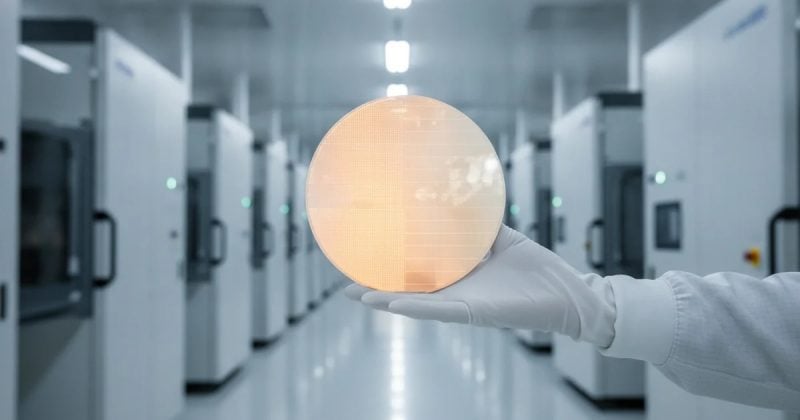
The Israel-headquartered foundry, traded on NASDAQ under the ticker TSEM, announced the expansion on July 14. The plan centers on 300mm silicon photonics (SiPho) production and advanced packaging at facilities in Uozu, Japan, leveraging a former Arai facility and an adjacent site called Fab 7.

Advertisement

The first phase of Tower’s dual-track plan targets production readiness by Q4 2027. The company has already locked in more than 70% of the planned new capacity through 2028.

Tower’s silicon photonics revenue contracts for 2027 alone sit at $1.3 billion, with $290 million in customer prepayments already collected.

Japan’s Ministry of Economy, Trade and Industry (METI) is footing $1 billion of the bill through government grants. CEO Russell Ellwanger thanked the Japanese government for selecting Tower to lead this technology expansion.

Japan’s semiconductor comeback tour

TSMC is building a fab in Kumamoto. Rapidus, a Japanese consortium, is attempting to manufacture cutting-edge 2nm chips. Now Tower adds another layer to Japan’s semiconductor revival, specifically in the optical connectivity segment that AI workloads desperately need.

The company updated its financial model to project $3.6 billion in revenue and $1.2 billion in net profit by 2028. Tower also raised its 2026 capital expenditure guidance to $920 million following the announcement. Shares responded predictably, jumping in premarket trading.

Disclosure: This article was edited by Editorial Team. For more information on how we create and review content, see our Editorial Policy.

Tower Semiconductor to invest $3B in Japan with government support, betting big on AI chip demand

Tower Semiconductor to invest $3B in Japan with government support, betting big on AI chip demand

The chipmaker's massive expansion into silicon photonics signals where the real AI infrastructure bottleneck is heading next.

Tower Semiconductor just committed roughly $3 billion to build out advanced chip manufacturing in Japan, backed by a $1 billion grant from the Japanese government. The investment targets silicon photonics and advanced packaging, two technologies that are quietly becoming the plumbing of every major AI data center on the planet.

What Tower is actually building

The Israel-headquartered foundry, traded on NASDAQ under the ticker TSEM, announced the expansion on July 14. The plan centers on 300mm silicon photonics (SiPho) production and advanced packaging at facilities in Uozu, Japan, leveraging a former Arai facility and an adjacent site called Fab 7.

Advertisement

The first phase of Tower’s dual-track plan targets production readiness by Q4 2027. The company has already locked in more than 70% of the planned new capacity through 2028.

Tower’s silicon photonics revenue contracts for 2027 alone sit at $1.3 billion, with $290 million in customer prepayments already collected.

Japan’s Ministry of Economy, Trade and Industry (METI) is footing $1 billion of the bill through government grants. CEO Russell Ellwanger thanked the Japanese government for selecting Tower to lead this technology expansion.

Japan’s semiconductor comeback tour

TSMC is building a fab in Kumamoto. Rapidus, a Japanese consortium, is attempting to manufacture cutting-edge 2nm chips. Now Tower adds another layer to Japan’s semiconductor revival, specifically in the optical connectivity segment that AI workloads desperately need.

The company updated its financial model to project $3.6 billion in revenue and $1.2 billion in net profit by 2028. Tower also raised its 2026 capital expenditure guidance to $920 million following the announcement. Shares responded predictably, jumping in premarket trading.

Disclosure: This article was edited by Editorial Team. For more information on how we create and review content, see our Editorial Policy.