
Toyota’s $2B Texas plant expansion signals broader shift in global auto supply chains

Toyota’s $2B Texas plant expansion signals broader shift in global auto supply chains

The automaker's decision to move truck production from Mexico to San Antonio has implications for trade policy, tariff exposure, and the macro backdrop crypto investors are watching closely.

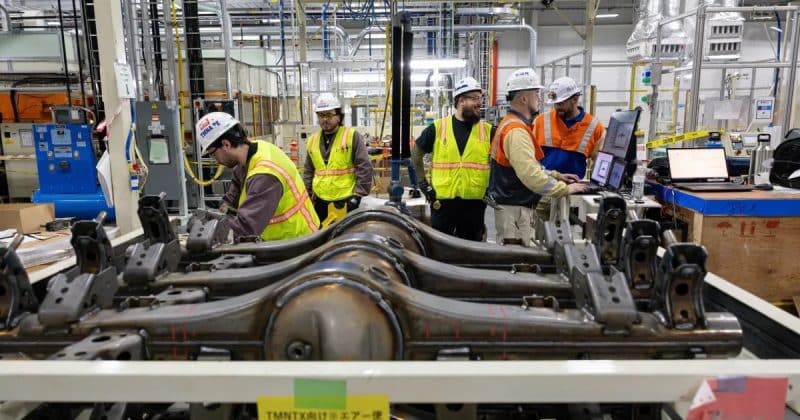
Toyota is doubling down on American manufacturing. The automaker filed plans on May 15 for a $2 billion expansion at its existing San Antonio plant, a project internally dubbed “Project Orca” that will add a new assembly line for full-size trucks and SUVs.

The investment is part of Toyota’s broader commitment of up to $10 billion in US manufacturing through at least 2030.

What Toyota is actually building

The San Antonio expansion breaks down to roughly $1.05 billion for buildings and property and $950 million for machinery and equipment. Toyota expects the project to create approximately 2,000 jobs between 2028 and 2030, nearly doubling the workforce at a facility that currently employs around 3,700 people.

Advertisement

The existing plant produced approximately 197,500 vehicles in 2025. The expansion would significantly increase that capacity, with construction potentially starting by the end of 2026 and production slated for 2030.

Early reports pegged the project at $3.6 billion to $4 billion. The confirmed $2 billion figure is still massive, but it’s worth noting the gap between initial speculation and Toyota’s actual filing.

The Tacoma pickup, currently produced at Toyota’s plant in Guanajuato, Mexico, may soon be assembled domestically as part of this initiative.

Why this matters beyond the auto industry

Toyota’s move also reflects surging demand for hybrid vehicles in the US. The company isn’t just reshoring for defensive reasons. It’s chasing a consumer trend. Hybrid sales have been climbing steadily, and Toyota, which basically invented the modern hybrid with the Prius, is positioning itself to meet that demand with domestic production capacity.

The reshoring trend and what investors should watch

For traditional equity investors, Toyota’s expansion is a straightforward positive signal. More US production capacity means less tariff exposure, more pricing stability, and stronger positioning in the North American market. The 2,000 new jobs will also generate goodwill with policymakers on both sides of the aisle.

The other thing worth watching is the regional economic impact. San Antonio is already a significant manufacturing hub for Toyota, and nearly doubling the workforce at that facility will have multiplier effects across the local economy. Construction spending alone, over a billion dollars in buildings and property, represents a meaningful stimulus.

Disclosure: This article was edited by Editorial Team. For more information on how we create and review content, see our Editorial Policy.

Toyota’s $2B Texas plant expansion signals broader shift in global auto supply chains

Toyota’s $2B Texas plant expansion signals broader shift in global auto supply chains

The automaker's decision to move truck production from Mexico to San Antonio has implications for trade policy, tariff exposure, and the macro backdrop crypto investors are watching closely.

Toyota is doubling down on American manufacturing. The automaker filed plans on May 15 for a $2 billion expansion at its existing San Antonio plant, a project internally dubbed “Project Orca” that will add a new assembly line for full-size trucks and SUVs.

The investment is part of Toyota’s broader commitment of up to $10 billion in US manufacturing through at least 2030.

What Toyota is actually building

The San Antonio expansion breaks down to roughly $1.05 billion for buildings and property and $950 million for machinery and equipment. Toyota expects the project to create approximately 2,000 jobs between 2028 and 2030, nearly doubling the workforce at a facility that currently employs around 3,700 people.

Advertisement

The existing plant produced approximately 197,500 vehicles in 2025. The expansion would significantly increase that capacity, with construction potentially starting by the end of 2026 and production slated for 2030.

Early reports pegged the project at $3.6 billion to $4 billion. The confirmed $2 billion figure is still massive, but it’s worth noting the gap between initial speculation and Toyota’s actual filing.

The Tacoma pickup, currently produced at Toyota’s plant in Guanajuato, Mexico, may soon be assembled domestically as part of this initiative.

Why this matters beyond the auto industry

Toyota’s move also reflects surging demand for hybrid vehicles in the US. The company isn’t just reshoring for defensive reasons. It’s chasing a consumer trend. Hybrid sales have been climbing steadily, and Toyota, which basically invented the modern hybrid with the Prius, is positioning itself to meet that demand with domestic production capacity.

The reshoring trend and what investors should watch

For traditional equity investors, Toyota’s expansion is a straightforward positive signal. More US production capacity means less tariff exposure, more pricing stability, and stronger positioning in the North American market. The 2,000 new jobs will also generate goodwill with policymakers on both sides of the aisle.

The other thing worth watching is the regional economic impact. San Antonio is already a significant manufacturing hub for Toyota, and nearly doubling the workforce at that facility will have multiplier effects across the local economy. Construction spending alone, over a billion dollars in buildings and property, represents a meaningful stimulus.

Disclosure: This article was edited by Editorial Team. For more information on how we create and review content, see our Editorial Policy.