
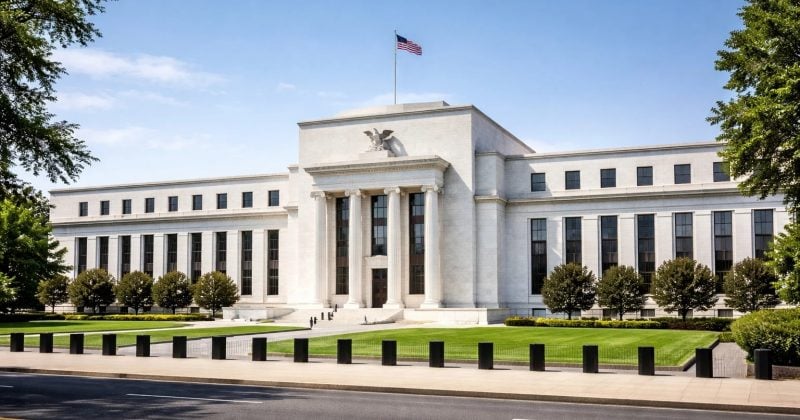
Via thehotelwashington.com
Traders are sending the Fed a clear message: slow down on rate hikes
A Bloomberg live session revealed how market participants are pricing in barely any rate increases for the rest of 2026, and crypto markets are paying close attention
The Federal Reserve doesn’t have a suggestion box. But it does have something better: a multi-trillion-dollar derivatives market that tells policymakers exactly what traders think is coming next.
On July 29-30, Bloomberg hosted a live Q&A session titled “What are traders telling the Federal Reserve?” and the answer, put simply, is this: traders are betting the hiking cycle is basically over. Market participants are now pricing in less than a single 25-basis-point increase for the entirety of 2026, a dramatic softening from expectations earlier in the year.
The Warsh effect on market expectations
The shift in trader positioning traces back to one key variable: Fed Chair Kevin Warsh. Since taking the helm, Warsh has pivoted the central bank’s communications strategy away from traditional forward guidance, the practice of essentially pre-announcing rate decisions, and toward a purely data-dependent framework.
That change has forced traders to recalibrate how they position in the bond and derivatives markets. Instead of anchoring to a dot plot or a carefully worded statement about the “path of policy,” participants are now parsing every CPI print, every PCE reading, and every GDP revision like it’s the final episode of a prestige TV show.
The result has been significant repricing across fixed-income markets. With the federal funds rate sitting at 3.50%-3.75% as of late July 2026, the market is essentially telling the Fed that current policy is restrictive enough.
The news moving money, markets, and the world—before your day starts.
Daily. Free. Join 34,000+ readers across crypto, finance, and policy.
Data dependence means more volatility, not less
There’s an irony baked into the Warsh approach that traders are still getting comfortable with. By eliminating forward guidance, the Fed has theoretically reduced one source of uncertainty, the gap between what the central bank says it will do and what it actually does. But it’s introduced another: every single data release now has the potential to move markets.
Under the old regime, a slightly hot CPI print might be shrugged off if the Fed had already signaled it would hold steady. Under data dependence, that same print could send rate-hike probabilities lurching higher in a matter of minutes. The Bloomberg session highlighted exactly this dynamic, with traders acknowledging that their positioning has become more reactive and, by extension, more volatile.
The practical takeaway for investors across asset classes is straightforward: economic calendar dates now matter more than Fed meeting dates. The next CPI or PCE release could do more to move markets than anything Warsh says at a press conference, precisely because he has chosen not to telegraph his next move.