
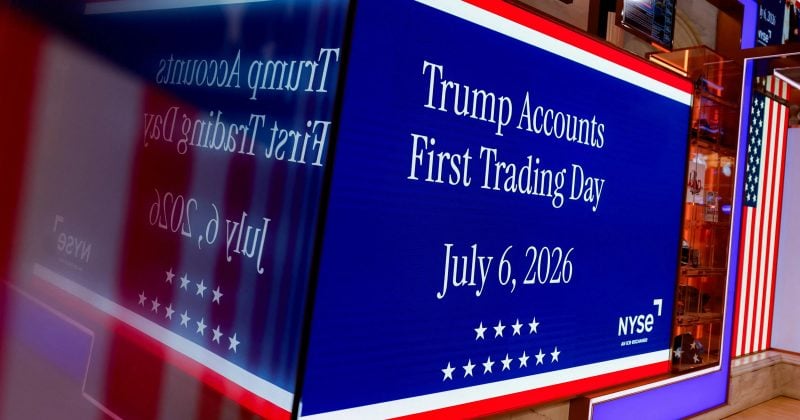
Trump Accounts program deposits first $1,000 for 500,000 newborns

Trump Accounts program deposits first $1,000 for 500,000 newborns

The federal savings initiative channels half a billion dollars into S&P 500-linked accounts for American babies, with zero crypto options in sight

The US government just opened investment accounts for more than 500,000 babies. Each one got a $1,000 head start, courtesy of Uncle Sam, with the money parked in funds that track the S&P 500.

President Donald Trump announced the milestone on July 6, confirming that the so-called “Trump Accounts” have begun receiving their federal seed deposits. The program, born out of tax legislation passed in 2025, is essentially a government-funded baby portfolio: eligible newborns get $1,000 deposited into an investment account they can access when they turn 18.

How the program actually works

Any US citizen child born between January 1, 2025, and December 31, 2028, with a valid Social Security number qualifies. The federal government kicks in $1,000. Families and employers can contribute up to $5,000 per year on top of that.

The investment options are deliberately narrow. All contributions must go into traditional mutual funds or ETFs that track the S&P 500. No individual stocks, no bonds, no alternatives.

Advertisement

The IRS and Treasury administer the program, with enrollment handled through trumpaccounts.gov. By March 2026, more than 4 million accounts had already been established under the framework. One million families had claimed the pilot deposit by that same point.

The Michael & Susan Dell Foundation contributed $6.25 billion to provide an additional $250 for qualifying lower-income children.

The S&P 500 bet, and what it excludes

Over 500,000 accounts with $1,000 each means at least $500 million in initial federal deposits flowing into S&P 500 funds. That’s before families and employers start layering in their own contributions, which can reach $5,000 annually per account. With 4 million accounts established, the potential capital pipeline into domestic equity index funds is substantial.

Context: baby bonds meet index funds

Proposals for “baby bonds,” government-funded savings accounts for newborns, have circulated in policy circles for years. Senator Cory Booker proposed a version in 2019. The UK ran a Child Trust Fund program starting in 2005 before scrapping it in 2011.

What makes Trump Accounts distinctive is the investment mandate. Previous baby bond proposals typically suggested conservative vehicles like government bonds. This one goes straight into equities.

The program also sits alongside existing options like 529 college savings plans, though with key differences. 529 plans are tax-advantaged but designed specifically for education expenses. Trump Accounts have no such restriction on how the money is spent once the child turns 18.

The four-year eligibility window, covering children born through the end of 2028, suggests the program is designed as a time-limited initiative rather than a permanent entitlement.

What this means for investors

Index fund providers stand to benefit the most. Firms like Vanguard, BlackRock, and State Street, which dominate the S&P 500 ETF market, are the natural recipients of these inflows.

Disclosure: This article was edited by Editorial Team. For more information on how we create and review content, see our Editorial Policy.

Trump Accounts program deposits first $1,000 for 500,000 newborns

Trump Accounts program deposits first $1,000 for 500,000 newborns

The federal savings initiative channels half a billion dollars into S&P 500-linked accounts for American babies, with zero crypto options in sight

The US government just opened investment accounts for more than 500,000 babies. Each one got a $1,000 head start, courtesy of Uncle Sam, with the money parked in funds that track the S&P 500.

President Donald Trump announced the milestone on July 6, confirming that the so-called “Trump Accounts” have begun receiving their federal seed deposits. The program, born out of tax legislation passed in 2025, is essentially a government-funded baby portfolio: eligible newborns get $1,000 deposited into an investment account they can access when they turn 18.

How the program actually works

Any US citizen child born between January 1, 2025, and December 31, 2028, with a valid Social Security number qualifies. The federal government kicks in $1,000. Families and employers can contribute up to $5,000 per year on top of that.

The investment options are deliberately narrow. All contributions must go into traditional mutual funds or ETFs that track the S&P 500. No individual stocks, no bonds, no alternatives.

Advertisement

The IRS and Treasury administer the program, with enrollment handled through trumpaccounts.gov. By March 2026, more than 4 million accounts had already been established under the framework. One million families had claimed the pilot deposit by that same point.

The Michael & Susan Dell Foundation contributed $6.25 billion to provide an additional $250 for qualifying lower-income children.

The S&P 500 bet, and what it excludes

Over 500,000 accounts with $1,000 each means at least $500 million in initial federal deposits flowing into S&P 500 funds. That’s before families and employers start layering in their own contributions, which can reach $5,000 annually per account. With 4 million accounts established, the potential capital pipeline into domestic equity index funds is substantial.

Context: baby bonds meet index funds

Proposals for “baby bonds,” government-funded savings accounts for newborns, have circulated in policy circles for years. Senator Cory Booker proposed a version in 2019. The UK ran a Child Trust Fund program starting in 2005 before scrapping it in 2011.

What makes Trump Accounts distinctive is the investment mandate. Previous baby bond proposals typically suggested conservative vehicles like government bonds. This one goes straight into equities.

The program also sits alongside existing options like 529 college savings plans, though with key differences. 529 plans are tax-advantaged but designed specifically for education expenses. Trump Accounts have no such restriction on how the money is spent once the child turns 18.

The four-year eligibility window, covering children born through the end of 2028, suggests the program is designed as a time-limited initiative rather than a permanent entitlement.

What this means for investors

Index fund providers stand to benefit the most. Firms like Vanguard, BlackRock, and State Street, which dominate the S&P 500 ETF market, are the natural recipients of these inflows.

Disclosure: This article was edited by Editorial Team. For more information on how we create and review content, see our Editorial Policy.