
Trump rings NYSE and Nasdaq opening bells from Oval Office, launches tax-advantaged investment accounts for children
The new 'Trump Accounts' give every newborn a $1,000 Treasury contribution and restrict investments to broad US equity index funds, leaving crypto entirely out of the picture.
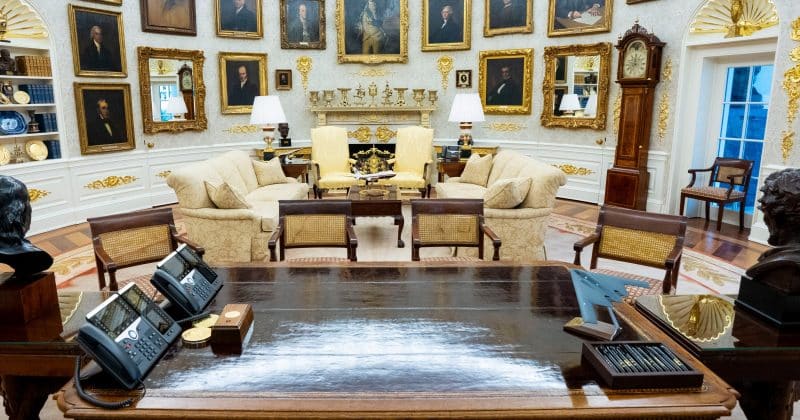
President Trump pulled off something no sitting president has done before: ringing the opening bell for both the New York Stock Exchange and Nasdaq simultaneously, from the Oval Office. The July 6 ceremony doubled as a launch event for “Trump Accounts,” a new class of tax-advantaged investment accounts for American children under 18.
The accounts are a product of the Republicans’ 2025 tax reform package. They come with a one-time $1,000 seed contribution from the US Treasury for babies born between 2025 and 2028, and they only allow investments in stock-index ETFs or mutual funds tracking broad US equity benchmarks like the S&P 500.
What Trump Accounts actually are
Families, and potentially employers, can contribute to these accounts on behalf of minors. The money can only go into funds that track broad domestic indexes. Sector-specific ETFs are out. Foreign-focused funds are out. And notably, crypto is completely absent from the menu.
White House economic adviser Kevin Hassett previewed the program in late June, but the Oval Office ceremony gave it the full presidential treatment. Cabinet members, corporate CEOs, and even children attended the event.
Dell Technologies stock got a bump after Trump promoted the company’s products during his remarks.
The news moving money, markets, and the world—before your day starts.
Daily. Free. Join 34,000+ readers across crypto, finance, and policy.
Why crypto is watching from the sidelines
For an administration that has positioned itself as broadly crypto-friendly, Trump Accounts represent a conspicuous commitment to traditional finance. The program’s investment restrictions don’t just exclude crypto by omission. They actively prohibit anything outside broad US equity index products.
Market implications and what investors should watch
A government program that automatically channels fresh capital into broad US equity index funds is, by definition, a structural tailwind for those products.
If even a fraction of the roughly 3.6 million babies born annually in the US receive the $1,000 Treasury contribution, that’s billions of dollars in new capital flowing into S&P 500 trackers and similar products over the next few years. Add family and employer contributions on top, and the numbers get more interesting.
ETF providers tracking major US indexes stand to benefit the most. Vanguard, BlackRock’s iShares, and State Street’s SPDR products are the obvious winners in a world where the government is essentially marketing index investing to every new parent in America.
The restriction against foreign-focused funds signals a broader “buy American” philosophy in the administration’s financial policy, which could influence how future crypto regulations are shaped, potentially favoring US-domiciled exchanges, US-based token projects, and domestically regulated products.