
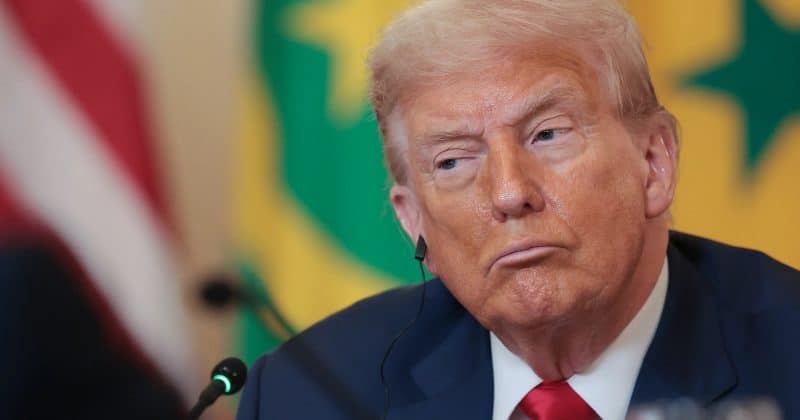
Donald Trump criticizes Federal Reserve, warns of disaster for Wall Street
The president's ongoing feud with the Fed keeps rattling equities while crypto markets quietly benefit from the chaos
The relationship between Donald Trump and the Federal Reserve has the warmth and stability of a dumpster fire, and it’s getting worse. The president has once again taken aim at the central bank’s interest rate policies, arguing that the Fed’s reluctance to cut rates aggressively is setting Wall Street up for disaster.
A feud that moves markets
Trump has spent much of his second term pressuring the Fed to slash rates to stimulate economic growth. The central bank, tasked with the delicate balancing act of managing inflation while supporting employment, has not been eager to comply at the pace the president demands.
The friction has real costs. Back in April 2025, when Trump-Fed tensions hit a particularly loud crescendo, the Dow Jones Industrial Average dropped roughly 970 points in a single session. That’s not a rounding error. That’s the kind of move that makes portfolio managers skip lunch.
The Powell exit and what came next
Jerome Powell’s term as Fed Chair ended in May 2026, and Trump moved quickly to install Kevin Warsh as his successor. Warsh, a former Fed governor with Wall Street experience, was seen as someone more sympathetic to the administration’s preference for lower rates.
But Powell didn’t disappear entirely. He remained on the Board of Governors beyond the leadership transition. And in June 2026, Powell issued a pointed warning about the dangers of politicizing the central bank, suggesting that such actions could undermine public trust in the institution.
The news moving money, markets, and the world—before your day starts.
Daily. Free. Join 34,000+ readers across crypto, finance, and policy.
Crypto’s quiet advantage
During periods when Powell demonstrated resistance to political pressure from Trump, Bitcoin’s price briefly climbed by 1-2%.
In May 2026, Trump ordered a review of crypto and fintech firms’ access to Federal Reserve payment services. That’s a significant policy move that could open banking infrastructure to digital asset companies that have historically been shut out.
What investors should watch
Rate expectations directly influence risk appetite across all asset classes. If markets begin pricing in rate cuts driven by political pressure rather than economic data, the initial reaction might be bullish for risk assets, including crypto. But the second-order effects, potential inflation, dollar instability, and institutional credibility damage, introduce risks that are harder to model.
The review of crypto firms’ access to Fed payment services adds another variable. A favorable outcome could unlock significant institutional capital flows into digital assets.