
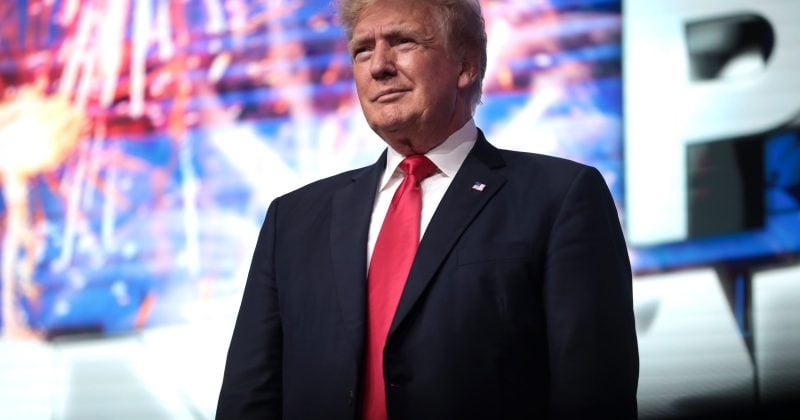
Trump declares Iran nuclear deal over after renewed military escalation

https://es.wikipedia.org/wiki/Donald_Trump

Trump declares Iran nuclear deal over after renewed military escalation

US-Iran deal in 2026

Former U.S. President Donald Trump has declared the Iran nuclear deal “over” following renewed military confrontations, including U.S. airstrikes on Iran. This escalation occurs after a brief ceasefire, established by a memorandum of understanding, broke down. The conflict between the United States, Israel, and Iran has intensified, particularly after Iran’s recent attacks on commercial tankers and the downing of a U.S. helicopter. The memorandum had initially required Iran to halt uranium enrichment and reopen the Strait of Hormuz, but both sides now accuse each other of violations, indicating a potential return to full-scale hostilities.

Advertisement

Key Takeaways

  • Market pricing suggests that Trump’s declaration is consistent with decreased confidence in the inclusion of reconstruction funding in a future US-Iran deal.
  • Recent developments appear to reflect a significant drop in the probability of a successful diplomatic agreement being reached within the year.
  • The latest military actions could indicate further disruption in global oil markets, consistent with the increased geopolitical tensions.

What to Watch

Observers should monitor the responses from key international actors such as Iran’s Foreign Minister Javad Zarif and U.S. Chief Negotiator Mike Vance. Any new statements or military actions by Israel or Iran may further impact the probability of a diplomatic resolution. Developments such as a reopening of the Strait of Hormuz or significant diplomatic engagement could influence market perceptions of a potential agreement. Markets appear to be poised for further adjustments depending on the evolving geopolitical landscape.

Get prediction market intelligence as a structured API feed. Early access waitlist.

Disclosure: This article was edited by Estefano Gomez. For more information on how we create and review content, see our Editorial Policy.

Trump declares Iran nuclear deal over after renewed military escalation

Trump declares Iran nuclear deal over after renewed military escalation

US-Iran deal in 2026

https://es.wikipedia.org/wiki/Donald_Trump

Former U.S. President Donald Trump has declared the Iran nuclear deal “over” following renewed military confrontations, including U.S. airstrikes on Iran. This escalation occurs after a brief ceasefire, established by a memorandum of understanding, broke down. The conflict between the United States, Israel, and Iran has intensified, particularly after Iran’s recent attacks on commercial tankers and the downing of a U.S. helicopter. The memorandum had initially required Iran to halt uranium enrichment and reopen the Strait of Hormuz, but both sides now accuse each other of violations, indicating a potential return to full-scale hostilities.

Advertisement

Key Takeaways

  • Market pricing suggests that Trump’s declaration is consistent with decreased confidence in the inclusion of reconstruction funding in a future US-Iran deal.
  • Recent developments appear to reflect a significant drop in the probability of a successful diplomatic agreement being reached within the year.
  • The latest military actions could indicate further disruption in global oil markets, consistent with the increased geopolitical tensions.

What to Watch

Observers should monitor the responses from key international actors such as Iran’s Foreign Minister Javad Zarif and U.S. Chief Negotiator Mike Vance. Any new statements or military actions by Israel or Iran may further impact the probability of a diplomatic resolution. Developments such as a reopening of the Strait of Hormuz or significant diplomatic engagement could influence market perceptions of a potential agreement. Markets appear to be poised for further adjustments depending on the evolving geopolitical landscape.

Get prediction market intelligence as a structured API feed. Early access waitlist.

Disclosure: This article was edited by Estefano Gomez. For more information on how we create and review content, see our Editorial Policy.