
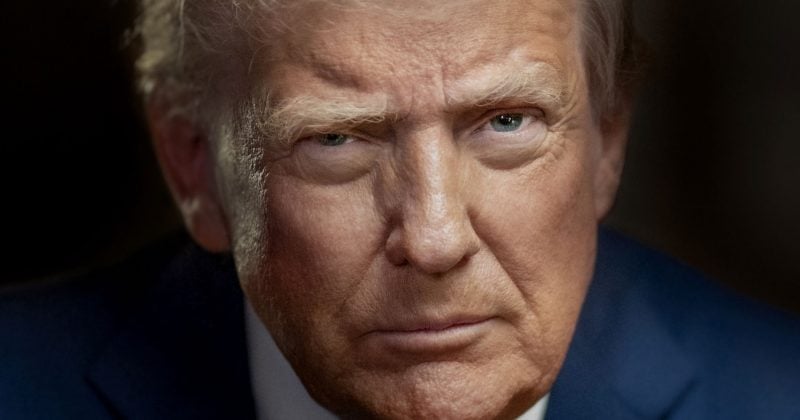
Donald Trump advocates for 12% to 13% GDP growth targets, dwarfing historical norms

Donald Trump advocates for 12% to 13% GDP growth targets, dwarfing historical norms

The president's proposed growth rates would be roughly four to five times the post-WWII average, raising questions about what it means for monetary policy, markets, and crypto

President Donald Trump declared on July 2 that the United States should be targeting GDP growth of 12% to 13%. To put that in perspective, the country’s post-World War II average sits around 2% to 3%.

Trump shared his remarks through live posts on X, where he also expressed frustration with a 4% GDP growth benchmark. He reportedly criticized Federal Reserve Governor Cook in the same breath, signaling dissatisfaction with what he views as insufficiently ambitious economic targets from the central bank.

The numbers don’t exactly cooperate

Recent quarterly GDP figures under Trump’s administration have ranged from 3.8% to 4.3%. The Q3 2025 reading came in at 4.3%, which by any reasonable historical standard is a strong number.

Advertisement

The only time recent memory produced a double-digit GDP print was Q3 2020, when the economy posted a 33.1% annualized growth rate. But that was a mechanical snapback from pandemic lockdowns, not organic expansion.

During Trump’s first term, his stated targets hovered around 3% to 4% or higher. For context, even China’s economy during its most explosive growth phase in the early 2000s rarely sustained GDP growth above 14%, and that was from a much lower base with fundamentally different structural dynamics. The US economy, valued at roughly $28 trillion, faces vastly different mathematical realities when chasing percentage growth at that scale.

What this means for monetary policy and traditional markets

Bond yields could rise if markets interpret the growth targets as inflationary. A president publicly criticizing Fed governors while demanding growth rates that would require extraordinary monetary loosening creates uncertainty about central bank independence.

The crypto angle: quiet for now, but worth watching

As of Trump’s announcement, no major crypto media outlets covered the remarks. There was no immediate discussion about specific tokens, protocols, or blockchain-related assets in connection with the GDP targets.

If these growth targets translate into concrete pressure on the Fed to cut rates or maintain loose conditions, that’s when Bitcoin and risk assets broadly could benefit. Conversely, if chasing 12% growth leads to inflationary fiscal policies or destabilizes confidence in the dollar, Bitcoin’s narrative as a hedge against monetary uncertainty could strengthen.

Disclosure: This article was edited by Editorial Team. For more information on how we create and review content, see our Editorial Policy.

Donald Trump advocates for 12% to 13% GDP growth targets, dwarfing historical norms

Donald Trump advocates for 12% to 13% GDP growth targets, dwarfing historical norms

The president's proposed growth rates would be roughly four to five times the post-WWII average, raising questions about what it means for monetary policy, markets, and crypto

President Donald Trump declared on July 2 that the United States should be targeting GDP growth of 12% to 13%. To put that in perspective, the country’s post-World War II average sits around 2% to 3%.

Trump shared his remarks through live posts on X, where he also expressed frustration with a 4% GDP growth benchmark. He reportedly criticized Federal Reserve Governor Cook in the same breath, signaling dissatisfaction with what he views as insufficiently ambitious economic targets from the central bank.

The numbers don’t exactly cooperate

Recent quarterly GDP figures under Trump’s administration have ranged from 3.8% to 4.3%. The Q3 2025 reading came in at 4.3%, which by any reasonable historical standard is a strong number.

Advertisement

The only time recent memory produced a double-digit GDP print was Q3 2020, when the economy posted a 33.1% annualized growth rate. But that was a mechanical snapback from pandemic lockdowns, not organic expansion.

During Trump’s first term, his stated targets hovered around 3% to 4% or higher. For context, even China’s economy during its most explosive growth phase in the early 2000s rarely sustained GDP growth above 14%, and that was from a much lower base with fundamentally different structural dynamics. The US economy, valued at roughly $28 trillion, faces vastly different mathematical realities when chasing percentage growth at that scale.

What this means for monetary policy and traditional markets

Bond yields could rise if markets interpret the growth targets as inflationary. A president publicly criticizing Fed governors while demanding growth rates that would require extraordinary monetary loosening creates uncertainty about central bank independence.

The crypto angle: quiet for now, but worth watching

As of Trump’s announcement, no major crypto media outlets covered the remarks. There was no immediate discussion about specific tokens, protocols, or blockchain-related assets in connection with the GDP targets.

If these growth targets translate into concrete pressure on the Fed to cut rates or maintain loose conditions, that’s when Bitcoin and risk assets broadly could benefit. Conversely, if chasing 12% growth leads to inflationary fiscal policies or destabilizes confidence in the dollar, Bitcoin’s narrative as a hedge against monetary uncertainty could strengthen.

Disclosure: This article was edited by Editorial Team. For more information on how we create and review content, see our Editorial Policy.